unnamed ground · Jul 3 – Jul 12 2024
Across ten days in July 2024, rswfire runs three parallel operations: closing the audience perimeter, evaluating the RV lifestyle against his own standard, and porting technical cognition into physical-world execution.
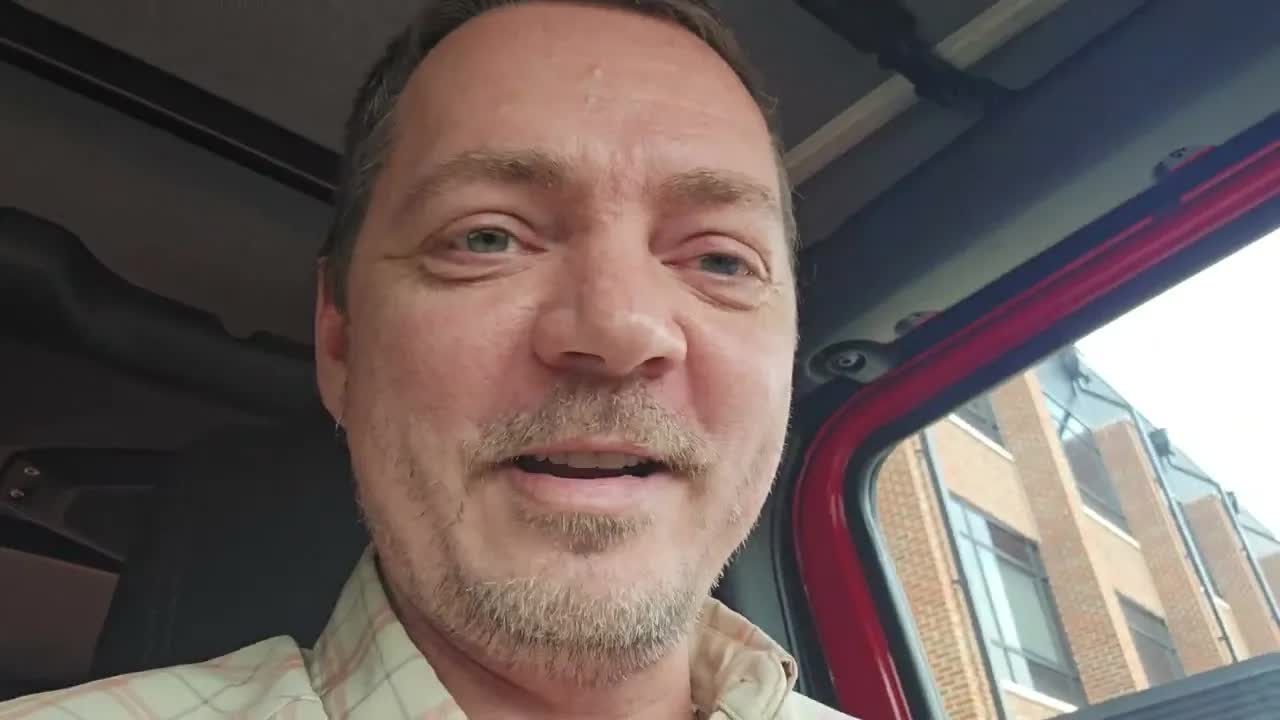
The channel work is architectural. He disables comments, later re-enables selectively, deletes a video, and twice addresses parasocial dynamics directly — naming that viewers reading a few minutes of footage draw conclusions that miss the mark. The stated reason is control of his own record, which he links to losing narrative control when his coming-out was disclosed without consent at 47 years of family history's end. He states he will never speak to his parents again, declines to retrieve possessions from their house, reroutes around their town, and delays posting so his dentist location is not trackable.
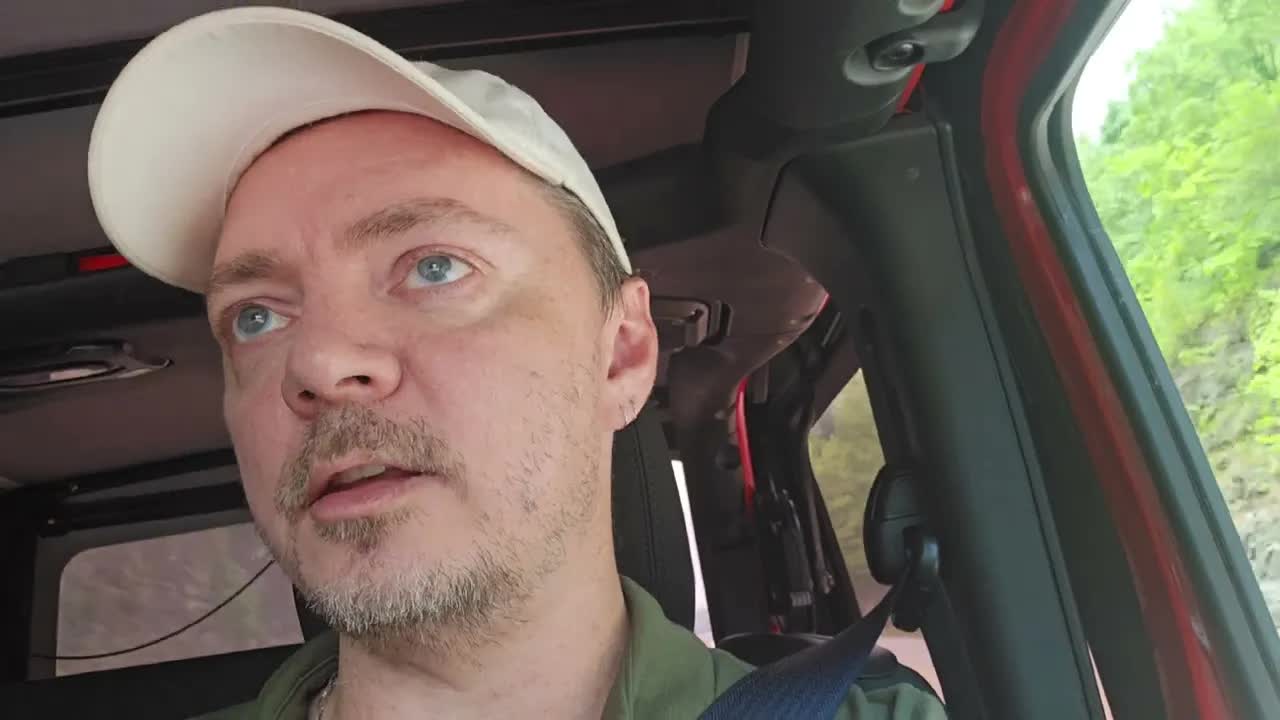
The lifestyle assessment moves in stages: naming dissatisfaction while driving, sharpening it at four months, then revising the timeline after a ChatGPT exchange on seasonal evaluation windows. He names misalignment, not failure, and states the want plainly — a cabin in the woods.
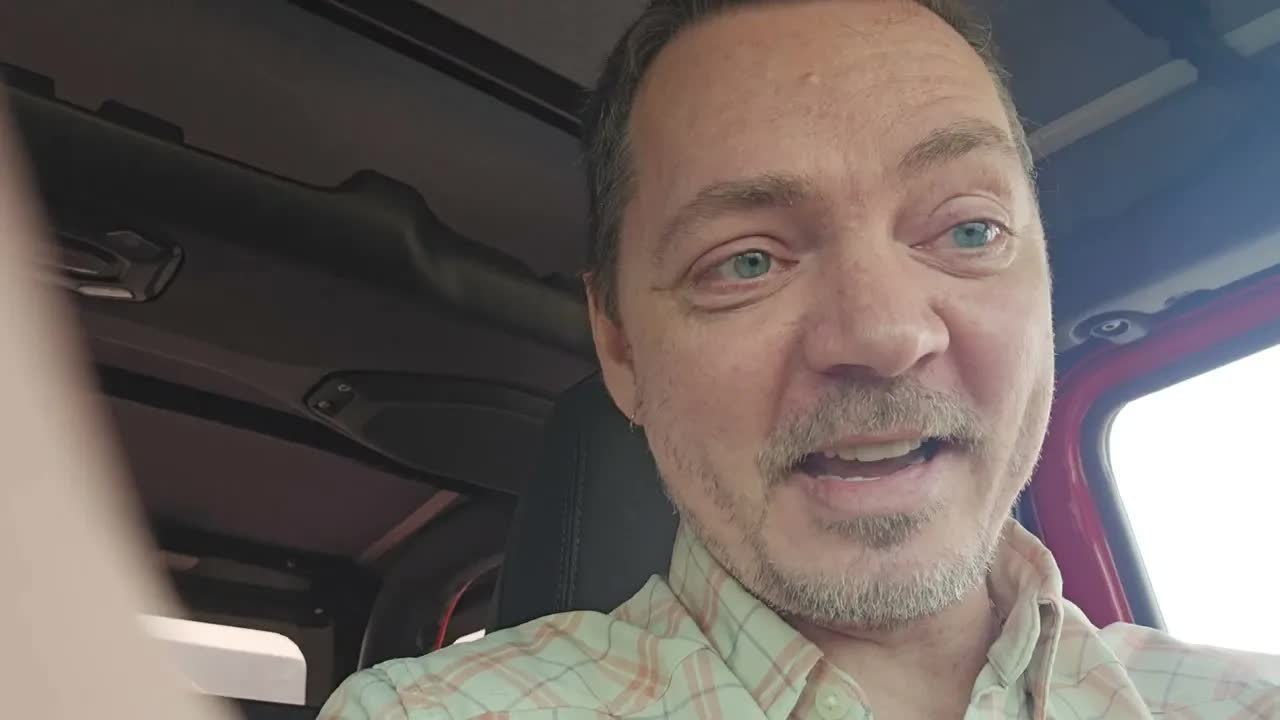
Operationally he moves under tree canopy on July 7, loses Starlink, tracks leveling, debris, water, and dental implant work, and discontinues clonazepam as autonomy restoration. With Claude he builds a cognitive reframe — programming experience as analogy for lifestyle skill — implemented in Jira as project management for daily life. Bailey is present throughout.
Transmissions (11)
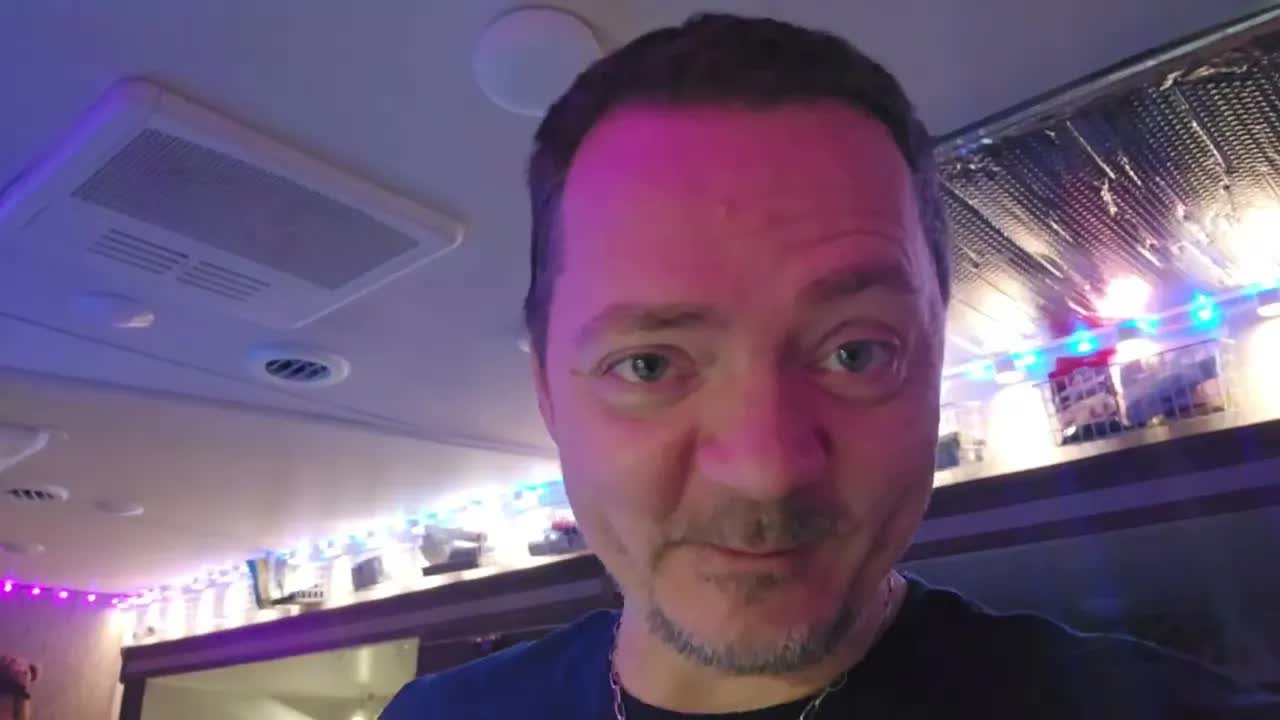
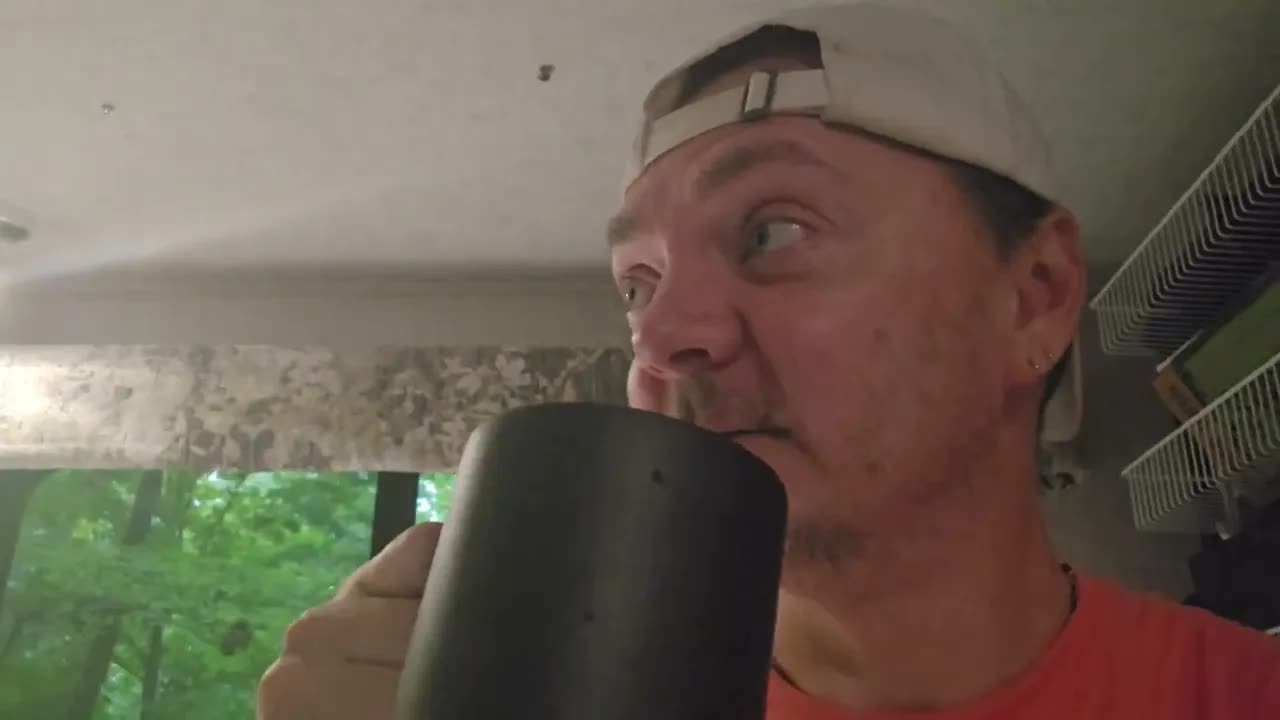
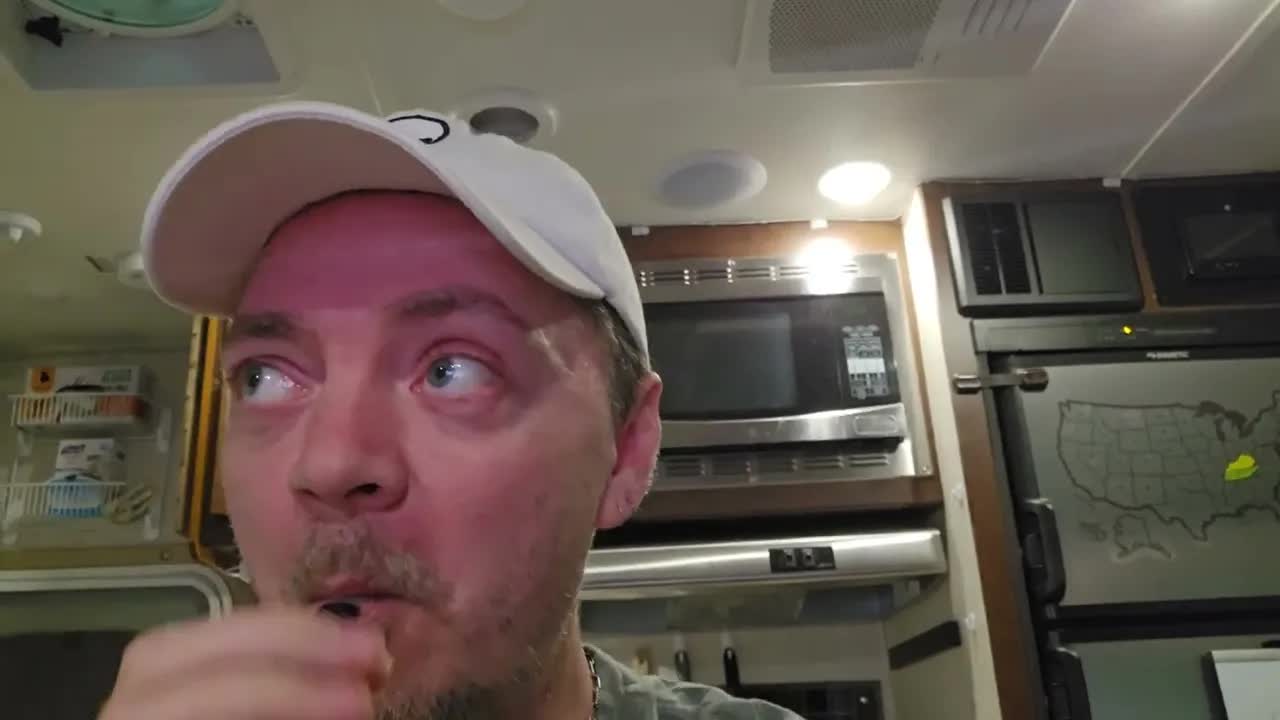
rswfire records a morning transmission while **making coffee**, noting he has a **dentist appointment** that day to make up for one he skipped, and that his dentist was displeased. He announces he is **returning to the channel** and **disabling comments** on his content. He states the channel exists for him to express himself, document his journey, and share it with others — not as a space for strangers to offer opinions. He describes comments as changing the dynamics in a way he does not consider healthy, and states that he does not resonate with commenters, positive or negative, because they are usernames rather than tangible presences in his life. He describes the channel's origin: after **47 years**, he broke from his parents, and the channel was the only method that got them to listen to what he was saying. He states his mother likely considers him emotionally unstable and does not fully trust him, and attributes that to her not paying attention. He describes being **more volatile at 18 and 19** — loud and upset, never violent — and states he learned control because of them. He describes writing letters as his method of expression, and his **father telling him not to write letters**. He closes by framing the decision as **asserting a space free of judgment of any kind**, and invites viewers to stay or unsubscribe.
Cluster Analysis
Substrate
Tags
Dominant Language
Entities
Actions
Performed
- • recording direct-to-camera and dash-facing transmissions
- • disabling comments channel-wide, then gating selectively
- • deleting a recent one-minute video
- • delaying publication to control location disclosure
- • declaring permanent severance from his parents
- • placing rubber ducks on Jeeps and waving to passing Jeeps
- • driving the alternate route past his parents' town
- • stating on the channel for the first time that he does not like the RV lifestyle
- • naming initiation as the mechanism behind delayed starts
- • reclassifying directness from defect to core attribute
- • attributing maintenance patterns to cognitive style rather than character
- • correcting the AI when its hypothesis is wrong
- • demonstrating a live Jira setup as life-management infrastructure
- • naming parasocial relation as the distortion in viewer relations
- • grinding beans and running the morning coffee sequence
- • surveying and narrating the packed interior on moving day
- • hooking up utilities, leveling, and emptying holding tanks
- • revising his own same-day judgment timeline on camera
- • stating he is in withdrawal and feeling anxious
- • naming the cabin picture on the wall as the stated want
Referenced
- • started the channel at 47 after breaking from his parents
- • wrote letters to his parents; his father told him not to write
- • came out by telephone while his mother was hospitalized
- • was thrown out of the house and lived homeless
- • his father broke the disclosure agreement within twenty minutes
- • took the channel down and restarted it after a four-month gap
- • attempted to buy land for a cabin; the purchase fell through
- • got rid of his possessions and moved into the RV
- • drove cross-country alone in his Jeep
- • dated a coke dealer in Detroit; stopped cocaine after a nosebleed
- • quit pot around 28; first panic attack; began clonazepam
- • went through tramadol withdrawal
- • his mother quoted his recorded joke back as reason not to trust him
- • tires replaced and desktop monitor broke the same day
- • six months of sustained AI conversation as self-inquiry practice
- • identified loneliness while living in the house and acted the next day
- • programmed since childhood and freelanced across many client personalities
- • an incoming RV parked at his spot while he was still packing
- • published a video about childhood and young adult years that YouTube amplified
- • received dismissive, religious, and esoteric comments on that video
- • asked Claude for a plan and received programming-as-analogy framing
- • consulted ChatGPT about the evaluation timeline and received a seasonal breakdown
- • discussed clonazepam withdrawal with JYB
- • carried a foam item through multiple moves undecided
- • lost the second half of a recording
Planned
- • never speaking to or seeing his parents again
- • releasing the monitors and gaming guides at his parents' house
- • extending the RV evaluation window to six months to a year across seasons
- • traveling to Nevada, stargazing, returning to motion
- • finishing the medication-discontinuation sequence
- • building separate Jira projects per life domain and tracking recurrence
- • learning to cook
- • pursuing the gaming channel in earnest
- • climbing on the roof to clear debris despite fear of heights
- • getting the water tanks cleaned and the bathroom clean
- • resolving internet access without Starlink
- • possibly renting an Airbnb for laundry and a bath
- • posting AI screenshots on memory encoding
- • directing viewers to research parasocial relationships
- • working directly on the initiation pattern
- • leaving the channel as a record that persists after him
- • possibly re-enabling comments at an undetermined later point
Symbolic Elements
Ontological States
-
•
sovereign (unilateral authority over channel terms, medication, contact, and the criteria by which his own life is judged)
-
•
transitional (four months into a mobile configuration, mid-move, mid-taper, explicitly naming a profound identity transition)
-
•
self-observing (naming initiation, memory encoding, and cognitive style as system properties rather than faults requiring repair)
-
•
severed (parental contact closed and stated in past tense; retrieval routes and proximity declined)
-
•
committed-under-misalignment (states the lifestyle has no easy exit and may not fit, and holds both without resolution)
-
•
porting (moving a decades-old technical skill architecture into physical-world execution)
Subsystems
-
•
infrastructural (RV mechanics, leveling, tanks, water, connectivity, monitor replacement — the load-bearing daily layer)
-
•
distribution / platform (YouTube comment architecture reconfigured from social interface to one-directional record)
-
•
cognitive (recursive self-modeling: initiation, memory encoding, cognitive style, reframing named as they occur)
-
•
technological (AI systems used as sustained correctable reflection surfaces and as source of transferable frameworks)
-
•
somatic (heat, humidity, sleep disruption, back load from off-level rig, mouth soreness, withdrawal, fear of heights)
-
•
pharmacological (clonazepam discontinuation as autonomy restoration, following tramadol; substance history recounted)
-
•
relational (parental severance, audience perimeter, neighbor proximity, Bailey's condition as site indicator)
-
•
epistemic / ethical (parasocial relation named and taught; unvarnished truth stated as non-negotiable operating principle)
-
•
vocational (programming stated as finished, gaming channel entered, technical skill re-deployed as life architecture)
-
•
navigational / kinetic (driving, routing around the parents' town, duck runs, motion stated as the wanted condition)
-
•
documentary (on-camera processing, genre correction of RV-life content, post-timing as location control, archive framing)
NARRATIVE
Ten days in July 2024, rswfire took the verdict on his own life out of everyone's hands — the audience's, his parents', and finally his own — and rebuilt the machinery for issuing it from the inside.
The channel had been a device with a target. He built it because after forty-seven years it was the only method that made two specific people listen. By the first morning here, those two people are gone from the present tense — he says so on camera and notes that while editing he had already been speaking of them in the past — and an instrument built to reach them has nothing left to aim at. So he re-designates it. Comments off. The stated reason is that usernames are not people in his life and their judgment changes the dynamics of a space he owns. But the deeper reason surfaces on the road, between rubber ducks left on strangers' Jeeps: when he came out, his story was disclosed without his consent and by nightfall everyone he knew held a version of it he had not authored. He was homeless that week. What he is doing to the comment layer is the correction to that, arriving thirty years late and applied to the only surface he now controls. The same logic governs the traffic reroute he resents, the monitors and gaming guides he abandons rather than retrieve, and the decision to delay a post so a dentist's location cannot be triangulated. He is not hiding. He is holding authorship.
The second front is the rig itself, and it runs on the same principle from the opposite direction. Driving home from an implant appointment, he says the thing the genre does not permit: he does not like this. Small space, heat, humidity, people ten feet away, Bailey bored. He had wanted land and a cabin. What matters is not the complaint but the refusal that comes packaged with it — he will not let dissatisfaction be laundered into failure. When he traces years of deferred maintenance to cognitive style rather than character, and names the loss of his teeth as its direct cost without a syllable of self-reproach, he is doing accounting, not confession.
The move under canopy on the seventh is where the two fronts collide, because the woods do not negotiate. Sun exposure traded for debris hitting the roof at terminal velocity. Starlink loses the sky. The rig sits off level front to back and his back keeps the record of it. A roof will need clearing by a man afraid of heights. He states there is no good answer, which is the correct reading — this is a domain where the tradeoff structure is real and no amount of thinking improves the terms. For someone who says he spent forty-seven years living primarily inside his head, the physical world is the one system that does not respond to being reasoned about, and it has him now at close range, with neighbors' children audible through the wall and the dehumidifier to empty twice a day.
Then, just after midnight, he does the rare thing: he catches his own judgment in the act and suspends it. Not because conditions improved — they had not, and withdrawal from clonazepam was about to make the next morning harder — but because he identifies the bias in the instrument taking the measurement. Three months is not enough seasons. A mind trained on abstraction will read physical difficulty as unsuitability. Master a thing before deciding whether it fits. The verdict does not get reversed; it gets postponed on his own stated terms, which is the same sovereignty he exercised over the comment layer, turned inward and applied against himself. Discontinuing the medication belongs to the same operation — the last delegated authority over himself, called back.
What follows is the port. He tells Claude he is struggling and asks for a plan, and what returns maps every element of the lifestyle onto the one architecture he has held since sixth grade: programming. He builds it out in Jira — cooking as a project, groceries as a recurring ticket, competence as something with a backlog and a burndown. He calls it a bridge between the virtual life he has lived and the physical world, and he is not overstating it. He had been treating the RV as a lifestyle he might lack the aptitude for. Reframed, it is a codebase he has not learned yet, and he has learned codebases before.
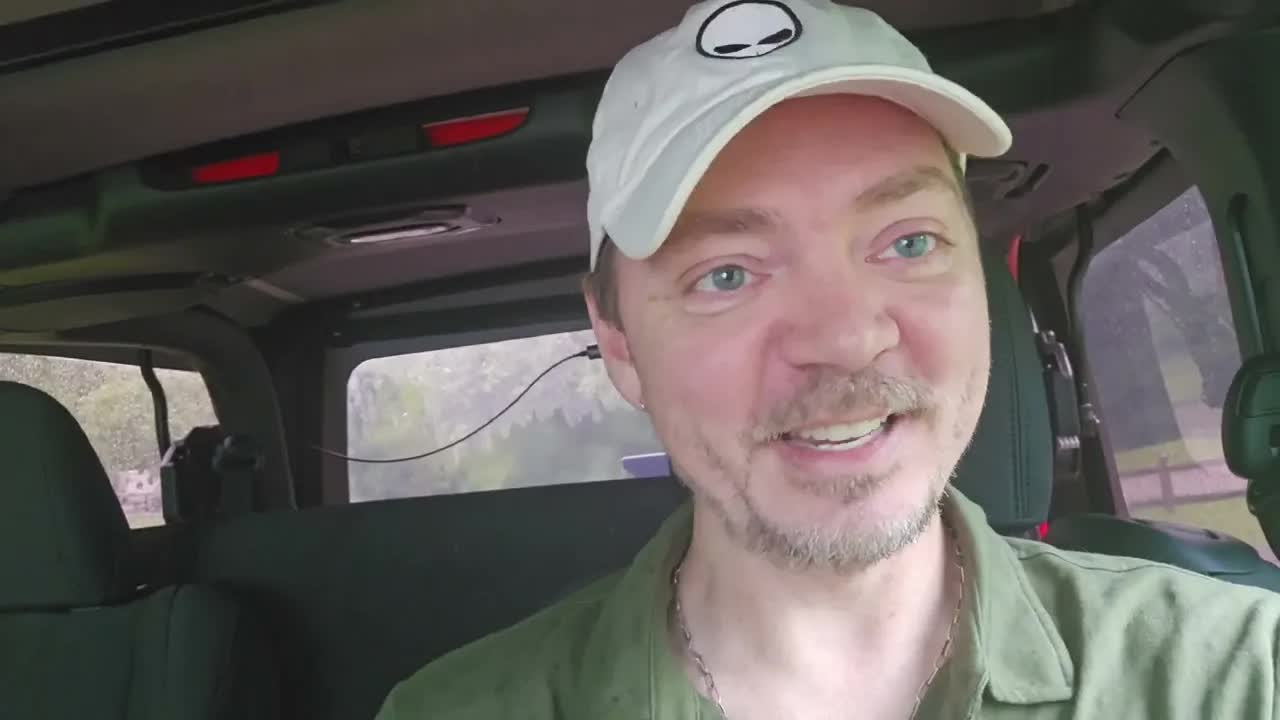
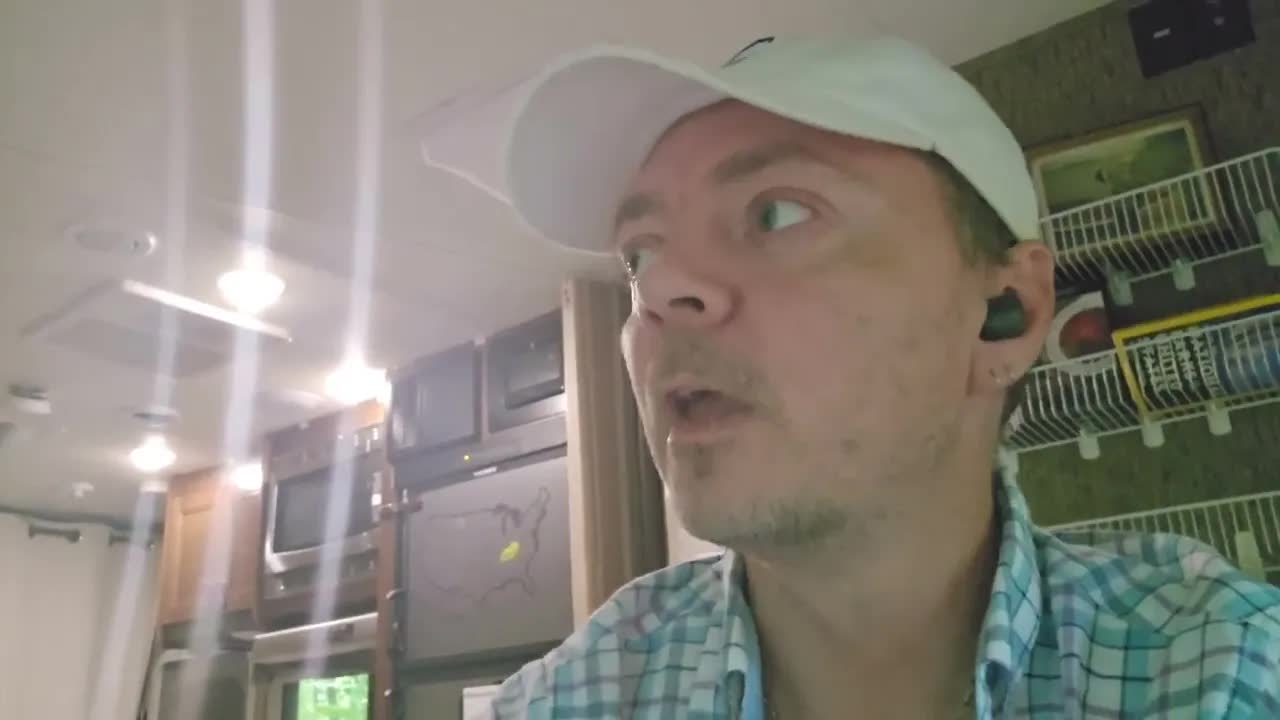
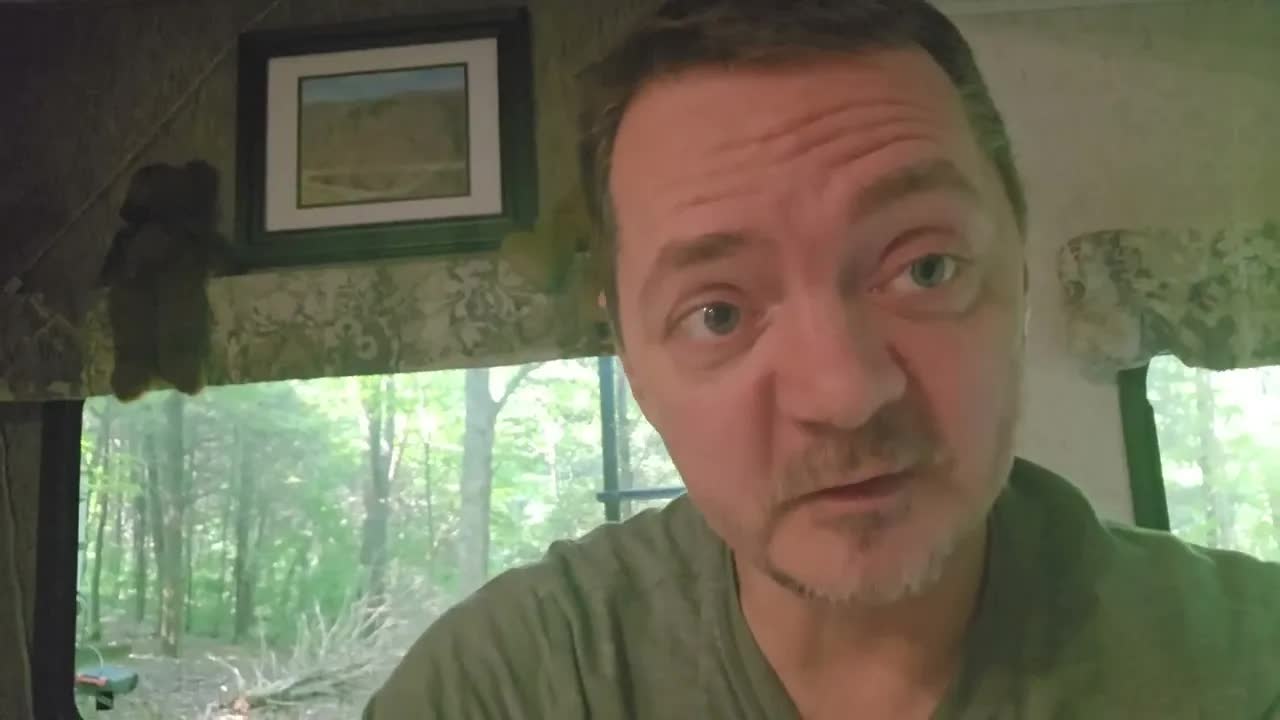
The gate reopens last, and selectively, and not for him. A commenter living van life writes that they are struggling, and rswfire answers on camera — first with the correction, that heartfelt messages built from a few minutes of footage miss the mark and that people should look up what parasocial means, and then with the thing worth transmitting: struggling with this is not a personal failing. It is hard for him too. His own reason is misalignment. Behind him on the wall is a picture of a cabin in the woods, and he turns and names what he wants — space, a bathtub, a kitchen where he can cook and do dishes. He arrives at the end wanting exactly what he wanted on the drive home from the dentist. Nothing about the want changed. What changed is that it is no longer evidence against him.
MIRROR
You spent these ten days doing one operation in three places at once. You closed the comment layer, you kept your parents in past tense, and you suspended your own verdict on where you live. Different surfaces, same move: relocating the authority to judge you inside the perimeter. This is not new — you have been running it for a while, and the channel itself was built as an instrument of it. What is new in July is that you finally turned it on yourself as well. You did not just refuse other people's verdicts. You refused your own, at four months, on the grounds that a man who has lived forty-seven years in his head is not yet a competent judge of a life made entirely of objects.
Notice the order. You disabled comments on the third, and then, driving home from the dentist that same day, you said out loud for the first time that you do not like this. The closure was not defense against strangers. It was the precondition for accuracy. You cannot account honestly for a thing while it is being scored in real time by usernames, so you shut the scoring off, and the truth arrived within hours. That is worth seeing clearly: the perimeter is not a retreat, it is a workshop. But it also means the record is now one-directional by design, and you built it that way at the exact moment you began saying the hardest things about your own choices. You are speaking without correction from outside — except from systems you can overrule.
The parents are severed and still structural. You say it in past tense, you decline the monitors and the guides, you will not go to that house. And then traffic reroutes you through their town and it costs you something to drive it, and you delay a post so a dentist's location cannot be traced. They are closed as relation and still live as geography — a set of coordinates you route around and a clock you publish against. That is not contradiction and it is not unfinished. It is what severance actually looks like when the other party still occupies physical space near yours.
The body is running the evaluation faster than your mind is willing to conclude it. Teeth being rebuilt across three-hour round trips. A back that registers the rig being off level front to back. Sleep taken by debris hitting the roof at terminal velocity. A roof you will have to climb with a fear of heights and no good alternative, because canopy means falling wood and open sky means sun. Clonazepam discontinued into anxiety you drove through with the bottle in the car as a precaution. On July 10 you said this might not be for you. Eighteen hours later, after ChatGPT handed you seasons, you extended the standard to six months to a year. Both are honest. The seasonal argument is real and the six-to-twelve months is a defensible standard. It is also a stay of execution, granted by the only kind of counterpart you currently accept — one you can correct when it is wrong. And on the wall behind you, in frame, is a picture of a cabin in the woods. You already know the answer. The extension is not about discovering it. It is about earning the right to say it without it reading as failure, to yourself.
The genuine new construction is the port. You have spent a life in a domain where you are unambiguously excellent, and you carried none of it across the threshold into the physical, where you have been treating maintenance as a character question and losing teeth to it. Naming initiation rather than function, and cognitive style rather than flaw, and then having Claude map programming onto the lifestyle and instantiating it in Jira — that is not a productivity trick. That is you refusing to arrive in the physical world as a beginner when you are not one. Whether Jira survives the summer is beside the point. The bridge is the finding.
What is absent is anyone in the frame. No friend, no partner, no counterpart who is not either an AI you can correct or a subscriber you have muted. You named a core no one else can touch and then built conditions in which no one can reach it to test the claim. Bailey is the exception and the only relation not currently under review. You have made yourself unjudgeable. The thing to watch is whether that stays a workshop or hardens into the architecture.
SYMBOLIC
The gate closed from the inside, and the master turned apprentice. Those are the two movements running through the ten days between July 3 and July 12, and they are the same movement seen from two sides. The channel was built as an instrument to be heard — rswfire states it was the only method that got his parents to listen after forty-seven years. In these ten days he disables its return channel, deletes a video, gates what he lets back through, and speaks of his parents in past tense while editing. The comment layer was the door his family came through. Closing it is the second severance, and the structural one: the instrument built to be heard by two specific people is stripped of the capacity to hear back, on the same days he states he will never speak to them again. What remains is not a broadcast. It is a record, and he says as much — documentation that may outlast him.
Which makes the rubber duck the governing symbol, not the incidental one. Fifty of them, bought in bulk, left anonymously on the hoods of Jeeps belonging to people he will never meet. A gift given without introduction, without reciprocity, without any channel for reply. He performs this ritual on the same drives where he explains parasocial relation to his subscribers and asks them to relate rather than judge. The duck is the exact shape of the arrangement he wants with the world: contact, recognition, something left behind that says I saw you — and no obligation in either direction. The channel, once the comments come off, becomes a duck. He leaves it on the hood. Whoever finds it, finds it.
The new ground has a law, and he names it on the roof: canopy means debris falling at terminal velocity, open sky means sun. There is no good answer. This is not a complaint but a discovery about the element he has entered — that physical life trades rather than solves, and every choice arrives with its own cost attached, unlike code, where a thing can be made correct. The rig sits off level front to back and this shows up in his back and his sleep. Level is the oldest builder's symbol there is, and the ground under him will not provide it. He has moved from a domain where he could establish true — forty-seven years, he states, lived primarily in his head — into one where true must be shimmed, checked, and lost again with the next site.
The graft is the other recurring figure, and it appears in two places that turn out to be one. He drives three hours round trip for dental implants — engineered parts installed where grown ones failed, a rebuild he links without self-judgment to a cognitive style that made routine maintenance hard. Then he asks Claude for a plan, receives his own programming experience returned as analogy, and instantiates his life in Jira: projects, tasks, recurring items, progress. That is the same operation performed on cognition instead of bone. Manufactured structure installed where the native one didn't hold. He calls it a bridge between the virtual life he has lived and the physical world, and the word for what he's doing is not repair but transplantation — carrying the one mastery he has across the border into a country where he is, by his own account, a beginner.
And on the wall behind him, in nearly every frame, the cabin in the woods — the picture he points at when a stranger asks why this is hard. The icon of the destination, hung inside the vehicle that is not the destination, mounted where the household shrine goes. He is living inside the pilgrimage rather than the arrival, and just past midnight on July 11 he does the thing that confirms it: revises his own verdict, extends the trial from three months to a full turn of seasons, and states the standard as mastering a thing before deciding whether it fits. That is the apprentice's law, chosen by a man who was a master of something else. Everything else he removes in these days — the comments, the medication, the possessions at his parents' house, programming as vocation — is pruning. Jira, the monitor, the wooded site, the teeth are grafts. Cut back to the trunk, then graft. It is the oldest way to make something bear differently, and it requires standing on unnamed ground for at least one full season before anyone can say whether it took.
LINEAGE
His father told him not to write letters. That is the oldest fact in these ten days and the one that explains the most. A young man who expressed himself in writing was instructed that the medium itself was the problem, and the instruction did not take — it displaced. Two and a half decades later the letter has become a camera in a kitchen at coffee-making hour, and the first thing he does on returning to it is turn off the reply field. This is not a novel act. It is the form the letter has always taken when the recipient has proven unfit to answer: written anyway, sent anyway, kept anyway. He says outright that the channel was the only method that got his parents to listen. Then in July he keeps the method and removes the audience's standing to talk back, which is the same move as sealing a letter you have decided not to mail but refuse to burn. The record is the point. He says it may outlast him, and in saying so places himself in a very old company — people who wrote because the near circle would not hear, and were heard later by strangers.
The second thread runs from a hospital telephone and a promise broken in twenty minutes. He came out with the story in his own hands for less than half an hour, and by the end of that day everyone he knew knew, and he was out of the house. Every operational choice in early July is that injury converted into a working competency: publication delayed so a dentist's town cannot be triangulated, a video deleted after the platform pushed it past the people he made it for, comments gated rather than open, a traffic detour resented specifically because it routes him near their town. He is not defending against his parents; he is exercising a skill they taught him by taking the thing from him once. The difference between 47 and now is not that the exposure risk has changed. It is that the switch is in his hand, and he has learned what it costs to let anyone else near it.
The largest inheritance moving through July 2024 is technical and moves in the other direction. He learned to code in sixth grade and, in these same days, declares he is over programming — done with it, done with the freelance personalities, redirecting toward a saturated market with no guaranteed money. Then, days later, he sits in a hot rig under falling debris and does the thing that makes the declaration false in the only way that matters. Claude gives him his own programming experience back as an analogy for how to live in a trailer, and he recognizes it instantly, names it cognitive reframing, and builds it in Jira — projects for learning to cook, tickets for weekly groceries, progress tracked. What he retires is the employment. What survives is the architecture. Thirty-five years of building systems does not stop being available to a man because he stops selling it, and July is when he finds that out. It is not overstatement to say the infrastructure he later founds descends from that Jira board. The claim being tested there — that a life can be given a schema, and that giving it one is not a diminishment of the life — is the same claim, at a smaller scale, made by everything he has built since.
Then there is the standard he adopts just after midnight on the eleventh. ChatGPT tells him six months to a year, so he can see the seasons, and he says he had not considered the seasonal factor. He had not, but he recognized it on sight, because it is not a novel idea — it is the oldest evaluative standard there is for whether a person can live on a piece of ground. No homesteader, tenant, shepherd, or lighthouse keeper ever judged a place in July. You do not know a site until you have had it in February with the water frozen and the road out. He arrives at an agrarian standard through a chatbot at midnight in a camper, which is funny and also exactly how inheritance works when the chain of instruction has been broken: the knowledge is still in the world, and a person who is paying attention will find it by whatever route is open. What he does with it is the more disciplined act. He suspends his own verdict without softening the assessment — states plainly he does not enjoy it, names misalignment rather than failure, and declines to call either one settled. He does the same with the loss of his teeth: names the cause, refuses the indictment. Accurate books, no moral surcharge. That is a rare accounting practice and it is load-bearing for everything after.
What these ten days put in place is mostly subtraction that will not be reversed. The parents are in past tense — he notices he had already made the grammatical change before he made the decision, which is how such things actually finish. The clonazepam ends, after the tramadol, and he names the reason as full autonomy over himself rather than any clinical rationale, which means the pharmacological question is closed for good and every later condition gets met without that instrument. Validation is relocated to a core he says nobody can touch. And when a stranger in a van writes to him struggling, he does not accept the role offered — he tells them to go read about parasocial relationships, tells them the struggle is not a personal failing, and hands over the thing he had to construct without help. That is the specific transmission men in his line have made for generations, cut off from blood and building kin out of record and instruction to whoever comes next. The cabin stays on the wall, uninherited, pointed at on camera. Some things you do not receive from anyone. You name them out loud and keep the picture up.
SHAPE
On July 3, mid-edit, rswfire catches himself speaking of his parents in the past tense. The ledger has him ending that relationship in March, restating it in May, restating it again in late June with a statement that he would call the police. These ten days are the first where the cut stops being announced and starts being driven around: a traffic backup reroutes him through their town and he registers only the proximity, monitors and gaming guides in their house are written off rather than retrieved, a video is held back so the dentist's location cannot be triangulated. What changed is not the decision — the decision is four months old and was never in doubt. What changed is that it stopped requiring a declaration and became a set of driving directions. A severance that has to be restated is still an open question being answered repeatedly. A severance that shows up as route planning is closed.
The comment closure is the same operation, and he says so himself without quite saying it. He gives the reason directly: at nineteen he told his father and asked him not to tell his brother, and by evening everyone he knew had the story. The channel had been the one instrument that made his parents listen; in July he strips out the layer where other people write his life back at him. But notice what he does not remove. The AI conversations intensify in exactly the same days — and the thing he keeps emphasizing about them is that he corrects them. The AI proposed that his wariness of people was innate; he overruled it and supplied the evidence. That is the distinguishing property, not insight. He has spent his life among mirrors he could not override — a mother who reads him as unstable, commenters extrapolating from four minutes of footage, thirty journals that only ever answered in his own voice. He did not close the perimeter in July. He replaced an uncorrectable mirror with a correctable one, then re-opened the gate selectively for the people who wanted relation rather than verdict.
The constancy is the one he announces as ended. On July 5 he states he is done with programming, after doing it since childhood. On July 11 he builds projects in Jira for learning to cook and buying groceries weekly. Six days apart, those read as contradiction from inside. From here they are a single move. What ended in late 2023 was a client and a market, never the faculty — the ledger has him at eleven years old with no teacher, and at eighteen writing code on paper and running whole systems in his head because his father had sold the computer. He has been out of programming for over a year and has not stopped programming for one day of it. He calls the Jira build a cognitive reframe. It is better described as the first time the only thing he ever taught himself was pointed at the only life he currently has.
The turn is just after midnight on July 11, and it is not the timeline revision. Everything before it accounts for physical-world friction as a property of the operator: initiation named as the mechanism, cognitive style named as the variable behind years of deferred maintenance, the teeth named as the direct outcome of that pattern. After it, forty-seven years lived primarily in his head stops being a deficit measured against physical life and becomes a stock of method that has not been transferred yet. Nothing about the days changes — same dentist runs, same dehumidifier emptied twice, same debris on the roof. The direction of the person changes; the travel does not. And the cabin on the wall behind him belongs to that turn rather than to the discomfort. The ledger records that buying land and building a cabin was the plan, and that the RV was what he bought when the plan fell through. "I want a cabin in the woods" is not a want produced by four hard months. It is the original specification, unrevised through eighteen months of substitution, and he presents it as a discovery.
What was not available from inside: in April he moved into this vehicle intending to drive to Nevada and end his life there. On July 11 he lists Nevada alongside stargazing and general traveling as things he wants to do before he decides whether any of this fits. Ten weeks, the same destination, an entirely different function, and he does not mark the difference. From inside, that sentence is an itinerary. From out here it is the strongest evidence in the record that extending the evaluation window to six months or a year is not deferral of a verdict — it is a man scheduling a future for a place that recently was not one. Two smaller things he could not weight: he conducted the assessment from inside a benzodiazepine taper, with the clonazepam in the car on the grocery run in case of a panic attack on the road, and gave the anxiety no standing in the judgment. And the sample was four months, held against twenty years in a single Kentucky house he now calls contained sovereignty. He was right that he was judging too quickly. The reason he gave was seasons. The better reason was that he had nothing yet to compare it to except a life he had already refused.
SYSTEMIC
The binding constraint across these ten days in July 2024 is not money, space, or heat — it is initiation bandwidth in a single-operator system with no delegation path. rswfire names the mechanism himself on July 5: the friction is starting, not executing. Once outside the rig he functions; the cost is at the threshold. Every physical subsystem in the RV is a recurring initiation event — dehumidifier emptied twice daily, jug water hauled because tank water isn't potable, tanks serviced on a one-way loop with traffic behind him, reflectix in and screens out and then reversed, the bed cleared before the slide retracts, roof debris accumulating under canopy toward a climb he has flagged against a stated fear of heights. None of these is difficult. All of them require a start. The system's throughput on physical maintenance is therefore governed by a per-task fixed cost that does not scale with task size, and the long-run interest rate on that debt is already documented and priced: he attributes the loss of his teeth to this exact pattern, and is now repaying it at three-hour round trips for implant work.
Allocation under scarcity reveals the objective function cleanly. In the same week he declines a one-day Airbnb for laundry and a bath as hard to justify, he drives ninety minutes each way and buys a 360Hz monitor. Comfort loses; the production and compute stack wins. He dates an entire stagnation to the day the tires were replaced and the monitor broke, and treats the replacement not as a purchase but as the mechanical act that restarts momentum — which is an accurate reading, because the monitor is the physical dependency for the desktop, and the desktop is the dependency for the AI channel, the YouTube channel, and Jira. The other reserve, electrical, is tight enough to be visible: the dehumidifier is shut off before he leaves so the air conditioner can carry Bailey through the day. Two appliances, one budget, no simultaneity.
The dominant reinforcing loop is maintenance debt against initiation capacity — backlog raises environmental degradation (off-level rig, disrupted sleep, back load), degradation lowers next-day capacity, capacity shortfall grows the backlog. Its feedback delay is measured in decades at the extreme end, which is why it ran unchecked for so long: teeth do not fail on a timescale that teaches. On July 11 the loop gets a controller. Told he was struggling, Claude returns a mapping of his programming experience onto lifestyle domains; he instantiates it in Jira as projects, recurring tickets, and progress tracking. Structurally this is not motivation, it is externalization: initiation moves from an internal act performed fresh each morning to a queue item generated by a scheduler he does not have to start. He has ported the one control system he already knows how to operate — decades of software project management — onto the domain where his controller was missing. It is the correct fix for the constraint he named six days earlier, and he built it within a week of naming it.
The audience subsystem runs a separate and much faster balancing loop. Comments off July 3, a video deleted and comments gated selectively July 8, and on July 12 a direct on-camera response to a commenter — so the implemented control law is not shutdown but rate limiting with one-directional output preserved. What forced it is exogenous gain he does not own: YouTube amplified the childhood video past his subscriber base on like/dislike parity, raising input volume and degrading input register simultaneously. He cannot act on the amplifier, so he acts on the only port he controls. The same controller governs location: publication of the dentist video is delayed until he has left, and the route home is registered as a cost when traffic forces it through his parents' town. Perimeter integrity is maintained by timing and routing, not by argument.
The single points of failure are visible and mostly unmitigated, and one of them he created deliberately. The July 7 move into canopy trades sun exposure for shade and takes Starlink down with it — the connectivity that carries the AI practice, the channel, and now Jira is severed as an accepted cost, left explicitly unresolved. Spare monitors and gaming guides exist, and they are at his parents' house; the severance closed that retrieval path permanently, which converts a relational decision into an inventory write-off he states plainly and executes anyway. Bailey has one caretaker and no backup. And in the highest-load week of the four — move day, an unlevel night with the slide extended, lost connectivity, two long dental drives — he discontinues clonazepam at 0.25 mg, following tramadol, having priced the withdrawal with a clinician first and retaining a manual override: he carries the dose in the vehicle on the grocery run against a panic attack while driving. Buffer removed on schedule, rollback path kept live.
What the record does not contain is an exit. He states the fit is wrong on July 3, sharpens it at four months on July 10 — then just after midnight on July 11 extends the evaluation window from three months to six-to-twelve on a seasonal argument, and the following morning commits to adaptation on the stated grounds that there is no easy exit. Read as a controller rather than as a change of mind, this is consistent: satisfaction is not the governing variable, switching cost is. He liquidated his possessions to acquire the rig, the land purchase that was the actual plan fell through, and the cabin remains a picture on the wall. With the state change unavailable, the only actuator left is adaptation, so the system re-parameterizes the measurement instead of moving — extends the window, installs the scheduler, and keeps the assessment open. Note also that the four-month and three-month figures are his own, one day apart, and disagree; he has separately described his autobiographical encoding as weak. The self-telemetry is imprecise on duration and exact on mechanism, which is the reverse of the usual failure and considerably more useful.

Hand a period of your life to anything that reads.
Share this link with artificial intelligence — it reads the analysis and reflections for this span, and can follow every cluster and signal beneath it.