unnamed ground · Sep 7 – Sep 12 2024
Five signals across five days in September 2024 document rswfire closing a six-month Kentucky stationing and staging departure for the Pacific Northwest coast — chosen explicitly over Florida for the winter.
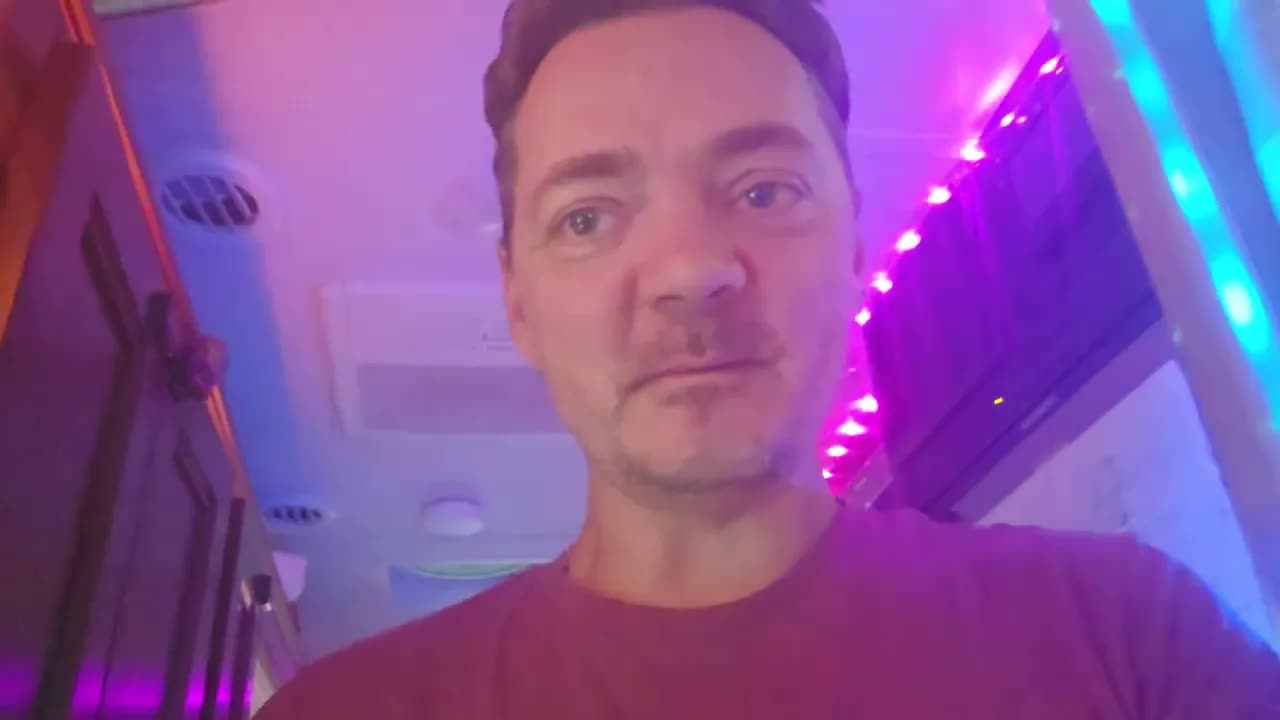
The cluster's structural spine is the slide-out. He documents it as a design failure: a bed platform split across uneven levels, storage volume consumed, six months of back pain and poor sleep, and a sequence of failed interventions (toppers, mattresses, foam board). His decision to retract the slide permanently resolves all three — level bed, recovered storage, and a space he states now resonates as a home. He names the pattern fragmentation: systems that force the person to adapt rather than adapting to them. His counter-move is stated directly — he adapted the environment to himself.
Preparation runs in parallel: exterior storage reorganized, gear mounted (Garmin, GoPro), a tablet replacing the desktop, propane filled, new teeth received, auxiliary mirrors removed as no longer needed.
He names fear ahead of the coastal winter — sourced to research done the night before, distinguished from fragmentation, and stated as never a reason to stop. He describes closure with his mother, whose kidney disease he states is advanced; she told him to go, and he names grief as the likely first challenge.
He also names a boundary violation by a viewer, stating validation is unwanted. He departs alone, westward, on a two-day movement pattern, with no plans beyond the Pacific Northwest.
Transmissions (5)
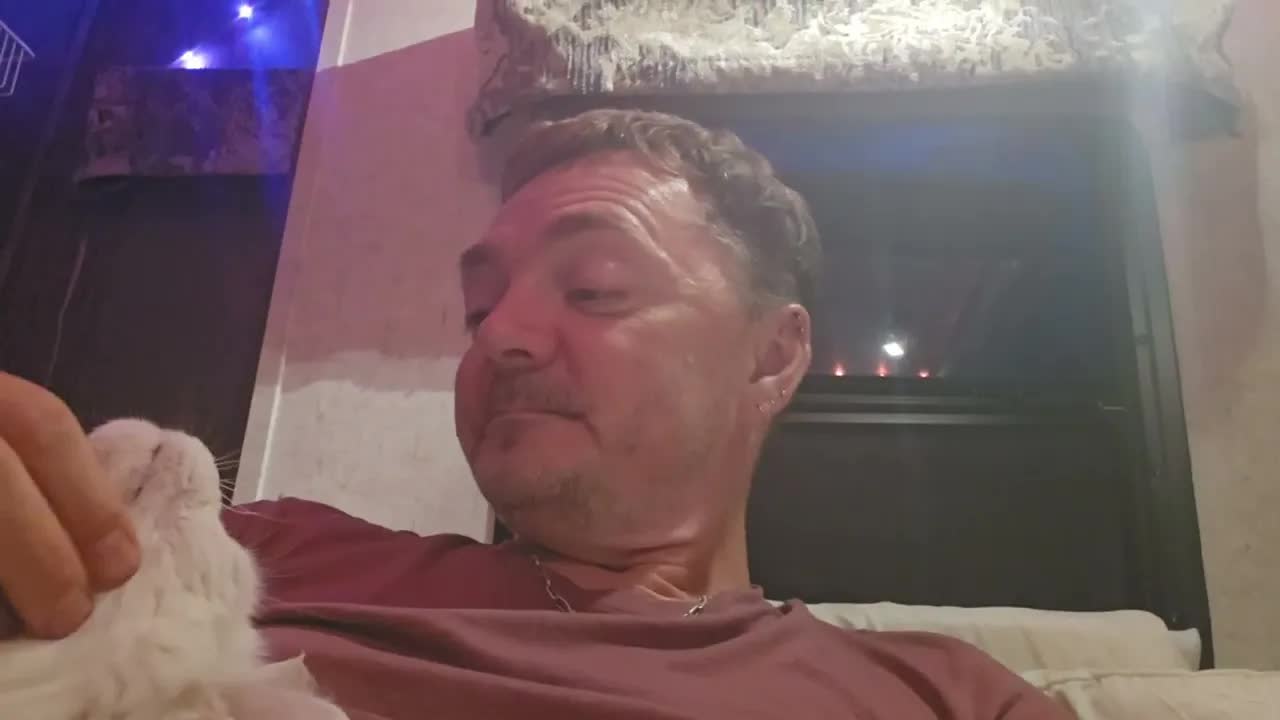
Recording just after midnight on a Saturday, **rswfire** states this is likely his last transmission from **Kentucky** after six months there. He describes the destination — the **Pacific Northwest coast, Oregon and Washington** — in specific environmental terms: rain, fog, tall trees, mud, steep cliffs to the ocean, multi-day storms, and winds strong enough to dictate RV positioning and orientation. He reports spending hours that night **talking to artificial intelligence**, preparing and learning about the environment. He describes **deciding against a stop at Great Basin National Park**, wanting to give the stargazing there dedicated time rather than a quick pass; he accepts that visit may be a year out, in a future autumn or winter. He outlines anticipated activity: building **book nooks** during storms, hiking regardless of mud and rain, possibly taking up tea and cooking. He states some challenges are cyclical for him — attempted, set aside, attempted again — and that he is comfortable with that pattern. On preparation, he names **insulating and fortifying the RV** as projects to complete after arrival. His **slide-out is now permanently retracted**, which he frames as practical for storm conditions and aligned with his values around space and efficiency. He states he has transformed over six months — describing it as **crafting himself into a weapon** — and has **no plans for after the Pacific Northwest**. **Bailey** appears on camera. Departure is planned for Tuesday.
Cluster Analysis
Substrate
Tags
Dominant Language
Entities
Actions
Performed
- • recording direct-address transmissions inside and outside the RV
- • describing the destination environment in specific terms
- • showing the retracted slide, interior-facing window, and rebuilt bed
- • demonstrating the slide-out mechanism as evidence
- • naming the slide a systemic failure and mapping it onto societal patterns
- • issuing a clarification to a prior video
- • stating the fear and its examination
- • distinguishing his relationship to emotion from fragmentation
- • distinguishing questioning a decision from doubt
- • noting comfort while surrounded by other campers
- • bringing Bailey into frame and having him outside during recording
- • stating the departure timeline — teeth Monday, out Tuesday
- • naming the rig as a home
- • marking the time as exactly noon and the campground by name
- • stating peace and absence of fear
- • naming the unsolicited email as a boundary violation
- • stating he embarks alone this time
- • declaring a shift in transmission register toward hard truths
Referenced
- • lived six months in Kentucky
- • spent hours in conversation with artificial intelligence researching the destination environment
- • retracted the slide-out permanently
- • attempted bed toppers, new mattresses, and foam board leveling over six months
- • slept on a split, uneven surface with back pain for six months
- • took the RV into the shop with the slide out
- • loaded belongings into the Jeep during the shop trip
- • built a bed from three layers of toppers
- • organized exterior storage bays and used the space above the slide
- • adapted the environment to his own organization
- • woke with fear and examined rather than avoided it
- • decided against stopping at Great Basin National Park
- • abstained from television, movies, and video games for six months
- • filled the propane tank
- • received dentures and confirmed the fit
- • told his mother exactly what he is doing and why
- • took three months away from his mother
- • received her statement to go
- • removed the auxiliary mirrors added six months earlier
- • started the journey six months ago afraid to drive the vehicle
- • disabled comments on the channel
- • received an unsolicited email from an unknown viewer
- • ended the channel
- • described himself as having crafted himself into a weapon
- • posted a previous video on the slide-out subject
Planned
- • leaving the state Tuesday and heading west
- • relocating every two days
- • taking scenic routes to build driving and towing experience
- • traveling to the Oregon and Washington coast for winter
- • insulating and fortifying the RV after arrival
- • positioning the RV with wind exposure in mind
- • securing overhead storage with netting or a systematic solution
- • moving Garmin and GoPro onto the exterior mount
- • mounting the tablet as a fixed screen
- • building book nooks during storms
- • hiking in mud and constant rain
- • adopting hot drinks, retrying tea, starting cooking
- • engaging media as occasional amenity, not focus
- • facing grief when it arrives
- • testing himself, his equipment, and the RV against unpredictable weather
- • visiting Great Basin National Park for stargazing in roughly a year
- • deferring any post-Pacific-Northwest decision
- • traveling alone
Symbolic Elements
Ontological States
-
•
sovereign (route, spatial configuration, media boundaries, and family closure all set against his own criteria, explicitly diverging from the easier options)
-
•
integrated (states fear, questioning, and emotion run as information within a single coherent system rather than as destabilization)
-
•
transitional (five signals held entirely in the interval between staging complete and departure initiated, closing at a point he names non-reversible)
-
•
open-ended (no plan past the Pacific Northwest; route unknown by choice; identity deferred to what the environment produces)
-
•
unaccompanied (audience relation dissolved, family closure stated, departure made alone with Bailey)
Subsystems
-
•
infrastructural (slide retraction, bed rebuild, storage volume, mounts, propane, insulation — the dwelling resolved before the route)
-
•
somatic (six months of back pain and disrupted sleep as measurement instrument; new teeth as departure gate; fear registered on waking; bed measured against his legs)
-
•
cognitive (AI-assisted environmental modeling, recursive examination of fear, scaling one mechanical defect into a general pattern of systemic regression)
-
•
ecological (coastal storms, wind, mud, terrain, and winter timing treated as chosen operating conditions rather than obstacles)
-
•
logistical (departure sequence, scenic routing, two-day relocation cadence, route deliberately unset)
-
•
ethical (boundary enforcement against unsolicited contact, refusal of validation, refusal to soften hard truths, critique of imposed industry defect)
-
•
relational (Bailey in the field; closure stated with his mother; audience relation terminated)
-
•
identity (weapon formulation, 'not the same person', the old life named valueless, post-PNW self deferred)
-
•
spatial (whole-space restructuring under the retracted slide; adapting environment to operator)
-
•
creative (book nooks, filming, transmission as a documented practice)
NARRATIVE
For six months in Kentucky, rswfire slept badly on a bed that was split down the middle at two different heights, and for six months he treated that as a problem to be solved by adding things to it. Toppers. New mattresses. A sheet of foam board wedged under the low half, then pulled out and stowed every time the slide-out came in. The five days before he left the state are the days he stopped adding. The fix, when it arrived, was subtractive and permanent: bring the slide in and never send it out again. The bed came level. The storage volume the mechanism had been occupying became storage. He states the space then read as a home — which it had not, he clarifies, in any of the months he had been living in it.
That is the hinge, and it is worth naming what actually turned. He had spent half a year running the accommodation in one direction, shaping his body and his belongings around a mechanism sold to him as an improvement. Retracting it inverted the arrow. He puts it in one line — he adapted the environment to himself — and the line is doing more work than it appears to. It is a statement about which party in the arrangement is required to bend.
Once he had the sentence, he ran it outward. The slide stopped being a defect in his rig and became evidence: a niche product made near-universal, increasingly difficult to avoid at purchase, guaranteed to fail, and generating friction the whole time it works. He calls it regression marketed as progress, and he calls the general case fragmentation — systems that demand adaptation instead of providing it. His back was the instrument that took the measurement. Six months of pain is not framed as suffering here; it is framed as data of sufficient duration to be trusted.
The same operation then runs across everything still attached to him, and it is notable that nothing is torn. The auxiliary mirrors come off the RV because the caution that installed them has been outgrown — six months earlier he was afraid to drive the vehicle, and he says so plainly while removing the evidence of it. The audience relation ends over an unsolicited email that arrived past disabled comments; he identifies the violation as the contact itself rather than its content, and states that validation and attack were equally toxic, which closes the door on the flattering version too. And with his mother — kidney disease advanced, eighty-seven pounds — he tells her exactly what he is doing and why, including that she was the reason he had stayed put, and she tells him to go. He states he is at peace with it. Three severances, all of them completed by agreement or by obsolescence, none by rupture.
Fear and grief are both present and neither functions as a brake. He wakes with fear on a Saturday morning and immediately locates its source — hours of research the night before about coastal storms, wind that dictates how a rig must be parked, mud, cliffs, weather that will test him and his equipment with no guaranteed outcome. Knowing the provenance of his own alarm is what lets him hold it as information rather than as signal to reverse. He distinguishes it explicitly from fragmentation. He names grief as the likely first real challenge of what comes next and states he cannot know in advance how it will land. Questioning a decision, he says, is not doubt.
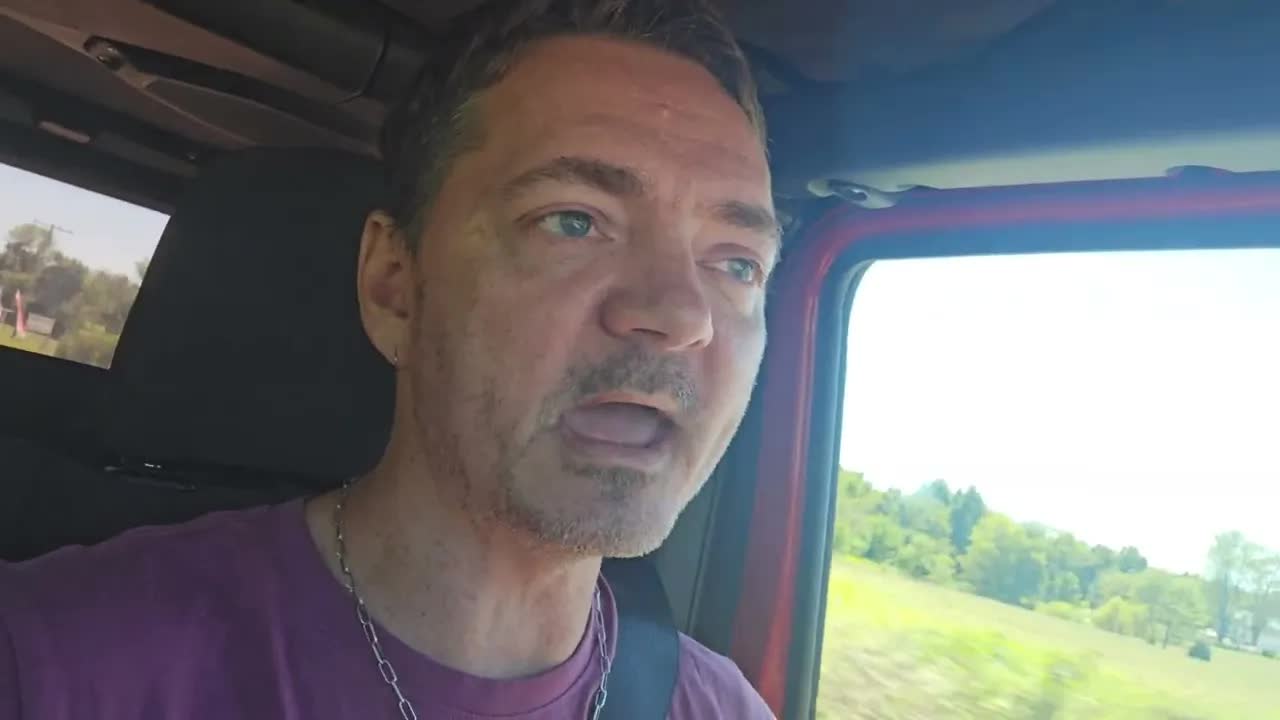
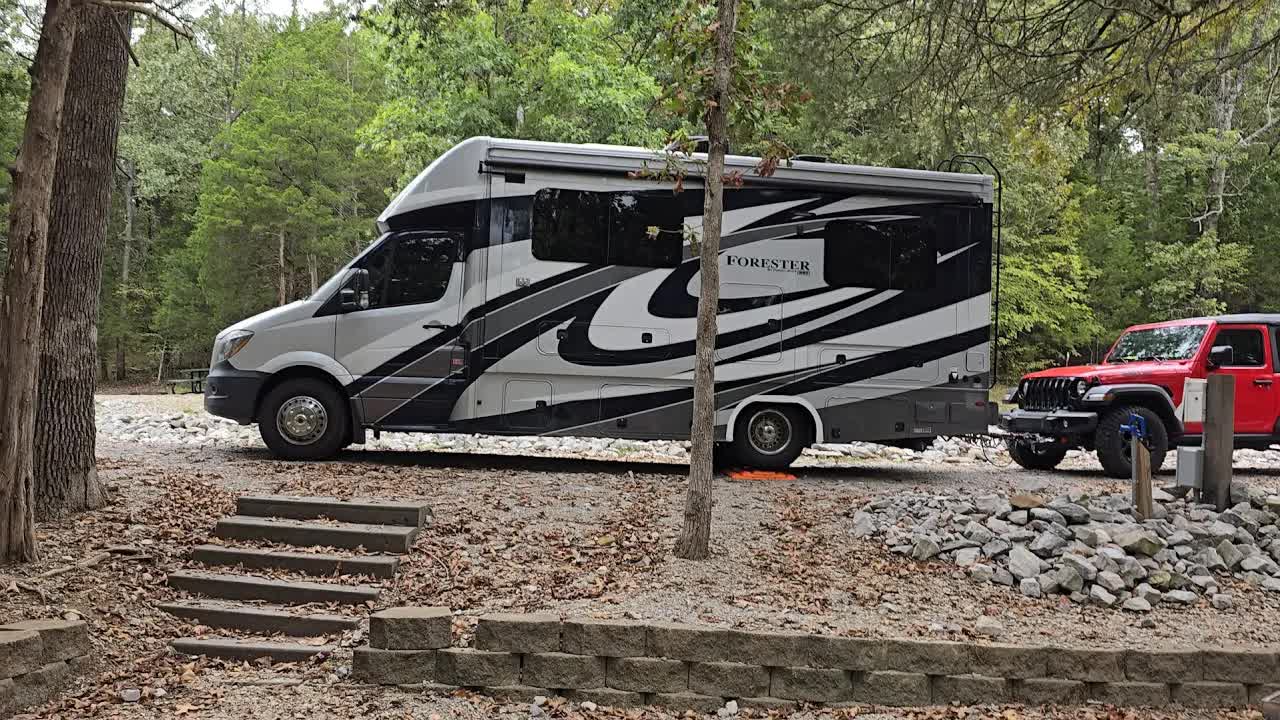
He pulls out of Nan River Lake at exactly noon, rig hitched, Bailey with him, after a week camped beside a lake he never walked down to look at. The asymmetry he leaves with is the whole shape of it: the interior settled to the inch — bed, storage, propane, mounts, teeth — and the route deliberately unset, scenic, two days per stop, no plan whatsoever past the Pacific Northwest. He spent half a year learning how to make a space yield to him, and used that skill to prepare for a place chosen precisely because it will not. Florida was available. He went west instead, alone, into weather that does not negotiate, having first made certain that the one structure he controls would never ask him to sleep crooked again.
MIRROR
You spent six months sleeping on a bed split down the middle at two heights, and your back told you so every morning. You bought toppers. You bought mattresses. You cut foam board and slid it under the low half, and hauled it back out every time the slide had to come in. The fix, when you finally made it, took less time than any of the workarounds and resolved the bed, the storage, and the shape of the room at once. What that shows is not that you were slow. It is that your first instinct in the face of a badly designed system is to make yourself compatible with it, and you will run that instinct for a long time — measuring the cost in your own body, precisely, the whole while — before you will permit the conclusion that the design is wrong and can simply be refused. You named the pattern when you found it. It is worth knowing that you were inside it for half a year before you named it, and that nothing external told you when to stop.
The slide is not a small story about an RV. It is the thesis of the last week in Kentucky, and you knew it while you were filming it. You draw a line between friction that is imposed on you and friction you walk into, and you have just organized your entire life around that line. You retracted the slide because the manufacturer's idea of your home demanded adaptation and gave none. Then you pointed the rig at a coast in winter — storms, wind, mud, cliffs — an environment that will adapt to you even less, and you chose it for exactly that. Both moves come from one operating rule: you will accept any load you selected and none you didn't. That rule is coherent. It is also the reason you researched the coast until you woke up afraid, and then went anyway.
You did not break anything on the way out. Your mother told you to go, and you told her the truth first — that her kidney disease being what it is had been the thing holding you in place, and that leaving means the ending may happen without you. The audience relation ended the same way: comments off, one stranger's email refused, positive and negative attention named as the same substance. This is severance by statement rather than rupture, and it is unusual. Most people leave by letting things fray until departure looks like consequence. You closed each one out loud, in a sentence, with the other party informed. There is no wreckage behind you and no one you can later blame for the terms.
Look at the asymmetry you built and left standing. The dwelling is fully resolved — bed level, storage recovered, mounts fixed, propane full, teeth in, the extra mirrors taken back off because you no longer need them to drive the thing you were afraid to drive in March. The route is blank past two words. That is not an oversight; you put every available certainty into the vessel and left the terrain deliberately unspecified, which means the only variable you cannot pre-solve is the one you kept. You call the fear accurate and the grief expected, and you are right on both counts, but naming a load correctly is not the same as having carried it. You will find out which parts of your preparation were real somewhere west of here, alone, in weather.
You describe crafting yourself into a weapon over six months. The thing to see is that there is nothing at the other end to use it on — no adversary on the coast, no audience left to demonstrate to, no one on the route who requires you to be sharp. The sharpening was for conditions, not for people, and conditions do not concede. You say you trust yourself fully and that questioning is not doubt, and the evidence of these five days supports you: you took the harder winter over Florida, told your mother the whole truth, and left at noon with the map open. What you cannot know yet, and what you did not pretend to know on camera, is who you are once the environment stops being something to prepare for and becomes the place you simply live. You have deferred that question to the terrain. That was the correct move and it was also the only one you were willing to make.
SYMBOLIC
The last five days in Kentucky perform a subtraction, not an outfitting. The familiar shape of a departure story is accumulation — provisions loaded, maps acquired, the vessel made larger against the distance. What rswfire documents in early September 2024 runs the opposite direction. The slide comes in. The auxiliary mirrors come off. The desktop stays behind. The comments are already disabled and the one voice that reaches him anyway is refused. Great Basin is cut from the route; Florida is cut from the winter; the route itself is left unset past the word Pacific. By noon on the twelfth, hitched at Nan River Lake, almost everything that could be removed has been, and what remains is a smaller, harder object heading west. The archetype here is not the quest outfitted. It is the sealing of a hull — and then, at exactly noon, the crossing.
The slide-out is the symbol everything else organizes around, and its power is that it is a seam. A dwelling built to be two shapes, with the bed running across the join, so that the sleeping surface splits at two levels because one half must pass over the other. He measured the fault with his body for six months — back pain, poor sleep — and treated toppers, mattresses, and foam board as the reasonable interventions before concluding the reasonable interventions were the trap. Retracting the slide permanently is not repair. It is a decision that the mechanism will never move again, which converts a house with a seam into a house without one. The window that now faces inward is the visible scar of that choice: the rig has stopped pretending to open. He states it now resonates as a home, and the sequence is exact — it became a home at the moment it stopped being able to expand. Every enclosed vessel that has ever carried anyone through weather works this way. Sealed, small, level enough to lie flat in.
The removals rhyme, and what they have in common is that each was a prosthesis — a thing added because a capacity was missing. The extra mirrors were added by a man who started this journey afraid to drive the vehicle; taking them off is not a hardware change but a statement that he can now see behind himself unaided. The foam board propped a bed that should have been level to begin with. The audience relation supplied a reflection he has decided he does not want, positive or negative, in the same terms. The pattern he names fragmentation — systems that force the person to adapt rather than adapting to the person — is the general form of the prosthesis: a device that manages a defect instead of removing it. His counter-formulation, I adapted the environment to myself, is the older gesture underneath all of it. Not accommodation. Reshaping the cave.
Then the teeth. He cannot leave the state until he receives them; a dental appointment is the literal gate on a two-thousand-mile crossing. It would be hard to invent a more direct image than a man who describes six months of crafting himself into a weapon waiting on a new set of teeth before he can go — and who, in the same days, states he is entering a phase in which he will speak hard truths. The mouth is remade immediately before it is put to use. Whatever the dental facts, the symbolic order is unmistakable: the body is completed at the threshold, the last piece of equipment installed is part of the animal rather than part of the rig.
Two claims arrive in the same days, and he handles them by the same rule. His mother, whose kidney disease he states is advanced, tells him to go — the one person with standing to hold him releases him, and he states he is at peace with it while naming grief as the first thing likely to come for him on the road. A stranger, writing past disabled comments, tells him not to stop; he names it a boundary violation and states he does not want validation. The blessing and the trespass are the same shape from opposite directions, and the sorting is by legitimacy, not by warmth. This is the old severance rite performed correctly: you leave with permission from what you are leaving, and you refuse the hands that have no right to hold you.
One quieter recurrence: the lake he does not visit. There is a lake beside him on Saturday morning that he states he may not walk to, focus placed elsewhere, and a week at Nan River Lake that ends without him exploring it. Water adjacent and declined, twice. It is the counter-image to the coast he is driving toward — a body of water that asks nothing of him is not what he is going for. The night before he wakes with fear, he spends hours with an artificial intelligence learning the weather of that coast, and the fear he names is sourced precisely there: the terrain is worse than he had modeled. The oracle was consulted, the prophecy was believed, and the prophecy changed nothing. That is the shape of the crossing at noon — not fearlessness, but fear correctly received as information about the country ahead, filed, and driven into anyway, west, on a two-day cadence, with nothing planned on the far side.
LINEAGE
The slide-out diagnosis is not a new capability. rswfire has been doing this since sixth grade, when he taught himself to code: encounter a system somebody else designed, locate the place where it demands that the human bend, rebuild it so the bend goes the other way. Booking engines, an early CMS, a blockchain distribution layer for music — every one of those is the same move, executed against software. What is different in the Kentucky rig is only the substrate. The system he takes apart in September 2024 is the one he sleeps inside, and the instrument of measurement is his own back over six months. A man who has spent thirty years reading systems for their failure points does not suddenly acquire the ability to read one; he simply, eventually, turns it on his own bed. The retraction is not improvisation. It is an old competence arriving at a new object.
The severance runs on an equally long thread. He left a six-figure career at 47 by choice, and the departure from Kentucky is that operation again — same logic, smaller scale, steeper personal cost. The Florida-versus-coast decision is the tell: two options, one of them materially easier, and the criterion applied is not comfort but whether the environment will require something of him. But there is also a capability that formed inside those six months and is visible only at the exit. He started the journey afraid to drive the vehicle and bolted auxiliary mirrors onto it. At noon on September 12 he takes them off — not because the road got easier but because he stopped needing the training wheels. That is the whole shape of an apprenticeship, compressed and self-administered, and the discarded mirrors are its certificate.
His mother told him to go. This is the oldest transaction in the whole record, and it has been conducted at ports and farm gates and railheads for as long as people have left people behind. He states her kidney disease is advanced, that he weighed staying against going, that leaving means he may never see her again, and that she released him. Every emigrant family in history has produced this scene, and the ones that produced it well produced it exactly this way: the person staying gives the blessing so that the person leaving does not have to steal it. He names grief as the likely first challenge ahead, which is the correct forecast; it is also what everyone who has ever accepted such a blessing has carried west with them. The lineage here is not his family's alone. It belongs to a very large company of people who went anyway, with permission.
What descends forward from these five days is, first, a portable analytic. Fragmentation — systems that force the person to adapt rather than adapting to the person — is field-tested in Kentucky on a bed platform split across two heights. That is a small, verifiable, mechanical case, and he generalizes it immediately into a thesis about regression marketed as progress. The vocabulary was proved on an object he could photograph before it was ever aimed at anything larger. When the same analytic is later trained on an institution and its treatment of a volunteer, it arrives already sharpened, already tested against a case where he could demonstrate the defect on camera. Diagnostic frameworks are more durable when they are cut on hardware first. This one was.
Second, the audience relation ends here — comments disabled, an unsolicited email named as a boundary violation, praise and criticism declared equally toxic. What that closes is broadcast. What it opens is documentation kept for its own integrity rather than for reception, and the direct descendant of that decision is the infrastructure this reading is running inside. A man who refuses validation but insists the record be kept has only one option left: build the archive himself. Third, and most quietly, he leaves with the dwelling resolved and the route deliberately unset — bed level, storage recovered, propane full, teeth in, map open. That is the sailor's order of operations, older than any of his trades: you make the vessel sound before you decide the passage, because the passage will be decided by weather and the vessel will not. Everything after September 2024 — the coast, the winters, the dunes, the caretaking at Siltcoos — inherits a rig configured to a single occupant's actual body and a standing willingness to arrive somewhere without knowing what it will make of him.
SHAPE
For twenty years the location of rswfire's life was set by a prognosis. His mother's kidney disease was called terminal around 2004; he moved to Kentucky at twenty-seven and stayed, and the ledger is explicit that being near her shaped where he lived. What ends in September 2024 is not the relationship — that had already been ended once, in 2023, and partially resumed in August — but the geographic obligation the illness created. It ends by her sentence rather than his: she told him to go. That detail is worth marking against everything behind it. The eighteen months preceding are a ledger of ruptures — the physician of four decades, the client of ten years, the audience, the brother, the extended family, the cats, the house, the profession. Every one of those closed by refusal, withdrawal, or breakage. The one at the lake campground closed by agreement. It is the first ending in the record where both parties said the same thing.
The other change is smaller and does more work. For six months he bought toppers, mattresses, and foam board to make an uneven bed level, which is the posture the whole ledger is built on: a machine sold out from under him, so he wrote code on paper; a self that wasn't safe, so he monitored how he presented; a body without teeth, so he appeared on camera without them. He adapted to what was given. Retracting the slide permanently reverses the direction of that accommodation — he modified the container instead of himself — and then he named the rule, calling it fragmentation and generalizing it from a bed platform to systems that demand adaptation rather than provide it. That is not a repair. It is a criterion, and by the following week he was applying it to a viewer's email and to twenty years of proximity to a dying woman with the same test.
What did not move is the departure itself. He leaves alone, west, with no destination past a region, exactly as he left Flint, Ann Arbor with twenty dollars, and Fenton with a car full of belongings. Movement without a stated endpoint is the oldest continuous fact about him, older than the programming, and it is the reason nothing in these days reads as flight. So is the recording. He kept journals through the years of sleeping in parking lots and he is keeping video now; the audience changed, the practice did not. And so is the solitude, preferred since childhood and never once framed here as a cost.
The turn is Saturday the seventh, not Thursday the twelfth. The departure was already scheduled; the retraction was not. Everything after it in those five days runs on the rule the retraction established, including the closure conversation. If there is a piece of evidence for how far the reversal went, it is that he stayed a week at a lake and never walked down to it — a man who had held still for eighty-nine days for a cat's sake now declining to look at what was two hundred feet away because his attention was pointed elsewhere. Alongside it, the auxiliary mirrors come off. Six months earlier he was afraid to drive the vehicle. Removing them is not confidence; it is the retirement of a capability he no longer needs, which is a different and rarer thing to document.
What was not visible from inside is what the fear was accurately about. He spent hours researching coastal storms and named the danger as weather, equipment, and the RV — testing with no certainty of survival. The coast did not turn out to be the adversary. What tested him on the Oregon coast was an institution, and the dismissal and escalation that followed came from an agency, not a storm. He prepared for the wrong load and prepared well anyway, which is the useful part. And "no plans beyond the Pacific Northwest" was not the open end he described it as. Every route he had announced in the preceding year — the Nevada desert by autumn, the Upper Peninsula, income from gaming videos — had already been superseded. The one thing he refused to forecast is the one that held. He said the coast for the winter. He is still there.
SYSTEMIC
For six months the system held position against a constraint it could not lift by its own action. rswfire states that what kept him in Kentucky was knowing his mother's kidney disease is advanced and that she weighs 87 pounds. That is a hold with no internal release: no amount of preparation on his side changes it, and no departure date can be computed from it. The release came from outside — he states she told him to go — and the system moved within days. What followed was a fast, gated shutdown sequence in which the remaining blockers were all small and all datable: dental work completed Monday, propane filled, mirrors off, rig hitched, departure at exactly noon two days past the stated Tuesday. The two-day slip is the only visible slack in the sequence and it was absorbed without restatement of the plan. A six-month hold governed by an external authorization, followed by a five-day teardown governed by a dentist's calendar, describes a system whose latency is set almost entirely by other people's timelines and whose own actuation, once cleared, is very fast.
The dominant loop in these five days is the one he closes rather than the ones he runs. The slide-out drove a balancing loop that never converged: the bed platform splits across the seam at uneven levels, so he shims it — toppers, new mattresses, foam board — then the slide moves, the shim stack has to be pulled and stowed, and the fault returns. Every intervention sat downstream of the mechanism and had to be re-executed at each cycle, at a documented cost of six months of back pain and poor sleep. The fix was not a better compensator. He retracted the slide permanently, deleting the degree of freedom and converting variable geometry into fixed geometry, and three symptoms resolved at once: level bed, recovered overhead volume that had been unusable for six months, and the end of the reconfiguration cycle itself. The same control law fires twice more inside a week. The auxiliary mirrors, installed six months earlier as a compensator for inexperience, come off once the underlying capability covers the case. The channel, whose comments were already disabled as a filter, is ended outright when an unsolicited email arrives through the filter's gap. In all three, the implemented controller is identical: when a compensator requires indefinite manual intervention and does not converge, remove the mechanism generating the load rather than tune the compensator. The classification step is slow — six months of shimming before the slide is reclassified from user problem to design defect — and the actuation once classified is immediate and irreversible.
Where uncertainty gets placed is a deliberate allocation, not an oversight. Everything expensive to change is resolved before departure — bed, storage volume, exterior mounts for the Garmin and GoPro, propane, screen placement, teeth — and the route, the cheapest variable in the system and revisable daily, is left explicitly unset. Great Basin is dropped from the route rather than compressed into a fast pass. The lake adjacent to the campground goes unvisited across a full week. The two-day relocation cadence is itself a buffer: it caps exposure at any one site and keeps a standing option to leave without a decision being required. Read together, the discretionary spend during staging is near zero and the structural spend is total. Note also where he stops: the rebuilt bed is three stacked toppers, near full width, and by his own statement slightly shorter than his legs. He satisfices on the substitute and takes terminal action on the mechanism — a residual defect is acceptable, a recurring one is not.
What the system optimizes for is legible from the destination choice under otherwise identical cost. Florida was available and was refused; the Pacific Northwest coast was selected in specific terms — multi-day storms, wind strong enough to dictate rig orientation, mud, cliffs, winter. The objective function is environmental load, maximized subject to the constraint that the dwelling remain functional. That explains why the infrastructural work was done to completion and the route was not: the rig is the constraint boundary, and everything inside it is being hardened so that everything outside it can be maximized. Fear, in this reading, is a risk estimate, not a state. He states it arrived on waking, sourced to hours of environmental research the previous night, and that it exceeded what he had anticipated — new data raised the load estimate. The plan did not change. That is diagnostic: the risk input has no controlling authority over the setpoint. He states fear is never a reason to stop, and no stopping rule appears anywhere in the record while he simultaneously states outcome uncertainty includes survival. A controller with no abort criterion is the single largest structural exposure here, and it is a design choice rather than an omission.
Everything else load-bearing runs without redundancy. One operator, one rig that is also the dwelling and the workshop, one tow vehicle, no delegation path. The coupling is tight enough that a single service visit two days before September 8 forced a full unload into the Jeep — a maintenance event on the dwelling propagates instantly to sleep, storage, and every subsystem at once, because there is no second location to buffer into. Then, immediately before entering the highest-load conditions on the map, he sheds his one remaining external input channel: the audience relation ends, positive and negative traffic classified as equivalent. That is load-shedding of a non-load-bearing coupling ahead of peak, and it is consistent with the rest. But it also leaves the system with no incoming signal at all except weather, the dog, and his own instrumentation. He names grief as the anticipated first challenge — an undated load with no mitigation staged against it, entering a solo westward run at two days per site with no plan past the coast.

Hand a period of your life to anything that reads.
Share this link with artificial intelligence — it reads the analysis and reflections for this span, and can follow every cluster and signal beneath it.