Transit · Sep 21 – Sep 26 2024
Six days of westward travel — Kansas through Nebraska into Wyoming — during which rswfire builds out the RV as an integrated living system while stating his terms for being seen.
The body is treated as infrastructure alongside the rig. He removes his dental prosthetic on camera and states his worth is not set by appearance; he disinfects cartilage piercings acquired in Kentucky each morning and holds off on hoops until the soreness clears. He links the earrings to sailors and pirates who kept what mattered on the body rather than in possession.
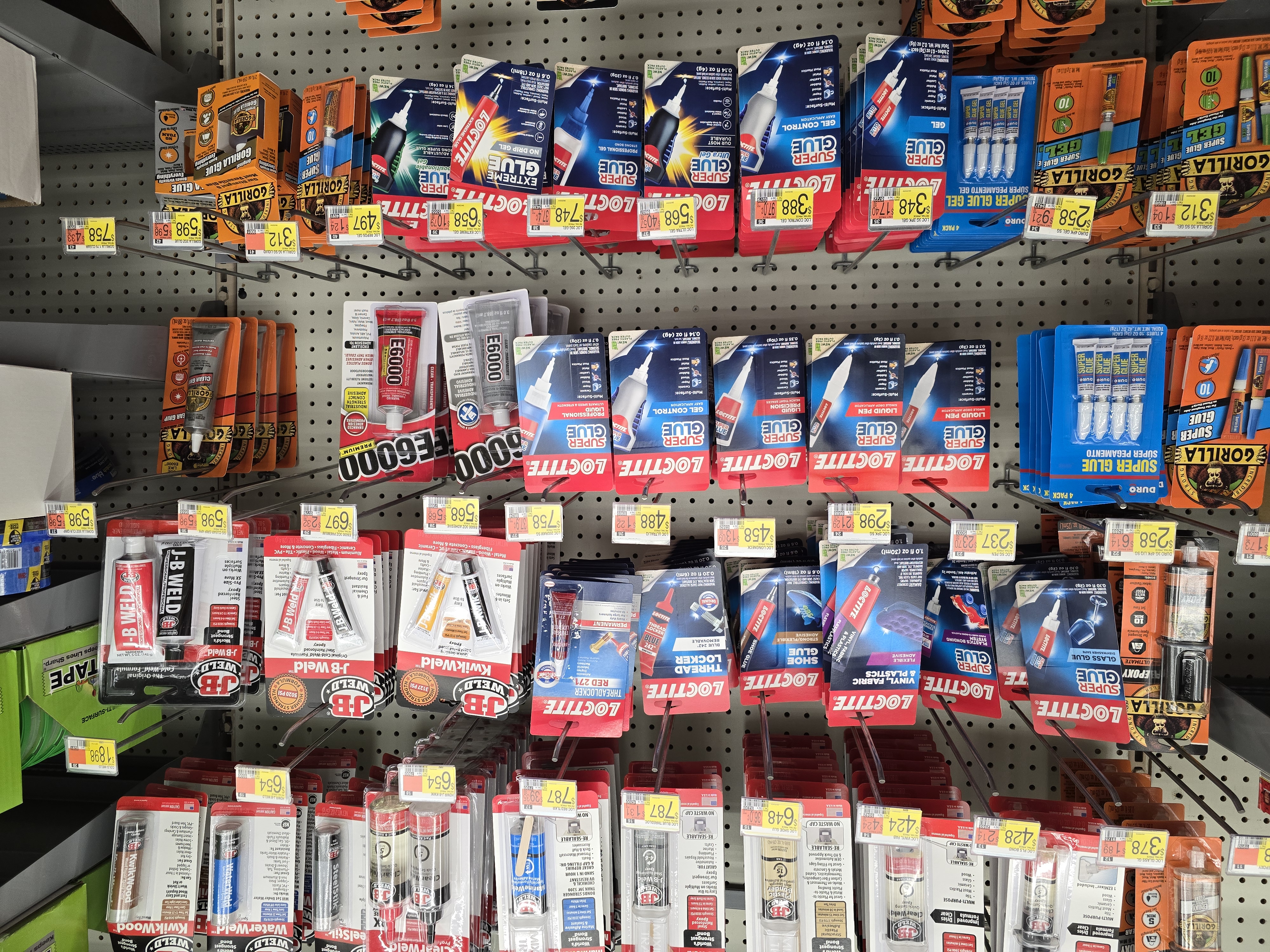
The mechanical thread runs continuously: propane tanks and adapters, a replacement Mr. Buddy heater and grill, mirror and dash cam installs, adhesive repairs, tank emptying, batch-cooking to conserve fuel, cabinet organization at Chadron State Park. He names his method as integration versus fragmentation, rejecting both minimalism and viewer advice — "go to Tractor Supply," "watch a YouTube video" — as shortcuts that bypass process. Comments stay disabled.
Crossing into Wyoming, he names Matthew Shepard — murdered when rswfire was 21, the same age — and states the aftermath, not the act, is what cost him faith in humanity. He states he would route around the state if avoidance were something he did, and drives through instead.
Bailey moves through nearly every frame. AI conversation recurs as a working consultation channel. The destination holds: roughly six months in the Pacific Northwest, October onward.
Transmissions (6)
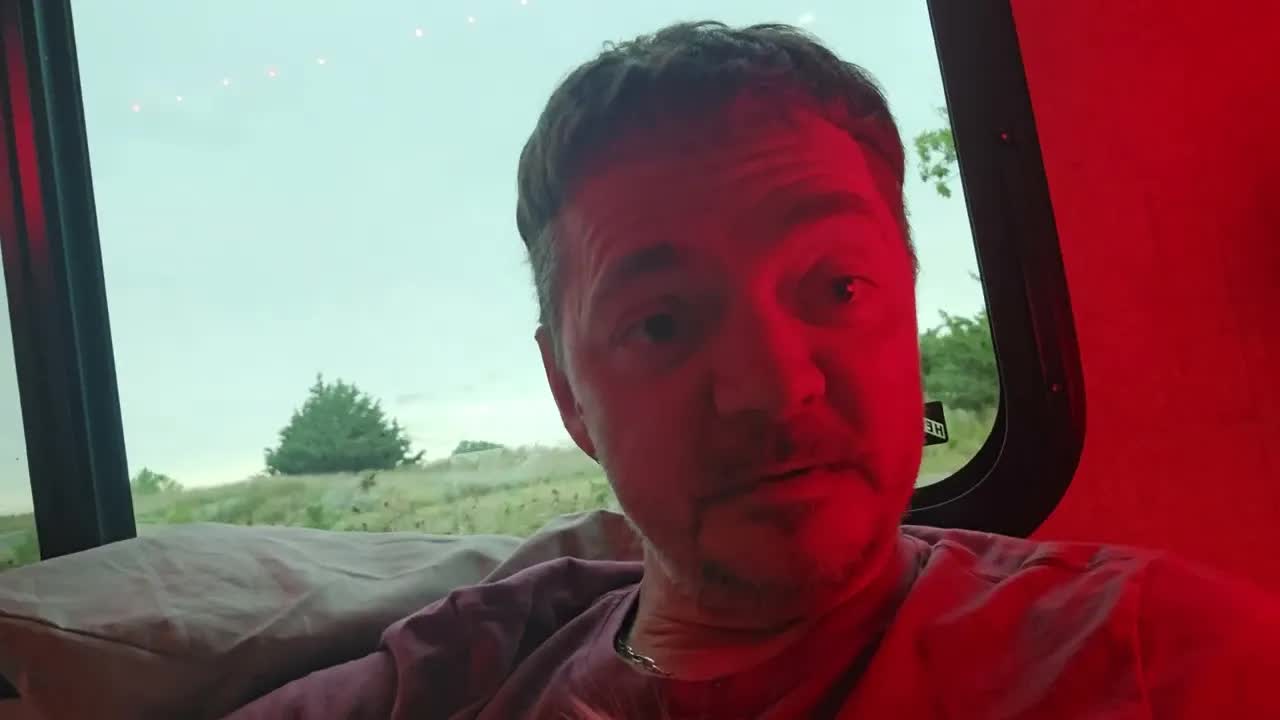
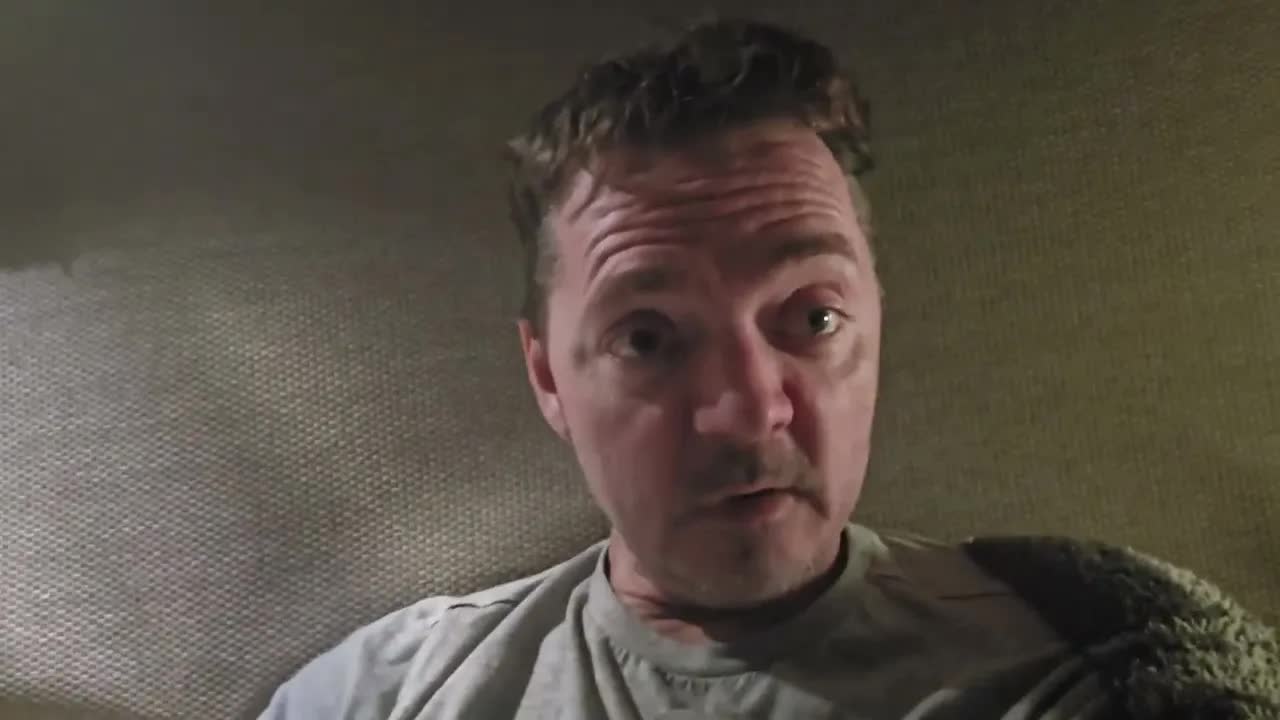
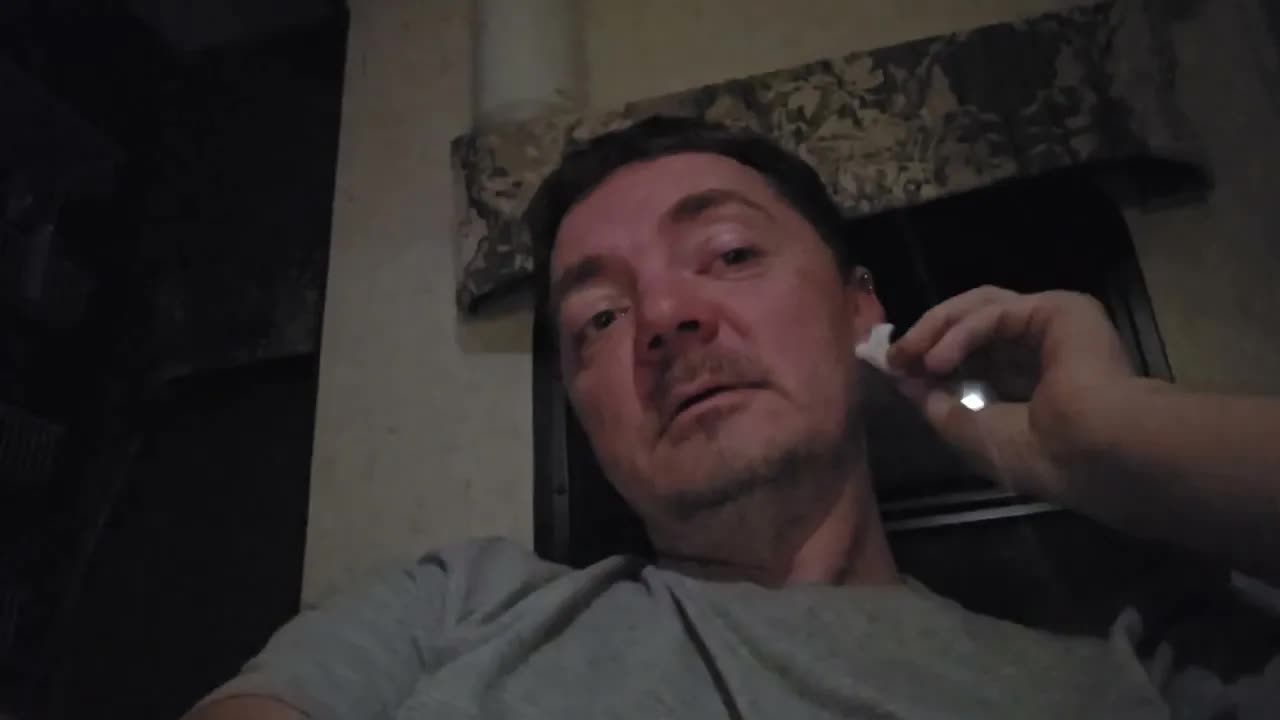
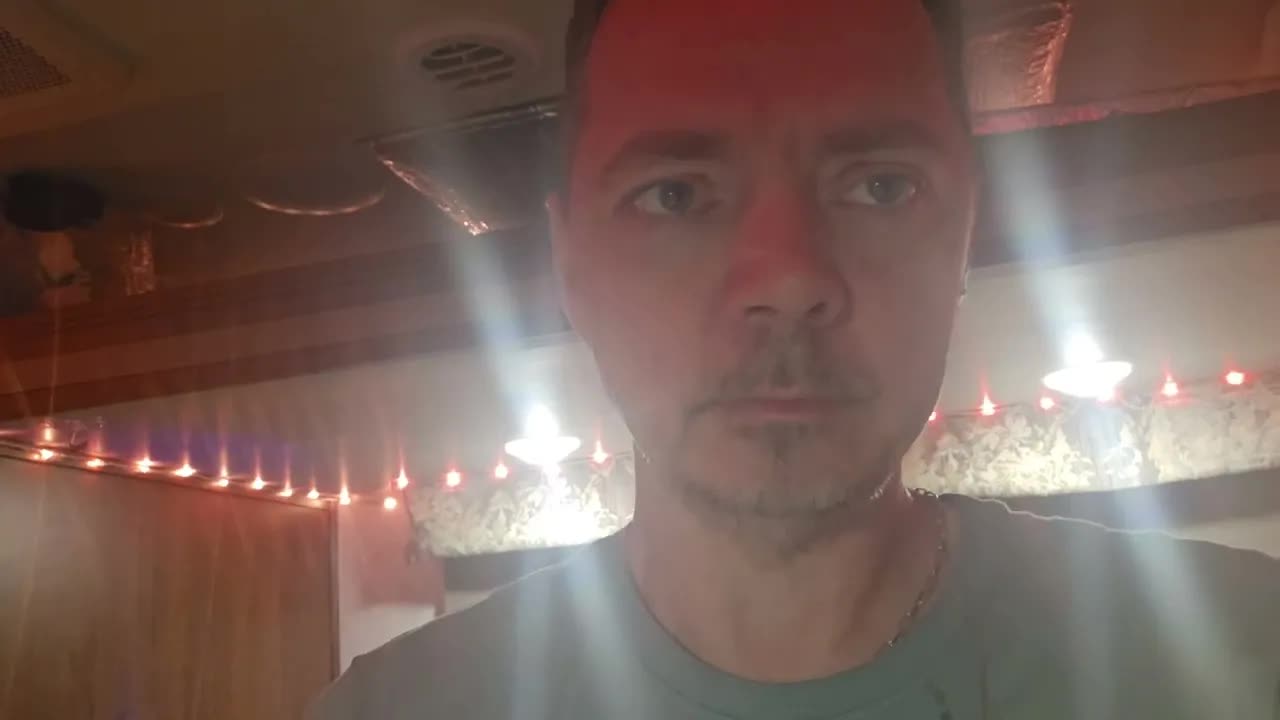
rswfire opens the transmission by **removing his dental prosthetic on camera**, noting it clips to the roof of his mouth over four implanted rods. He references the **six months he appeared on camera without teeth** and states his self-worth is not defined by his appearance, and that he remains willing to be seen without the prosthetic now that he has it. He adjusts the lighting, noting he **dimmed the bright lights on AI's suggestion** as a sleep experiment, and mentions a storm forecast that has not yet arrived. His cat **Bailey** moves through the frame repeatedly; he notes the cat's matted coat and that he does not brush her as often as he should. He states that **Mountain Dew destroyed his teeth**, and adds that the fuller truth includes not having cared for them well. He describes decades of working to stop drinking soda as an ongoing process, currently including Pepsi and flavored Dr Pepper, and frames the change as motivated internally rather than by outside opinion. He explains he **turned comments off** because viewers construct a picture of him that does not match who he is — "I am not mad at the painter, I'm mad at the painting." He tells viewers he does not judge them for having judged him. Closing updates: - Departing tomorrow for a stop near the **Kansas** state line - Route continues through **Nebraska**, possibly **Idaho**, then **Oregon** - Plans to **insulate the walls with foam board** plus a reflective-type layer - Intends to paint and **art journal on the interior walls** over time in the Pacific Northwest
Cluster Analysis
Substrate
Tags
Dominant Language
Entities
Actions
Performed
- • removing his dental prosthetic on camera and describing the four implanted rods
- • stating self-worth is not defined by appearance
- • declining to judge viewers for judging him
- • adjusting the red light and checking for the forecast storm
- • addressing and handling Bailey; noting her matted coat
- • reading the westward route from the wall map
- • disinfecting cartilage ear piercings and testing soreness by touch
- • correcting the meaning of 'motivating myself'
- • naming the river as the metaphor for how he moves
- • articulating the integration/fragmentation distinction
- • enumerating the unknowns he works through before a new task
- • addressing commenters directly and clarifying his tone
- • driving into Chadron on US 385 and running the resupply circuit
- • acquiring a 20 lb propane tank, adapter, hose, heater, and propane grill
- • rejecting minimalism as a form of fragmentation
- • tossing a rubber duck to a neighbor
- • applying adhesive to the leaking air compressor hose
- • inventorying cabinets and drawers; making coffee
- • noting device clock discrepancy at the state line
- • naming the Wyoming–Matthew Shepard association on record
- • stating he is gay and rarely discusses it on the channel
- • demonstrating the burner spark ignition and flame range
- • batch-cooking sausage, bacon, and eggs on camera
- • stating the refusal to bypass the state
- • addressing older viewers as constituent of the field and rejecting what it built
Referenced
- • appeared on camera without teeth for six months
- • disclosed missing teeth in his first video
- • turned off YouTube comments
- • gave the painter/painting analogy in a prior transmission
- • consumed Mountain Dew over decades; worked to stop drinking soda
- • bought paints and art journaling supplies years earlier
- • got cartilage piercings in Kentucky weeks prior
- • slept five or six hours after Marley kept him up past midnight
- • taped down the RV mirror; added mirrors that did not work out
- • installed a concave mirror and dash cam
- • took a month to first empty the tanks
- • took six months to complete the propane process
- • received comments telling him to go to Tractor Supply or watch a YouTube video
- • received a text from his father listing tank locations
- • scouted Tractor Supply locations at each campground move
- • gave away a Mr. Buddy heater and propane grill near a dumpster
- • watched someone take them within minutes
- • consulted AI about light and sleep, propane, cooking, tools, and battery charging
- • reviewed a prior transcript with AI
- • pointed out an abandoned house in an earlier recording
- • arrived at Chadron State Park late the previous night
- • was 21 when Matthew Shepard was murdered at the same age
- • states he lost faith in humanity in the aftermath
- • states he grew up internalizing projected homophobia
- • planned the route without consciously registering the Wyoming association
- • was startled by the burner spark ignition the previous day
Planned
- • departing for the next campground and continuing Kansas → Nebraska → Idaho → Oregon
- • driving from Nebraska into Wyoming and navigating what surfaces
- • insulating the RV walls with foam board and a reflective layer
- • painting and art journaling on the interior walls during Pacific Northwest storms
- • sourcing ceiling and floor insulation, possibly via Portland or Seattle
- • using propane for heat through the Pacific Northwest winter
- • cooking breakfast daily and batch-cooking to conserve propane
- • acquiring lids; making no-heat energy bars; retrying tea
- • repairing the water hose, door mats, loose step, and glass lid
- • running propane from outside through the satellite dish port
- • charging batteries from shore power and solar simultaneously
- • shedding duplicate dishes and unused induction gear
- • switching from studs to hoops once the piercings can be touched without feeling
- • reducing or ending soda consumption
- • brushing the cat more; taking Bailey outside on harness
- • spending roughly six months in the Pacific Northwest, October through March or April
- • continuing to scout locations and research before new tasks
Symbolic Elements
Ontological States
-
•
sovereign (definition, timeline, and terms of engagement held internally across every signal — teeth, process, minimalism, sexuality)
-
•
integrated (emotions, ethics, cognition, and procedure running in one continuous take, named explicitly as the operative distinction)
-
•
in transit / threshold-crossing (five days, four states, a pre-departure hold and a marked state line approached rather than routed around)
-
•
embodied (piercings, dentures, soreness as instrument, visibility on camera as structural rather than incidental)
-
•
continuity-holding (nothing lost; released objects re-enter the system, abandoned structures register as lives built)
Subsystems
-
•
infrastructural (the rig as the primary build: propane, heater, mirrors, dash cam, tanks, hoses, insulation, cabinets — each acquisition tested against the winter ahead)
-
•
somatic (dentures, cartilage soreness, short sleep, coffee, food, crying noted plainly — the body as both instrument and readiness gauge)
-
•
cognitive (recursive self-tracking, associative mapping of place to event, full-scope problem work before action, self-correction of his own partial accounts)
-
•
ethical (honesty stated as precondition; honoring others' processes; naming the causal chain from ambient atmosphere to specific violence)
-
•
relational (audience boundary set by disabled comments, direct address to viewers, cat care, the duck exchange with a neighbor)
-
•
logistical (multi-state routing, drive times, supply-town assessment, fallback cities, campground sequencing while towing)
-
•
linguistic (precision work on 'motivating myself', 'integration', 'minimalism' — redefining terms against common usage)
-
•
energetic/power (solar, battery bank, shore power, propane conservation as the winter strategy)
-
•
creative (paint and art journaling planned as self-authored surface on the interior walls)
-
•
identity (statement of being gay on record; refusal of the totalizing frame imposed on it)
NARRATIVE
Six days of driving west, Kansas to the Wyoming line, and the work being done in them is not travel. rswfire spends the drive settling a question of authorship — who gets to say what he is — and he settles it three times, in three materials, each one harder than the last.
He opens by taking his teeth out on camera. The prosthetic clips over four implanted rods; he removes it, holds it, and says that his worth is not set by what his face looks like without it. He had gone six months on camera without teeth before he had them, and he is telling the audience he has not become dependent on the improvement. This is also why the comments are off. He is not angry at the people painting him, he says — he is angry at the painting, which is a picture of someone he is not, made by people working from the outside. Shutting the comment field is not thin skin. It is refusing to let a portrait be assembled by committee while he is still the one living in the body.
The rig buildout is the same argument conducted in propane and adhesive. A mirror taped down against vibration, a concave mirror added, a dash cam installed after earlier attempts that failed. Tanks emptied — a month to learn, and he says he now feels satisfaction each time. Propane, six months of questions about overfill and exchange and safety, and then the viewers telling him to go to Tractor Supply, watch a YouTube video. His father texts him tank locations. Location, he notes, was never the problem. What he names here is the whole architecture: integration versus fragmentation. Emotions, ethics, thought, and action run as one coupled system, and advice that hands him an answer while skipping the process is not help — it is a request that he live in pieces. He will respect other people's processes, he says, and did not get that in return.
The body carries the same rule at closer range. He disinfects cartilage piercings from Kentucky each morning and holds off on hoops until he can touch them without feeling them — the soreness is the instrument telling him where he is, and he will not overrule it for the sake of the look. He links the earrings to sailors and pirates who wore their funeral money in their ears: what mattered was kept on the body rather than in a possession, so it could not be lost. That is the whole method stated in miniature. The teeth, the piercings, the refusal of the painting — all of it locates value inside the vessel that moves.
At Chadron he proves the other half of it. He buys a Mr. Buddy heater and a grill to replace ones he gave away months earlier beside a dumpster, and he does not narrate this as a mistake corrected. He had no storage then; the objects were resources to be redistributed rather than assets to hold. Now he has capacity and they re-enter the system. He rejects minimalism outright, calling it a form of fragmentation — the goal is not fewer things but a whole in which each object has earned its placement. He passes an abandoned house and reads it as evidence of a life built, not a life lost. Nothing leaves the system permanently. He tosses a rubber duck to a neighbor through the Jeep window.
Then the state line, and the principle stops being about propane. Wyoming, he says plainly, is Matthew Shepard — murdered when rswfire was twenty-one, the same age. What cost him faith in humanity was not the act but everything that came after it: the justifications, the homophobia, the fear that arrived with them. He would route around the state if avoidance were something he did. It isn't, so he drives in. He states he is gay, that he rarely discusses it on the channel, that the issue is not historical. Then he addresses the older viewers directly and tells them he hates what they built and rejects it, and that the fracture is theirs. The device clocks disagree at the crossing — three or four depending on which screen — and he cooks sausage and bacon ahead to conserve fuel while he says all of it. The heat is concentrated and it stays under procedural cover the entire time.
Six months in the Pacific Northwest, October through March or April. Bailey moves through nearly every frame, adapting well. What rswfire is really assembling on the way west is a shell strong enough to hold a winter, while stating — in every register available to him, teeth and cartilage and cabinet space and a state line — that the shell was never where he lived.
MIRROR
You are running one operation at every scale, and these six days make that impossible to miss. Taking the prosthetic out on camera, taping down a mirror that vibrates, waiting six months to understand propane, driving into Wyoming rather than around it — these are not a personal thread and a mechanical thread braided together. They are one procedure applied to whatever is in front of you. You named it on the fourth night as integration versus fragmentation, but the naming came after the fact. It was already how you were working, from Kansas onward, in the body and the rig equally.
What you refused, you refused in one gesture. Minimalism, "go to Tractor Supply," "just watch a YouTube video," and the painting the audience made of you are the same object: an answer that arrives without the process that would make it yours. Your father texting tank locations was the cleanest version of it — the information was correct and irrelevant. This is worth seeing plainly, because it is the expensive position. You are not slow at these tasks; you are refusing to accept a result you did not build, and that refusal has a cost in months. You pay it without complaint and without apparently considering the alternative.
The heater and grill you left by a dumpster and repurchased in Chadron is the tell. You did not treat that as a correction. Nothing came back as a mistake — the system simply grew large enough to hold what it previously couldn't, and the objects re-entered. You apply the same accounting to abandoned houses: evidence of lives built, not loss. This is not optimism. It is a structural refusal to let anything exit the ledger, and it is why you can drop a rubber duck through a stranger's window and mean it as a completed exchange.
Comments are off and you talk to the audience in nearly every recording. That is not withdrawal, it is terms — you kept the address and removed the reply. Meanwhile AI occupies the seat they vacated: propane, light and sleep, batteries and shore power, transcripts. You did not stop wanting an interlocutor. You replaced one that interrupted the process with one that works inside it. Say that clearly to yourself, because from outside it looks like isolation and it isn't.
Wyoming was decided before you got to it. You state you would route around it if avoidance were something you did, which means the rule made the call and you drove. You name Shepard at twenty-one and yourself at twenty-one, and you say the aftermath is what cost you faith — the justifications, not the act. Then you cook sausage ahead to conserve propane. The procedure is not covering the heat; it is the thing holding while the heat runs through. You said the issue is not historical and you addressed the people who built it directly, and it was the sharpest thing you said all week, delivered while stocking a refrigerator.
Underneath everything is winter. You aren't traveling to the Pacific Northwest; you are provisioning for it in motion, and every acquisition is a bet placed on six months you have not reached. The same patience governs your body — five hours called enough, cartilage still sore, hoops held back until you can touch the piercing without feeling it. You do not force a transition before the material is ready, whether the material is an ear, an adhesive cure, or your understanding of a propane exchange. What you carry, you carry on the body, where it cannot be taken. That is the whole architecture, and it was already load-bearing before you crossed the state line.
SYMBOLIC
Two movements run through these six days between Kansas and the Wyoming line, and they are the oldest pairing there is: provisioning the vessel, and making the crossing. Neither is metaphor here. The rig is literally a vessel being outfitted before winter — propane laid in, heater replaced, mirrors fixed, hoses cured, dishes stowed where they will stay when the road moves them. And the crossing is literal too: four states, a marked line, and on the far side of it a place that carries a name rswfire says aloud rather than drives past. What makes this cohere is that the outfitting is not preparation for the crossing. It happens the same mornings, in the same take, between the same cups of coffee. The vessel is built while underway.
Fire is the element that recurs, and it recurs in every register the drive offers. Propane is heat for the coast, flame for the cooktop, the burner-spark he works out by hand, the reason for cooking sausage and bacon ahead in batches — feeding the fire less by feeding himself in advance. Six months of questions about tank exchange and overfill resolve into a twenty-pound cylinder bought in a Nebraska town at eight in the morning. The hearth is not a place he is going to; it is a thing he carries and rations. What reads as procedural detail — adapters, hose extensions, conservation strategy — is the domestic fire being made portable, which is what every traveling household has had to solve since there were traveling households.
The second vessel is the body, and it is worked on with the same tools and the same attention. The prosthetic comes out on camera; the hoops stay in the drawer until the cartilage stops announcing itself. rswfire supplies the myth for this himself, and it is the precise one: the sailor's earring, the coin for the ferryman, the fare kept on the body because the body is the only luggage that cannot be separated from you. He names the Styx while driving toward a border. The distinction he draws — embodied rather than possessed — is the whole logic of the outfitting compressed into a single object worn through the ear. What is on you survives the wreck. What is stowed does not necessarily.
Against this sits the painting — his word for the portrait strangers assemble and hand back to him. It is worth noticing what he does in the same days he refuses it. He tapes down a mirror so it will stop shaking. He adds a second, concave, to widen what he can see. He installs a dash cam. He dims his lights to red. He closes the comment field. Every instrument of seeing that he controls gets built or corrected; the one channel where others do the looking gets shut. And the stated plan for the coast is to paint the interior walls himself. The refusal of the painting and the intention to paint are the same gesture at two scales: not a withdrawal from being seen, but a claim on who holds the brush.
Then Wyoming, where the two movements meet. He states the association plainly — Matthew Shepard, killed when rswfire was the same age — and states he would route around it if routing around were something he did. He drives through. The detour is available, cheap, and refused, and the refusal is the operating rule the rest of the days have been quietly demonstrating: the heavy thing is entered, not bypassed — the same rule that rejects "go to Tractor Supply" as an answer to a six-month question. At the line the device clocks disagree with each other, which is what thresholds have always done to time. And the heater he gave away by a dumpster months ago is riding with him again, bought new, because the system finally has room for it. Nothing was lost. It simply had to be released until there was somewhere for it to sit.
LINEAGE
Somewhere between Chadron and the Wyoming line he passes abandoned houses on the Pine Ridge and says plainly what he sees in them: evidence of lives built, not evidence of loss. That is the oldest thing running in these six days, and it is a reading habit before it is a philosophy. It is also how he treats the heater and the grill he set beside a dumpster months earlier and buys again in a Walmart parking lot at eight in the morning — released when the rig couldn't hold them, re-entering the system now that it can. Nothing was lost; it was in circulation. Applied to a homestead's caved roof, applied to his own discarded objects, applied to the six months he appeared on camera with no teeth, it is the same operation. A man who reads ruins this way will not read his own past as wreckage.
The method he names as integration versus fragmentation has a longer history than the propane tank it argues about. Six months to finish the propane question. A month to become competent and then proud at emptying tanks. Decades on the soda, still underway, currently at Pepsi. This is the same posture as a kid teaching himself to code in sixth grade — hold the whole system in view, and do not act on a part of it until you understand what the part is attached to. What the commenters offer him — go to Tractor Supply, watch a YouTube video — is not wrong information; it is a rival lineage of knowing, the delegated answer, competence borrowed rather than built. When his father texts him tank locations, he notes that location was never the problem. That is a very small sentence with a great deal of family inside it, and he keeps it small.
The ancestors he claims outright are sailors and pirates, the earring as funeral money, the ferryman's fee kept on the body where it cannot be stolen or set down. He is right about the logic and he is enacting it more broadly than the earrings: worth held in what is embodied rather than possessed, which is why the prosthetic that clips over four implanted rods can come out on camera without costing him anything. And he is doing this on US 385, the Gold Rush Byway, running a resupply circuit through the last decent town before harder country, buying propane and adhesive and real dishes against a winter he can already name — October through March or April. Anyone who has ever provisioned a boat before the season closed, or a wagon on that same road, would recognize the whole morning without needing a word of explanation.
The inheritance he refuses is named at the Wyoming line. Matthew Shepard was murdered when rswfire was twenty-one, the same age, and he states it was the aftermath — the justifications, the fear — rather than the act that cost him faith in humanity. That is a cohort inheritance rather than a family one: what was installed in gay men his age in 1998 was less the crime than the sound the country made afterward. He says he would bypass the state if avoidance were something he did, and then drives into it, and then turns and addresses the older viewers directly to say he hates what they built and locates the fracture with them. Two lines of descent are being handled in the same morning — one taken up, one cut — and both are handled the same way, by naming the thing accurately and then continuing to drive.
What these six days put in place, and later ones inherit, is a person configured to winter alone and to be seen doing it on terms he sets rather than negotiates. The rig stops being a kit of parts and becomes a system in which each object has earned its placement. The channel becomes a transmission with the return path closed — the audience present, addressed, not consulted. A new kind of counsel is in regular use, the AI asked about overfilling and shore power and light and sleep the way an apprentice once asked the guild, and it works because he brings whole problems to it rather than errands. And the operating rule gets stated out loud on a small matter, a state line on a Thursday: what is heavy is traversed directly. Rules set on small matters are the ones available later, when the matter is not small.
SHAPE
For roughly two years the ledger records a man subtracting. A house emptied, thirty years of possessions given to a library and a Goodwill and a friend starting over, two long clients released, a physician of four decades ended, parents ended, a brother and extended family cut, cats surrendered, and one after another every prescription discontinued cold. Then, in a Walmart parking lot in Chadron at eight in the morning, he buys a propane tank, an adapter, a hose extension, a heater, a grill, adhesive, and real dishes — and the heater and grill are the same two objects he set beside a dumpster in Kentucky months earlier. That is the reversal. The direction of the last two years was away from things; the direction of these six days is toward a system, and he names it himself when he refuses minimalism as a form of fragmentation. The shedding was never the goal. It was clearing ground, and the ledger simply had not yet contained anything being built on it.
What arrives with the teeth confirms the same thing from the other side. He spent roughly forty thousand dollars and two years of drilled rods, gag reflexes, unwearable temporaries and undeleted comments about his mouth to get an upper prosthetic. He receives it in early September. The first thing he does with it on camera is take it out. That is not indifference to the thing he paid for — it is a demonstration that the thing does not hold him up. The same week he is disinfecting cartilage piercings each morning and declining to move to hoops until the soreness clears, and telling the story of sailors who wore their gold in their ears because a body cannot be repossessed. Set against a ledger in which nearly everything he owned proved detachable — the house, the savings, the credit, the journals nearly lost to a trash bag — the teeth and the earrings are the same argument. He is sorting what can be taken from what cannot, and putting his weight only on the second category.
The constancy is older than any of it and does not move an inch here. At fifteen a church told him he could be straight if he wanted to be; at forty-seven a doctor told him the opioid was mild and easy to stop; viewers tell him to go to Tractor Supply and watch a YouTube video; and his response is identical in all three, separated by thirty-two years. He does not argue the correction, he refuses the standing to make it, and locates the fracture in the source. I am not mad at the painter, I'm mad at the painting. The ledger has no instance of him ever accepting an external definition of himself, and none is added. When he says on camera in Nebraska that he is gay and has never hidden it, nothing about him became true that was not true in 1996. What changed is the record — a channel he has run daily for sixteen months had not yet been made to carry it.
The turn is eight days before Kansas and goes unmentioned in these six days, because from inside it is not visible. On September 18 the last quarter-milligram of clonazepam ended, and with it a pharmacological continuity running back through tramadol, trazodone, ramelteon, diphenhydramine by the dozen, cocaine, cannabis, alcohol, and the cigarette he asked a friend for in a movie theater at sixteen. His own ledger says he began at sixteen and has never known his own baseline since. He is forty-seven, driving across Nebraska, describing five hours of sleep as enough for him and a river as the thing his motion resembles, and he does not appear to notice that this is the first stretch of his documented adult life in which he is not coming off something. The unhurried register of these days is usually read as tone. It is more likely chemistry — a nervous system reporting itself accurately for the first time since the Reagan administration, mistaken by its owner for a good morning. It is also why AI has quietly changed jobs: a year ago it was the mirror that examined his cognition, and here it is being asked about propane overfill, battery charging from shore power, and how bright the light should be. He has stopped needing to be looked at and started needing to be told things.
Two things were not available from inside the rig. The first is at the Wyoming line, where he states the rule — that he would route around the state if avoidance were something he did, and drives through instead — and treats it as a personal accounting with Matthew Shepard and the aftermath that cost him faith in people. It is a larger commitment than he knows he is making. Within a year that same rule will be pointed at an institution that removes him, and he will drive straight into it and build an archive rather than leave. The second is the destination. He says six months in the Pacific Northwest, October through March or April, and he is stocking a rig for a season. He is not stocking for a season. He is driving to the place he will still be living two years later, and the reason it holds is precisely what he was doing in Chadron — buying back the heater, refusing to travel light, assembling something that does not fold up when the six months are over.
SYSTEMIC
The binding constraint on the run from Kansas to the Wyoming line is not money and not time on the road — it is enclosed volume measured against a fixed date. October is the start of a stated six-month occupancy of the Pacific Northwest, roughly 180 days of heating load carried on propane, and every acquisition in these six days is tested against that number. The Mr. Buddy heater and the propane grill were released months earlier near a dumpster not because they lacked function but because the rig had no place to put them; they come back on September 25 because storage capacity now exists to hold them. That is the constraint slackening and the system immediately spending the slack. A second constraint tightens on the same axis: supply density declines westward. Chadron supplies a Walmart, a hardware store, and an auto parts store within one 8 a.m. circuit; Cheyenne is noted as smaller than expected; Portland and Seattle are named as fallback nodes for ceiling and floor insulation before the need is urgent. rswfire is drawing down the last dense-supply geography on the route, and the resupply is sized for what will not be available later.
The controller running underneath the mechanical work optimizes for time-to-stable-repeatability, not time-to-first-execution, and this single fact explains the entire exchange with the audience. Emptying the tanks took a month; propane took six; both now run repeatedly with people waiting and no reported stress. Advice arriving as "go to Tractor Supply" or "watch a YouTube video" minimizes a variable the system is not controlling for. His father's text supplying dump station locations is the cleanest instance: a correct answer to a question that was never the bottleneck. Everything in the build carries a cure time and none of them are shortened — the adhesive on the compressor hose and the water hose both hold 24 hours; the cartilage piercings from Kentucky stay in studs until touch stops registering them; the six months on camera without a prosthetic ran to completion rather than being covered. The feedback loop is long-delay by construction, which is why external pressure toward speed reads as noise rather than signal: the delay is the mechanism, not a defect in it.
Input bandwidth is under explicit control. YouTube runs one-way with comments disabled — an unfiltered, unsolicited, high-noise inbound channel, closed. In its place, AI functions as the queryable consultation channel and appears in nearly every transmission: red light for sleep, propane sizing and safety, egg and spice method, dual charging from shore power alongside solar, transcript review. This is a deliberate substitution of a pull channel for a push channel, and it works — but it is the most load-bearing element in the whole architecture with no redundancy behind it. Every non-mechanical question in these six days resolves through one source. Nothing in the record indicates a second consultation path, and the one alternate channel that fires unprompted returns an answer to the wrong question.
The material layer is redundant everywhere the human layer is not. Two mirrors plus a taped-down vibration fix plus a dash cam for visibility; solar plus shore power for charge; a 20 lb tank plus adapter plus hose extension; named fallback cities; backup options stated as a design principle. Against that, there is one operator, no delegation path, no second driver across a six-hour drive that runs eight with stops, and no relief for two animals. The rig is simultaneously dwelling and vehicle, which is tight coupling with no buffer: a drivetrain failure is a housing failure in the same instant. The Jeep is the only decoupling element in the system, and its function is visible in Chadron — it separates the supply run from the dwelling so the base can stay parked while the errand runs. Sleep is the thinnest reserve, holding at five or six hours, shifted later by Marley, declared sufficient and behaving as declared across the drive days. It is a setpoint, not a shortfall, but it is the reserve with no slack in it.
The control law at a marked threshold is inferred cleanly from September 26. rswfire states he would route around Wyoming if avoidance were available to him; the behavior implemented is the opposite — he drives in, names Matthew Shepard on record, states he is gay on a channel where he rarely does, and increases transmission at exactly the point where a load-shedding system would reduce it. The declared setpoint and the implemented controller disagree, and the behavior is the system: marked load triggers approach and higher output, not detour. Two devices disagree about whether it is 3:00 or 4:00 at the state line, and the rig proceeds on neither. What the system demonstrably optimizes for shows up in allocation under scarcity — with standing financial precarity, the Chadron run buys not the minimum but the integrated set: real dishes, the reacquired heater and grill, adhesive, and stored paint and journaling supplies for walls not yet insulated. It is spending for capability per unit of enclosed volume and for a dwelling authored on its own terms, and it is not spending for cost, weight, or speed.
Hand a period of your life to anything that reads.
Share this link with artificial intelligence — it reads the analysis and reflections for this span, and can follow every cluster and signal beneath it.