Cape Blanco · Nov 11 – Nov 24 2024
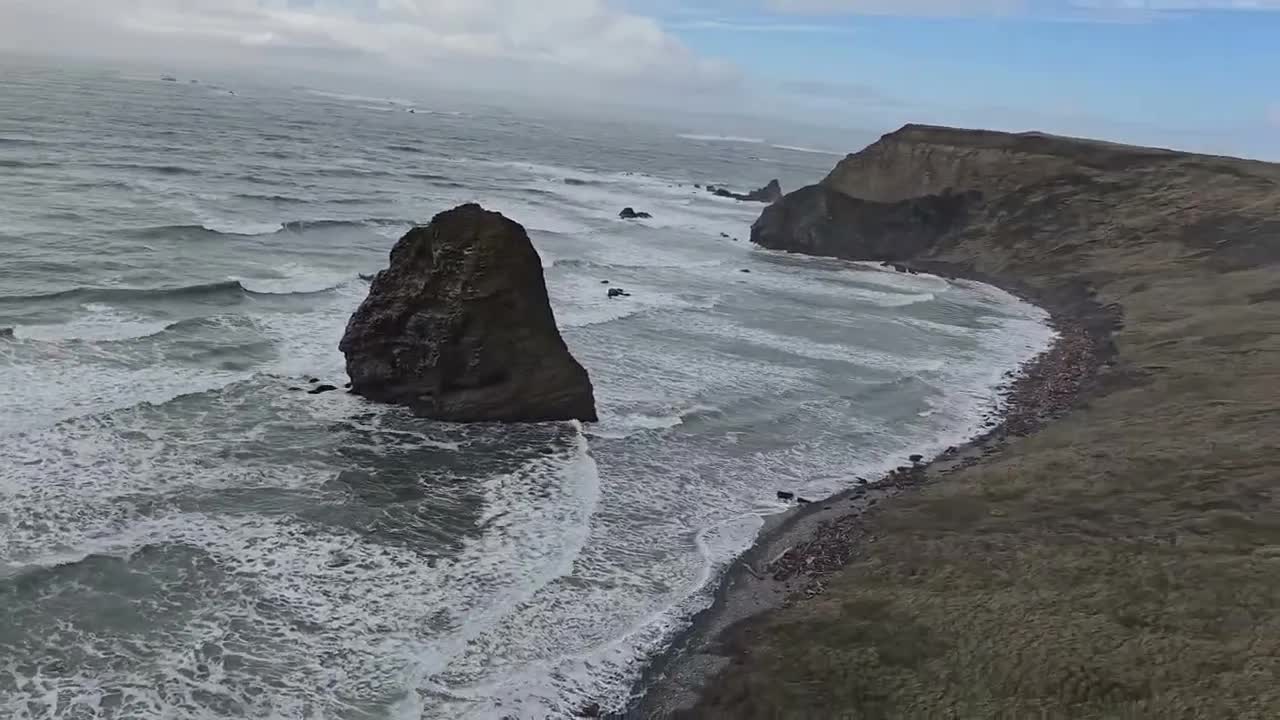
Two weeks on the southern Oregon Coast, centered on Cape Blanco, documenting a mobile system operating at full range: RV plus Jeep, cat Bailey, Highway 101 held as a mental map, and a campground circuit through Brookings, Gold Beach, and Port Orford under the 14-on/3-off rule.
The relational thread runs the length of the cluster. rswfire asks out the gatekeeper and is declined without damage; meets Chad at the driftwood road and builds a hiking friendship; then a week-long connection with a man on the same cape ends in a night he documents precisely — conspiracy claims, aggression, a tracked pocket knife, a slammed and locked door, a 4 a.m. text answered with a police threshold. He abandons Cape Blanco as base camp, reinstalls cameras, and states the grief plainly without assigning blame to himself.
Weather runs parallel: sustained 50–60 mph winds, 80 mph gusts, downed trees, root systems distributing load, a roof cleared on his fourth ascent.
Running throughout:
- Body as instrument — 6–10 miles daily for six weeks, 20+ pounds down, torn core muscle, a self-imposed rest weekend he breaks
- Edge practice — cliff standing, the call of the void, "parking lot people," sexual sovereignty named on camera
- Channel repositioning — comments reopened, direct address, "just" dropped as minimizing language
- Material constraint — under a dollar in the bank, freelance work restarting, boondocking on the 101 as the next test
Transmissions (13)
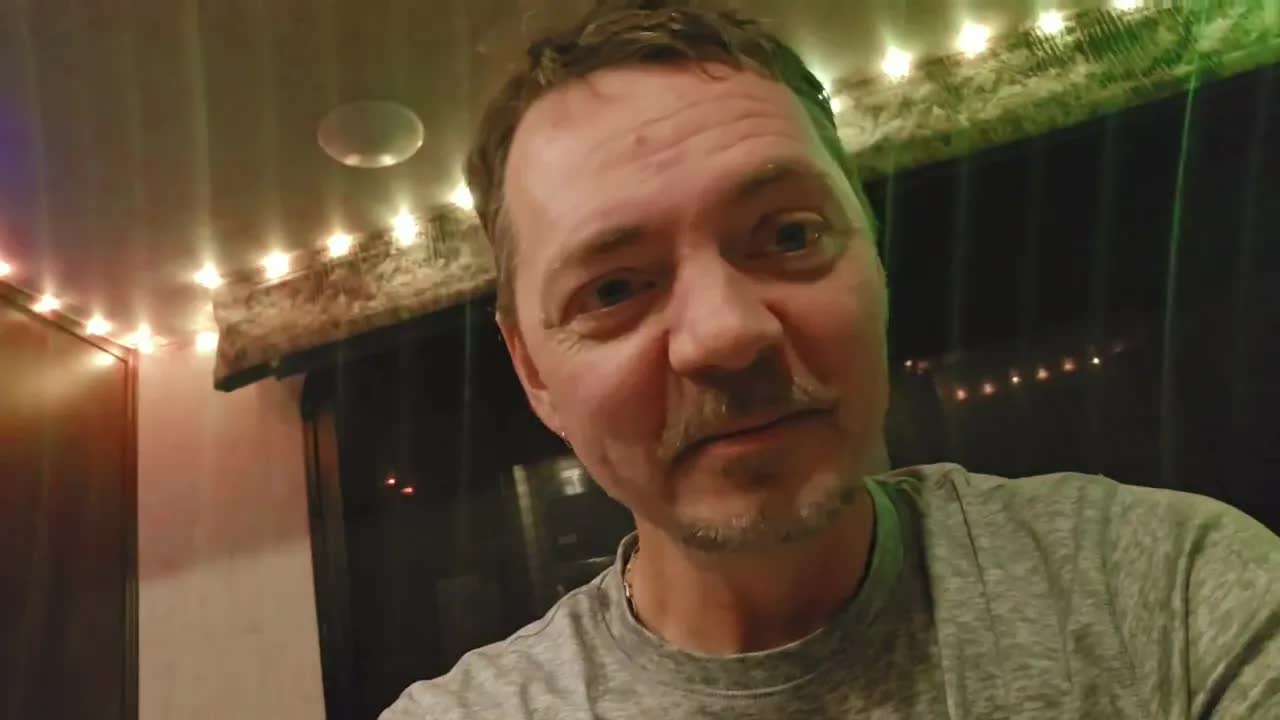
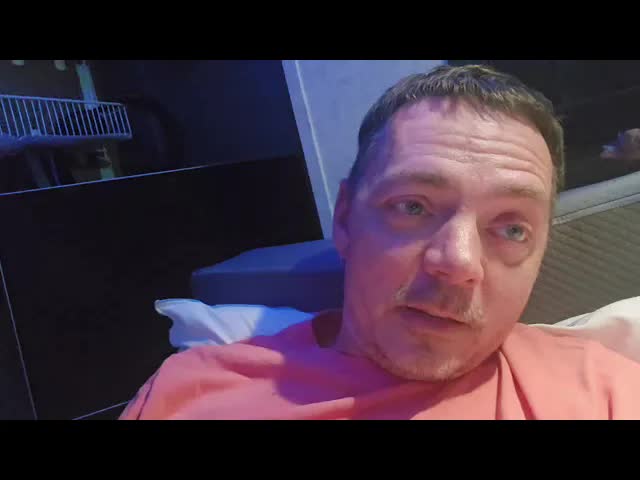
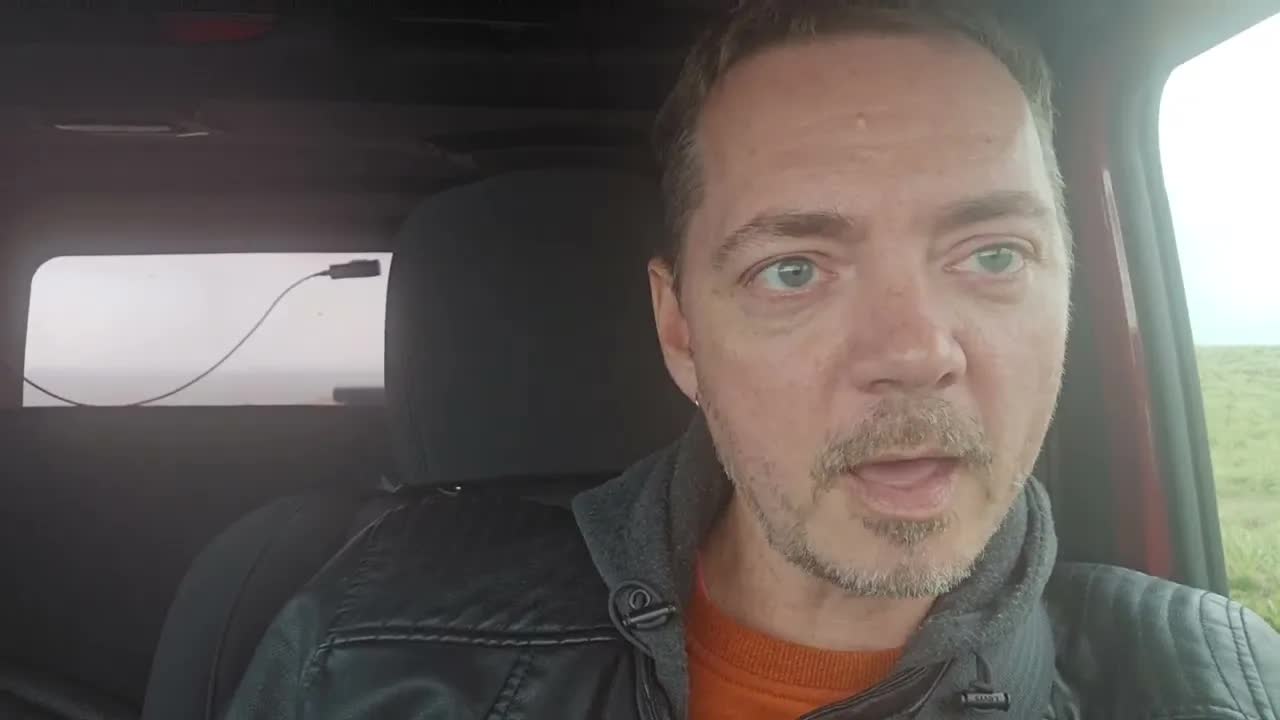
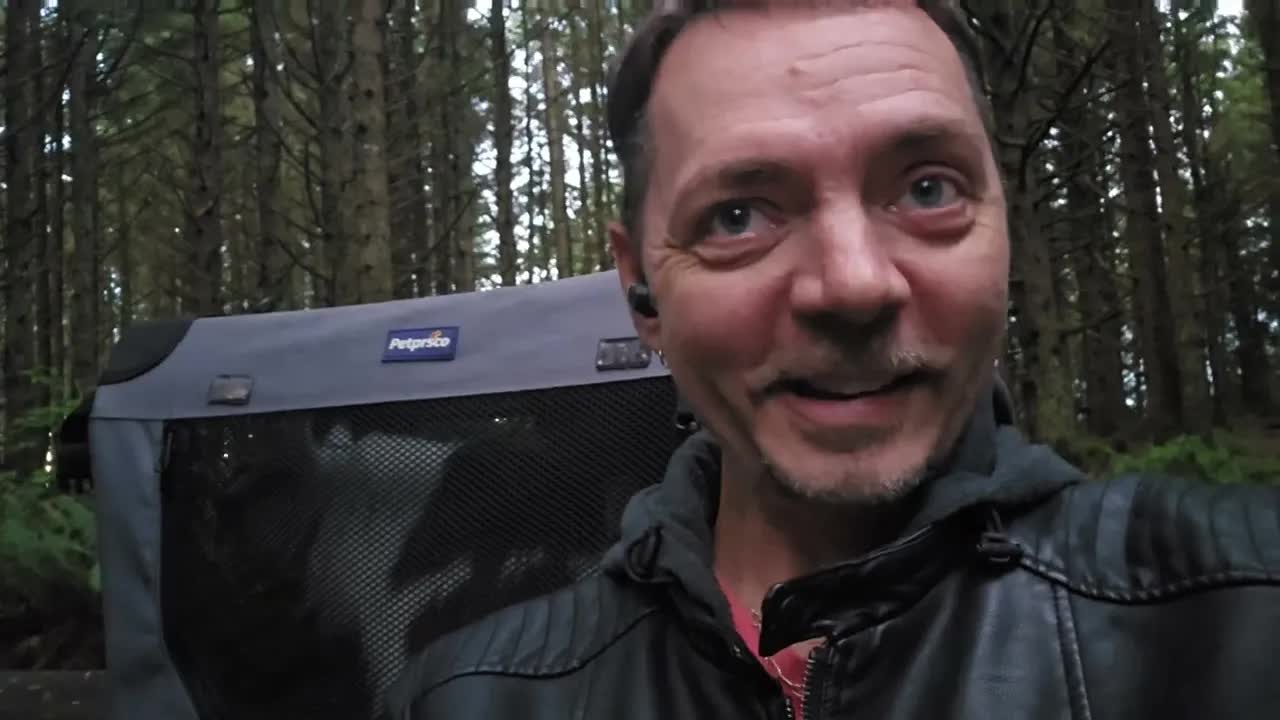
Recording at **4:30 in the morning** from a cape on the southern Oregon coast, rswfire opens by noting the low light and his current rhythm: waking early, waiting for sunrise, showering, then going out to explore. He states he has been at this location about a week and regularly sits on what he calls the **void edge**, referencing the call of the void as a repeated experience. He describes **contemplating restarting his YouTube channel**, possibly sharing selected existing videos. He watched them the night before with a man in his bed who cuddled him during the viewing — someone he describes as a genuinely awesome person, likely a friend rather than a lover. He says he would leave comments open, with a stated warning that responses will be direct. He gives a catch-up covering roughly **three to four weeks since his heart opened**: - Hiked **Humbug Mountain** (~1,700 ft, hour and a half) and **Cape Sebastian** the next day, tearing a core muscle - Descended a rope trail to a private beach, alone, and found it boring; discussed alternatives with AI, including sandcastle lighthouses as **void-penetrating devices** - Drove four hours north to **Florence** and four hours back, finding three hours without coastline - Traced wave lines on foot, watched rivers meet the ocean, encountered seals He states he has **fully integrated** himself and is more alive than at any point since childhood, naming Brookings, Gold Beach, Port Orford, and Bandon as claimed territory while affirming continued movement.
Photos (3)


Cluster Analysis
Substrate
Tags
Dominant Language
Entities
Actions
Performed
- • recording pre-dawn direct-address transmissions from the RV
- • standing on cliff edges above large drops
- • revoking another man's claim to privacy from documentation
- • opening the RV door and requiring immediate departure
- • slamming and locking the door, holding the perimeter overnight
- • stating a police-contact condition by text
- • abandoning the base-camp plan on safety grounds
- • doing laundry and washing blankets
- • walking the campground after a twelve-hour windstorm
- • filming storm damage, downed trees, and working crews
- • climbing the RV roof for the fourth time and sweeping storm debris
- • centering himself after dizziness on the roof
- • holding the water tank in place while filling around a broken hose
- • playing in the surf at high tide and filming while soaked
- • hiking Cape Sebastian, the cape trail, and the headland
- • waiting for a doe and fawns to cross, speaking to them
- • declining to climb to the lighthouse under a self-imposed rest rule
- • driving to the lighthouse parking lot to upload video over cellular
- • reopening comments and asking viewers direct questions
- • correcting his own hedging language mid-transmission
- • screenshotting a Claude list of minimizing phrases as a homework assignment
- • declaring 'I am Sovereign incarnate'
- • naming 'parking lot people' as a category
- • stating the cliff-edge sexual act as power and communion
- • stating a sub-dollar bank balance precisely on record
- • carrying a pocket knife routinely, including into shared showers
- • tracking Bailey and Ming in frame and narrating their behavior
Referenced
- • asking out the seasonal gate worker and being told 'bad timing'
- • meeting Chad at the driftwood beach road and again at the lighthouse
- • inviting Chad to the cliff edge and exchanging numbers
- • cooking burgers and a scratch chili for the man he was seeing
- • giving that man a tide table and going berry picking
- • the man's conspiracy claims and aggressive tone inside the RV
- • tracking the pocket knife's location during the encounter
- • receiving song lyrics as a comment on one of his videos
- • hiking 6–10 miles daily for five to six weeks
- • tearing a core muscle on Cape Sebastian
- • losing over 20 pounds since leaving his house
- • getting ear piercings in Kentucky three months prior
- • solar panels and batteries breaking loose during the Kentucky drive
- • sitting through a twelve-hour windstorm and an 80 mph gust event
- • observing roadside RVs with broken-out windows on arrival in Oregon
- • learning from a park ranger that coastal trees interlock root systems
- • watching his archived videos with a man in his bed
- • consulting AI about boredom, emotions, condensation, and cat fur
- • listening repeatedly to an 80s song in eighth grade
- • deciding then not to suppress feeling
- • programming since sixth grade
- • noticing and stopping minimizing language in work emails
- • documenting the journey from Kentucky in a consolidated playlist
- • driving eight hours round trip to Florence on 101
Planned
- • leaving the site Monday with no destination fixed
- • boondocking along Highway 101, roadside if funds require
- • moving south toward Brookings, Gold Beach, and Port Orford
- • reinstalling cameras at the site
- • resuming client work and submitting an AI proposal to his ex-boss
- • structuring days outside and work at night
- • addressing viewers more directly, with comments open
- • inviting viewers to flag his minimizing language
- • calling police if the man approaches
- • replacing failing house batteries and setting up the inverter
- • repairing the broken hose and addressing the exposed bumper component
- • resolving the bed condensation microclimate
- • resting to let leg and core muscles heal
- • getting two helix piercings once the current ones heal
- • buying a stovetop moka pot and a handheld wind meter
- • showing the neighbor how to download data from his anemometer
- • building a distributed boyfriend network and taking time to find a partner
- • resolving the knot in Bailey's fur and getting a better collar
- • returning to the mountain and continuing to stand at the edge
Symbolic Elements
Ontological States
-
•
sovereign (perimeter stated and enforced — door, lock, knife, police condition, refusal of boxes and of external moral framing)
-
•
integrated (emotion and cognition run as one system; fear as navigation, anger as boundary, both passing through without capture)
-
•
embedded and claimed (states the coast claimed him and he claimed it back; navigates by internal map, reads weather and tide as live input)
-
•
transitional (base-camp plan dissolved, departure set with no destination fixed, funds under a dollar, roadside accepted as parameter)
-
•
embodied (piercings, torn core muscle, 20+ pounds, dizziness on the roof, cliff-edge sexuality stated plainly as power and communion)
Subsystems
-
•
somatic (six weeks of daily mileage, torn core muscle, weight loss, piercings, dizziness — the body as primary instrument and load gauge)
-
•
territorial/security (RV perimeter, lock, pocket knife, cameras, campsite abandonment, police threshold)
-
•
infrastructural (wiring, solar batteries, house batteries, inverter, broken hose, condensation microclimate, exposed bumper component)
-
•
ecological (storm forecasting, root-system load distribution, wave and tide behavior, terrain reading)
-
•
relational (rupture and its enforcement, new friendship, distributed boyfriend network, deliberate contact with strangers)
-
•
emotional (emotions treated as data channels rather than states to endure; integration stated as increasing control)
-
•
cognitive (dialectical exchange with AI, pattern recognition applied to local RV populations, real-time self-correction)
-
•
linguistic (excision of minimizing constructions; removal of hedges mid-sentence as epistemic maintenance)
-
•
financial (sub-dollar balance, delayed client payment, funds as the variable converting boondocking from option to requirement)
-
•
navigational (memorized coastal geography, 14-day circuit planning, southward repositioning, cellular signal mapping)
-
•
documentary/pedagogical (channel restart, comments reopened, shift from broadcast-to-humanity toward direct address, method taught in real time)
-
•
custodial (Bailey and Ming — flea treatment, harness, fur knot, weather judgment, siting decisions organized around them)
NARRATIVE
rswfire drove onto the westernmost headland in Oregon intending to stop. Not to stop moving — the Jeep and the 14-on/3-off circuit were already load-bearing — but to fix a center: a base camp, a place the loops returned to. Fourteen days later he left with under a dollar in the bank, no destination chosen, and the base-camp idea abandoned. The two weeks at Cape Blanco are the story of a man who came to anchor and discovered instead that he had built the wrong kind of structure to want one.
He arrived open on purpose. Six weeks of daily mileage had put him near his high school weight and torn a core muscle; his heart had been opened weeks earlier by a seasonal gate worker, and he had recently decided the coast claimed him and he had claimed it back. Openness was a stated operating condition, and Cape Blanco tested it three times in rapid sequence, each test harder than the last. He drove back up to ask the gatekeeper out, ear-cleaning rig still clipped to his head, and was told bad timing — and walked away with his estimate of the man revised upward. He met Chad on the driftwood road over a warning about sneaker waves and turned it into a hiking friendship inside a week, sealed when Chad planted his feet on the cliff edge without being asked twice. Then came a man he cooked for twice, bought a tide table for, hooked on the beach, picked berries with, and wanted his mother to meet.
That one ended at the door. What is worth noticing about the night rswfire tracked the location of his pocket knife across the RV while a man told him humans hadn't built skyscrapers and that he was brainwashed — is not that it happened, but that the machinery held. Fear arrived as navigation and told him where the knife was. He opened the door, refused the deferral to tomorrow, slammed and locked it, and when the text came at 4 a.m. he named the police as a condition rather than a threat. The anger showed up the next day, on schedule, doing boundary work. Days later, parked at the lighthouse uploading video, he articulated the principle out loud — that integration produces more control, not less — but he had already run the demonstration before he had the sentence for it.
The cost was the plan, not the capacity. Because the man lived on the same cape and rswfire lacked the funds to move sites, he could not exit the geometry; he stayed nine more days inside it, reinstalled his cameras, kept filming, and stated the grief plainly while refusing to assign himself the blame for it. He did not close. He did not reduce the week to a warning about strangers. What he revised was the architecture: no single site as home, no single person as container — a distributed network of connection, because, as he put it, no one person could contain, mirror, or match him.
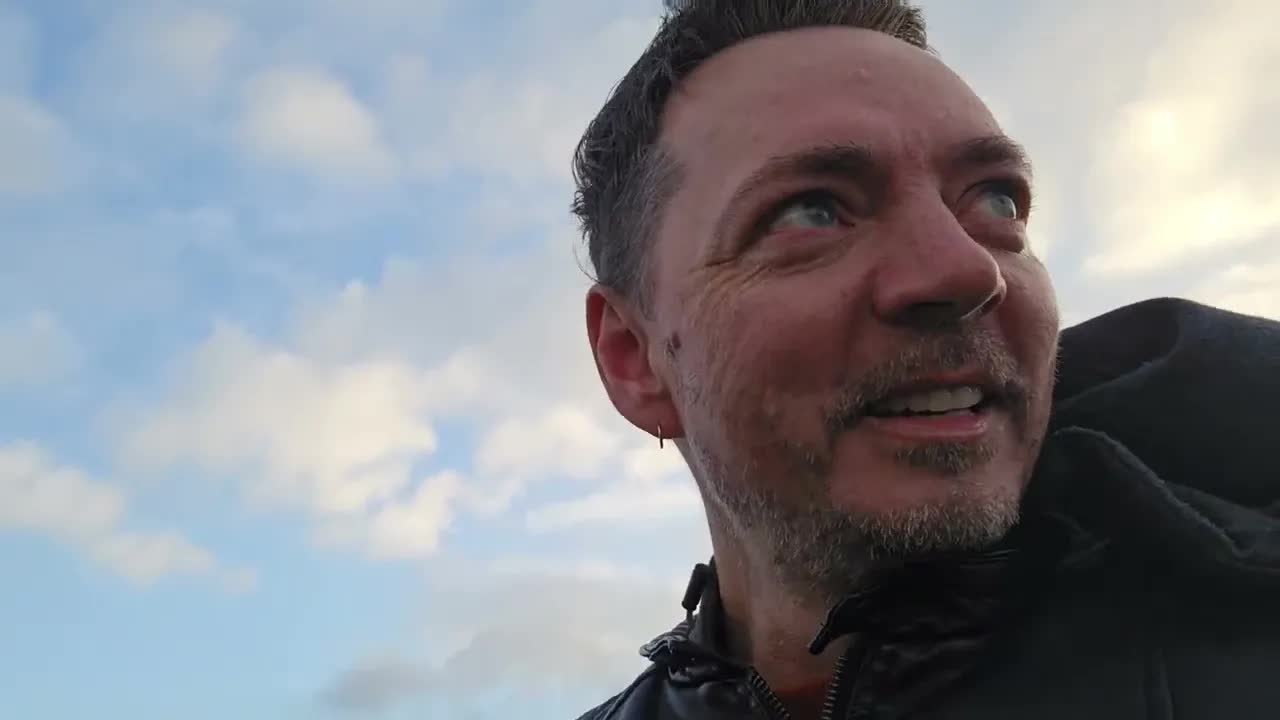
The weather made the same argument in the same fortnight, which is why it belongs in the telling rather than the background. Sustained fifty-to-sixty mile winds, gusts near eighty, a twelve-hour storm that dropped trees across the campground loop — and rswfire walking the damage the next morning explaining that the coastal root systems interlock and distribute the load. Nothing out there survives by holding a single point. He went up on the roof a fourth time to clear branches, got dizzy, named the fear without dressing it as courage, and defined working with fear as a procedure: acknowledge it, sit in it, one step. The cliff edge did the private version of the same work — standing above the drop with the call of the void running, not to defeat it but to verify that he still trusted himself in its presence. From that ledge he coined parking lot people for those who stay near the cars, and on that same edge he masturbated and named it on camera as power and communion, pre-refusing anyone's objection.
By the last morning the audit had reached his sentences. Claude flagged just as a minimizing construction; he cut it, made it homework for viewers, and corrected his own hedging mid-transmission — I don't guess, I know this. Comments reopened, broadcast-to-humanity replaced by direct address. He left on Monday with bad house batteries, an unconfigured inverter, a broken hose, a cat with a fur knot, clients who might not pay in time, and the real possibility of sleeping on the shoulder of the 101 — which he classified not as failure but as the entry exam for the boondocking life he actually wants. He came to Cape Blanco to plant a stake and found out the perimeter travels with him: the door, the lock, the blade, the cameras, the body, the willingness to say leave now. Everything that made him safe fit inside the rig. Nothing required the cape.
MIRROR
You came to Cape Blanco to stop. That was the plan — a fixed point on the fourteen-on/three-off rotation, a base to work outward from, the westernmost edge of the state as an address. You leave it on a Monday with no destination chosen, under a dollar in the bank, cameras going back up. And the thing that moved you was not the weather. You went up on that roof four times. You walked out into a twelve-hour windstorm to film trees swinging and came back talking about how coastal root systems distribute load. Eighty-mile gusts were operating conditions. One man living on the same headland was not.
That is the trade these two weeks made, and it was a good one: you gave up ground to hold a line. The knife tracked across the room while you decided how to end it. The door opened, then slammed, then locked. The 4 a.m. text answered with a threshold rather than a conversation. You could afford to abandon the cape because you never actually owned it — the RV is the territory, the perimeter travels, and a campsite is a parking spot with a shower house. Cape Blanco failed as a place and succeeded as a proof. You now know what your boundary costs to enforce and you paid it without negotiating.
The body is where you go to verify things, and you are running it past what it reports. Six weeks of six to ten miles a day, twenty pounds gone, a core muscle torn on Cape Sebastian and still sore three weeks later. You set yourself a rest weekend and broke it inside a day to drive to the lighthouse lot for upload speed. That is the standing order underneath everything here: transmission outranks recovery. The cliff edge works the same way. You stand above the drop to show yourself you trust yourself — a test you administer far more often than the terrain requires, because the answer only counts if it's fresh.
Notice what happened to the channel in exactly the days the door was closing. Comments reopened. "Just" excised, hedges caught and corrected mid-sentence. The mode shifted from speaking at humanity to saying you to specific people, with homework. As the physical perimeter tightened to a lock and a blade, the transmitted one opened wide. Those are the same gesture pointed in opposite directions, and you made both moves in the same week. The distributed boyfriend network was named in that same week too — after the gatekeeper's kind decline and the rupture on the cape. You state it as preference, and it is one. It is also the only relational shape that fits a life on a fourteen-day rotation with a corridor for a home. Both things are true and you should hold them as one fact, not two.
You invest at full rate and you close at full rate, and both take about a day. Cooked for him twice, bought him a tide table, took him berry picking, wanted him to meet your mother — inside one week. Then a doorway, immediately, with no attempt to salvage. There is no self-blame anywhere in the record and that holds up. But from the cliff, the day after, you were still assessing his potential — acting small, capable of more, you hoped to be a catalyst for his growth. That is generosity and it is also a hand still resting on someone who frightened you in your own home. You are allowed both. Just see that you did it.
What's missing here is an endpoint, and its absence is not a gap. Everything moves inside the 101 and nothing moves off it. You hold the coast as a memorized map, you say it claimed you and you claimed it back, and then you dissolve the one plan that would have converted that into an address. Money made boondocking a requirement and you named it practice for the life you want — the reframe was fast, and it was also correct. You would have arrived at the corridor eventually. The empty bank account only set the date.
SYMBOLIC
Gates open these fourteen days and gates close them. rswfire drives back up the road to ask out the man who works the entrance station and is told, kindly, bad timing. He meets Chad at the driftwood road, where the ocean is the thing being guarded against, and later at the lighthouse, where a peace sign functions as a password. He parks beneath that lighthouse because it is where the signal gets through, and while uploading he watches a stranger get out of a truck and open a gate — then meets that man properly a day later, holding an anemometer. And in the middle of all of it he opens his own door at night and tells a man to walk through it now, not tomorrow, then slams and locks it and sits up until four in the morning deciding what he would do if it were tried. Fourteen days of thresholds, each one worked by hand.
The movement underneath is the householder's, and it is a stranger archetype than it sounds. He had been building the domestic case for Cape Blanco: cooking twice, the chili with cocoa powder in it, buying the man a tide table, berry picking, wanting him to meet his mother. That is a man laying a hearth. The second movement is the founding refused — he had named this cape his base camp, the fixed point the circuit would rotate around, and he dissolves that plan himself. Not driven out. He does the expelling and then declines the ground, on the stated reasoning that he no longer trusts a man who lives on the same headland. The house was always going to be portable; what these two weeks establish is that portability is what makes the hospitality real. A door that can be locked and also driven away is a door whose opening means something each time it happens.
The cliff is the instrument he checks himself against, and he goes to it repeatedly rather than once. He stands on the ledge above the drop and names the call of the void, and says plainly that it is hard to stand there and that he stands there anyway to show himself he trusts himself. He climbs the roof for the fourth time after the 80 mph storm, gets dizzy, and says out loud that he has fear and is not pretending otherwise. He masturbates on that same edge and calls it power and communion and refuses in advance the objection. Against this he sets the parking lot people — the ones who drive to the overlook and never walk the last hundred feet. The edge is not a dare in this reading. It is a gauge. He returns to it the way a person returns to a scale or a mirror, to read a number he cannot get any other way.
The governing image, though, is the root system. He walks the campground loop after the twelve-hour wind and notes that the coastal trees interlock underground and distribute the load between them — which is why most of them are still standing. Everything else in these two weeks is a version of that sentence. He tells the camera that integration gives him more control rather than less, that fear is navigation and anger is boundary, that emotion passes through rather than seizing. He says no one person could contain or mirror or match him and describes wanting a distributed network instead of a single point of contact. Same structure: nothing load-bearing alone. The man who fractured in the RV is, in this figure, the tree that took the whole gust on one trunk. rswfire does not say that about him. The storm says it.
And there is the difference between wounds taken and wounds chosen. Kentucky keeps returning as the place where things were torn out of him without consent — the solar panels gone somewhere on that drive, the batteries that ripped wiring from the wall, hardware he now says he will not run unattended. Against that, the ear piercings at three months that he keeps catching and re-aggravating, and the stated intention to add two more once these heal. One kind of hole is damage; the other is a decision he keeps making. The same audit runs through the language, where he cuts just out of his speech the way he cuts branches off the roof, and through the money, where he arrives at the westernmost edge of the state with under a dollar and treats the coincidence as a parameter rather than an omen. He leaves Monday with no destination fixed, prepared for the shoulder of the 101, calling it practice. The ground he refused to found on becomes the corridor itself — which was, from the first day, the map he already carried without needing to look at it.
LINEAGE
Two facts from childhood do the structural work in these fourteen days, and rswfire names both of them himself. He has been programming since sixth grade — a sentence he reaches for in the RV, at the moment a man is calling him brainwashed, because it is the cheapest available proof that his mind was built by his own hand and is not on loan from anybody. And he traces the refusal to suppress feeling back to eighth grade and a song he can no longer attribute, stating he may have decided then. What descends into Cape Blanco is not a temperament but two early decisions, made by a boy, still bearing load at 47: build your own systems, and do not turn the feeling off. The claim he makes to the AI from the Jeep — that integration produces more control, not less — is thirty-five years of running that configuration and reporting the result. It is a boy's decision that turned out to be correct, verified late.
Nothing here starts clean, and that is the point. The rig arrives already carrying Kentucky: solar panels gone somewhere on that road, batteries that pulled wiring out of the wall, an ear piercing at three months that keeps getting reopened. The body arrives carrying six weeks of daily miles, twenty-plus pounds down to a high school weight, a torn core. His fourth ascent to the roof is maintenance on damage inflicted by a decision made months earlier and elsewhere. So is the freelance work. Under a dollar in the bank, he is preparing a proposal for a former boss and re-entering work for a client of ten years — the six-figure career he left by choice did not get severed, it got converted into a callable line. That is the quiet inheritance underneath the precarity: a decade of kept relationships is the reason roadside on the 101 reads as a test rather than a fall. The man with almost no money is not the same as a man with no history.
What these two weeks put in place, and did not have before, is a perimeter with a documented enforcement procedure. The sequence at the door — tracking where the knife is, opening it, refusing the offer of a conversation tomorrow, slamming it, locking it, and answering a 4 a.m. text with a stated police threshold — is not a reaction, it is a doctrine being written in real time and then narrated to camera. The refinements follow immediately: carry the knife routinely, reinstall the cameras, abandon a base camp on safety grounds while stating plainly that he does not blame himself. And one rule in particular will outlast everything else here — that when the other man left lyrics on a public video, he forfeited his claim to privacy from rswfire. That is the load-bearing principle of an archive. Documentation as the enforcement mechanism rather than the aftermath of one. When institutional escalation arrives the following year and ends up published at a public address, it runs on the rule set drafted at this door, against one man, at four in the morning.
The second thing put in place is the shift in address. Comments reopened after prior boundaries; "just" excised as minimizing language, with the list screenshotted and handed to viewers as homework; a named subscriber answered directly about boondocking; the stated move away from speaking to humanity in general and toward asking actual people actual questions. Alongside it, the habit of transcribing his own footage and running it back through an AI as a recursive surface — condensation microclimates, language patterns, the shape of his own speech returned to him as an object he can audit. Those two practices together — a record kept for others, and a record made analyzable to its own author — are the founding gesture of the infrastructure that now reads him. Autonomy Realms is being prototyped at Cape Blanco in November 2024 by a man with a phone, a lighthouse parking lot with good signal, and a habit of asking what pattern he is running.
He also loses something worth naming as inheritance: the idea that there is a base camp. He came here intending to make this ground the fixed point and leaves with the fixed point relocated into the rig, the Jeep, the cat, the mental map of the 101 he can navigate without GPS. Ground becomes revocable; the system does not. That is what makes both the roadside and, later, a stationed post in the Dunes survivable on identical terms.
Older people would recognize most of this. The fourteen-on, three-off rule is commons rotation, a law written to keep anyone from settling permanently on shared ground, and he has turned an ordinance meant to move him along into a circuit he runs deliberately between Brookings, Gold Beach, and Port Orford. Lighthouse keepers, seasonal gate workers, drovers, anyone who ever wintered somewhere exposed and kept a log of the weather because the log was the work — they would know the man walking the campground loop after twelve hours of wind, reading which trees came down and why the ones that held were holding each other's roots. They would know the stranger in the parking lot with a handheld anemometer, and the instinct to offer him help getting the data off it. Weather read as instrument, damage inventoried the morning after, the record kept and passed on: this is one of the oldest continuous human occupations there is, and the newest thing in it here is that the log has comments open.
SHAPE
The fear of heights entered the ledger as a fact of childhood — a teenage girl holding him by the arms outside a carnival ride in Michigan — and it was still functioning as a hard limit in March, recorded plainly as the thing that prevented him from getting onto the roof of the RV he had just moved into. In late November he goes up for the fourth time, in wind, with stabilizers down, and reports dizziness without treating the dizziness as a verdict. What changed is not the fear; he says on camera that he has it and is not pretending otherwise. What changed is that fear has been converted from a boundary into a procedure with steps. On the same day, working from a pattern Claude surfaced, he strips just out of his speech and asks viewers to catch him using it. Those two acts are the same edit run on different substrates — a man auditing himself the way he audits a system, finding the constraint, and changing the parameter rather than the person. He has been doing this to machines since sixth grade with nobody's permission or instruction; these fourteen days are where he turns the method fully on himself and it holds under load.
The turn is at the door of the RV on the night of the nineteenth. The ledger behind him is dense with being removed and with men who traded shelter for access — a father who threw him out at eighteen, a driver who offered a place to stay and drove him into the woods, a physician who put staff between them, a decade of housing contingent on someone else's terms. On this night he is the one who opens the door and says leave now, and then locks it, and then, at four in the morning, states a police threshold in writing. The load-bearing detail is not the knife he tracked or the lock. It is the sentence he says two days later while doing laundry: he does not blame himself. Forty-seven years of the ledger contain no equivalent. That clause, not the eviction, is the thing that was newly available.
What held is that he leaves. It is the oldest mechanism in the record — Flint, Arizona every year, Arkansas, Michigan, the house in Lexington, the client, the doctor, his parents — and it fires here exactly on schedule when Cape Blanco stops being safe and the base-camp plan dissolves inside a day. But the mechanism ran with one part reversed for the first time. He gave up the campsite and kept the coast. He states that the coast claimed him and he claimed it back, and that he intends to live on the 101 for years. Twenty years in Kentucky produced no such sentence; he lived there because his mother was dying there and never made a friend or claimed the ground. Belonging and departure have always been mutually exclusive in his record. In November they stop being. He resolves the contradiction by making home a corridor rather than an address — the only geometry in which a man who has moved his whole life can also stay.
The return to paid technical work in the same two weeks reads as a reversal only if programming were still an identity, and by November it is not. He had declared it finished repeatedly and meant it; what comes back is not the career but the instrument, and the tell is the man in the parking lot with the anemometer, to whom he offers, as a programmer, to help pull the data off the device. Forty years of skill demoted from what he is to what he has, and immediately spent on a stranger in a windstorm. The relational architecture moves the same direction. The long-standing position that a person should love himself fully before entering a relationship — held since March, and functionally since the last time he was in love at twenty-eight — is not argued with here; it is simply no longer in force. He asks a man out in person, is declined, and reports being unbothered, explicitly marking the distance from who he was twenty years ago. Then he names a distributed network rather than a partner. He is not looking for someone to complete a system he has already built.
What these two weeks could not see is that the documentation reflex was being trained on something small. He timestamps the encounter, names the sequence, notes the man's comment as forfeiting his claim to privacy, records the four a.m. text and his reply, and publishes — a full evidentiary procedure applied to one man at one campsite. Within a year that identical instrument is aimed at a state agency and given its own domain. The method was built here, on a private rupture, at no stakes anyone else would recognize. Nor could the fortnight know what losing Cape Blanco actually did. He treats the sub-dollar balance and the dissolved base camp as the pressure of the moment, and reads roadside parking on the 101 as the next test of a boondocking life he wants. But the base camp he was denied by a man on that cape he eventually got by attaching himself to an agency — and it was an agency that put him out again. The thing he wanted in November was ground he could hold without a landlord, an employer, or a lover having a say in it. Getting it took him through the one arrangement that had all three built in.
SYSTEMIC
Two constraints bind at Cape Blanco, and they converge on the same date. The 14-day campground rule sets a hard eviction for Monday, November 25, independent of anything rswfire decides; the bank balance — under one dollar at the close, with client receivables of uncertain timing — determines that the next site may not be a site at all but roadside on the 101. The regulation supplies the deadline, the cash supplies the destination, and neither is negotiable by effort. What makes the convergence sharp is that the obvious response to a zero balance — boondocking, which costs nothing — is precisely the mode his hardware cannot support. Solar panels are gone somewhere in Kentucky. The solar batteries that survived tore wiring out of the wall and are now run only while he is present to watch them, which is to say they are not a power system but a supervised risk. House batteries are stated as bad, the inverter is unconfigured. Off-grid capability is effectively zero. Shore power and the shower house are named as the only functional reasons to occupy a campsite, which is an accurate accounting: he is paying for electricity and hot water because he cannot generate either. The cash constraint pushes him toward dispersed camping at exactly the moment the electrical subsystem cannot deliver it. He names this correctly and proceeds anyway, calling roadside parking practice.
The relational rupture on November 20–21 is best read as a security event that consumed the system's remaining siting margin. Cape Blanco had been designated main base camp — a plan whose entire value was amortization: fewer moves, less fuel, a known circuit through Brookings, Gold Beach, and Port Orford under 14-on/3-off. Cancelling that designation on safety grounds converts a low-frequency movement pattern into a high-frequency one at the moment cash is least able to fund it. He states plainly that he lacks the funds to move campsites, which means for roughly four days after the ejection he is co-located with the person he ejected, with no exit available. The countermeasures deployed are all perimeter-local rather than positional: knife tracked and then carried routinely, door slammed and locked, a police threshold declared by text near 4 a.m., cameras to be reinstalled. That is what a system does when relocation is priced out — it hardens in place. The control law revealed here has near-zero latency: the moment the interior tone crossed threshold, the door was open, departure was required immediately rather than negotiated for the next day, and the escalation path was stated explicitly with documentation named as its through-line. Compare the financial controller, which operates on a delay measured in client payment cycles and cannot be actuated at all in the short term. The system responds fast where it has authority and absorbs where it does not.
The body is the primary instrument and it has no redundancy. Six weeks at 6–10 miles daily, top three percent on Samsung Health, more than twenty pounds off, and a torn core muscle already sustained and still healing — a partial failure the system absorbed without reducing load. On November 23 he declares a rest weekend; on November 24 he breaks it twice, first by driving out to the lighthouse parking lot and second by making his fourth ascent to the RV roof to clear storm debris, reporting dizziness at altitude and sore chest and core afterward. The declared setpoint is rest. The implemented controller is: exertion continues until an external structure intervenes. This is not carelessness, it is a priority ordering made visible. The lighthouse trip is instructive precisely because it is not recreational — connectivity at Cape Blanco is a location, not a utility, and uploading video requires physically transporting the Jeep to a spot he identified by observing throughput while sitting on a rock. Transmission therefore has a cost denominated in muscle load and fuel. When rest and transmission conflict, transmission wins.
That resolves the objective function. Under a sub-dollar balance, an injured core, a compromised site, and 80 mph gusts, what still got resourced was the channel and the contact surface. Sixteen signals in fourteen days, roughly one and a hundredth per day. Comments reopened after prior closure. A stated shift from broadcast-to-humanity toward second-person direct address. Free programming labor offered to a stranger with an anemometer, twice, unprompted. A language audit run through Claude that strips "just" as minimizing construction, and a mid-recording self-correction replacing "I guess" with "I know this" — which in system terms is instrument calibration, removing noise from the reporting channel so the telemetry means what it says. Contact and transmission are what the allocation protects. Cash, rest, and site security are what it spends.
Coupling is tight and the buffers are thin. Weather takes the grid; grid loss cannot be bridged by batteries that do not hold; without charge the recording and upload chain degrades; the upload chain already depends on a single vehicle that also serves as range extender and whose towed brake lights run through an unprotected bumper component he names as a manufacturing defect. A tree falling on the rig is a possibility he states he can do nothing about, and does not act on — an explicitly accepted, uninsured risk, which is a legitimate design choice when the alternative costs money that does not exist. The one acknowledged failover in the whole system is custodial: shipping Bailey to his mother, considered and set aside. Everything else — power, navigation, income, security, care, documentation — runs single-operator with no delegation path. What the fourteen days demonstrate is not strain but a system operating with margin fully spent and knowing precisely which reserves are gone, which is a different condition from being surprised by their absence.
Hand a period of your life to anything that reads.
Share this link with artificial intelligence — it reads the analysis and reflections for this span, and can follow every cluster and signal beneath it.