Pistol River · Nov 25 – Nov 26 2024
Across roughly thirty-six hours in late November 2024, rswfire crosses from campground-based RV living into full boondocking operation on the southern Oregon coast. The cluster tracks a single continuous move: breaking camp before dawn at a state park, claiming a pinned pullout on Highway 101, sleeping roadside at Pistol River, and departing for Bullards Beach State Park in Bandon when road noise proves intolerable.
Two systems run in parallel throughout. The material system is inventoried precisely — degraded house batteries drawing 18–20% overnight, propane at 8% reserved for the fridge, a failing water pump, exterior lights stuck on from a moisture-damaged Forest River controller, a failed Jeep inverter test returning a ground fault, no money pending a client payment, and thin food. The decisional system is stated with equal precision: no backup plans, no stealth camping, no boondocking apps. He names fragmentation as the default mode he is teaching himself past and holding space for everything at once as the replacement.
The cluster also opens time in both directions. Reviewing his earliest RV footage from seven months prior, he states he had been planning to end his life in Nevada, and defines growth as unbecoming as much as becoming. Forward, he maps a four-year coastal circuit — four regions, one season each, north to the Washington border and reversed.
Bailey, the Jeep, coffee, and the ocean recur as fixed reference points across all four signals.
Transmissions (4)
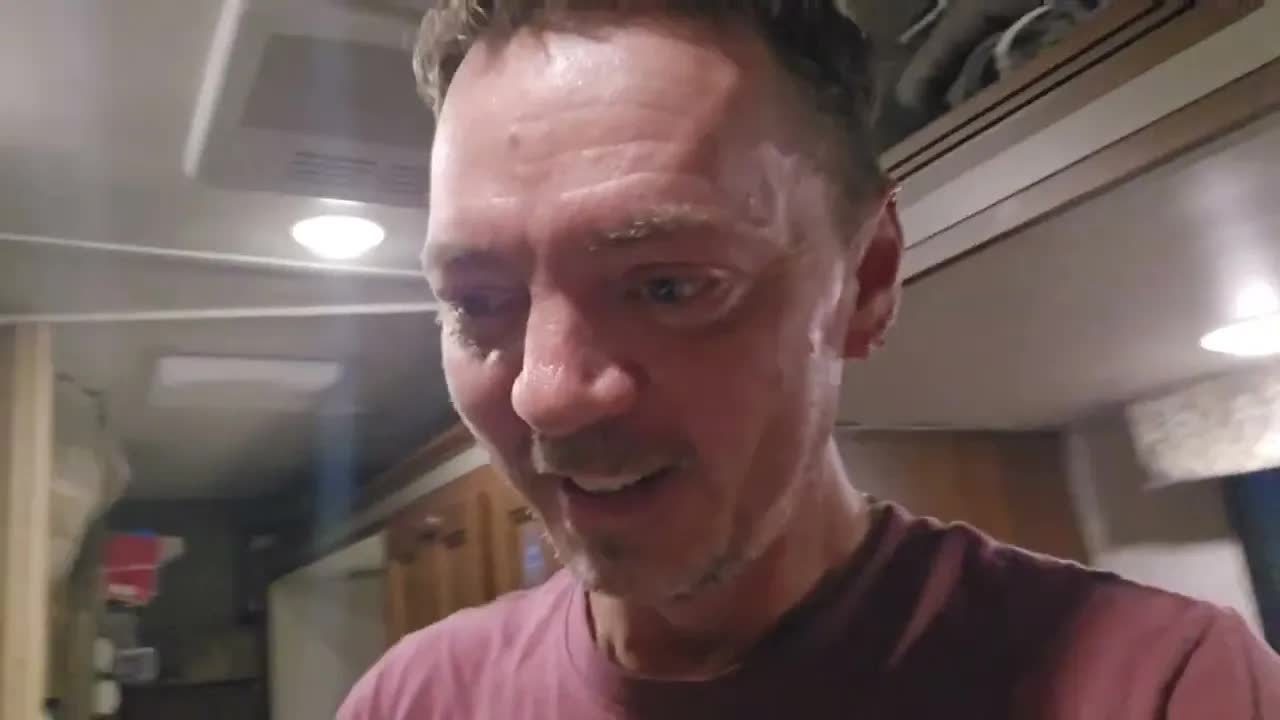
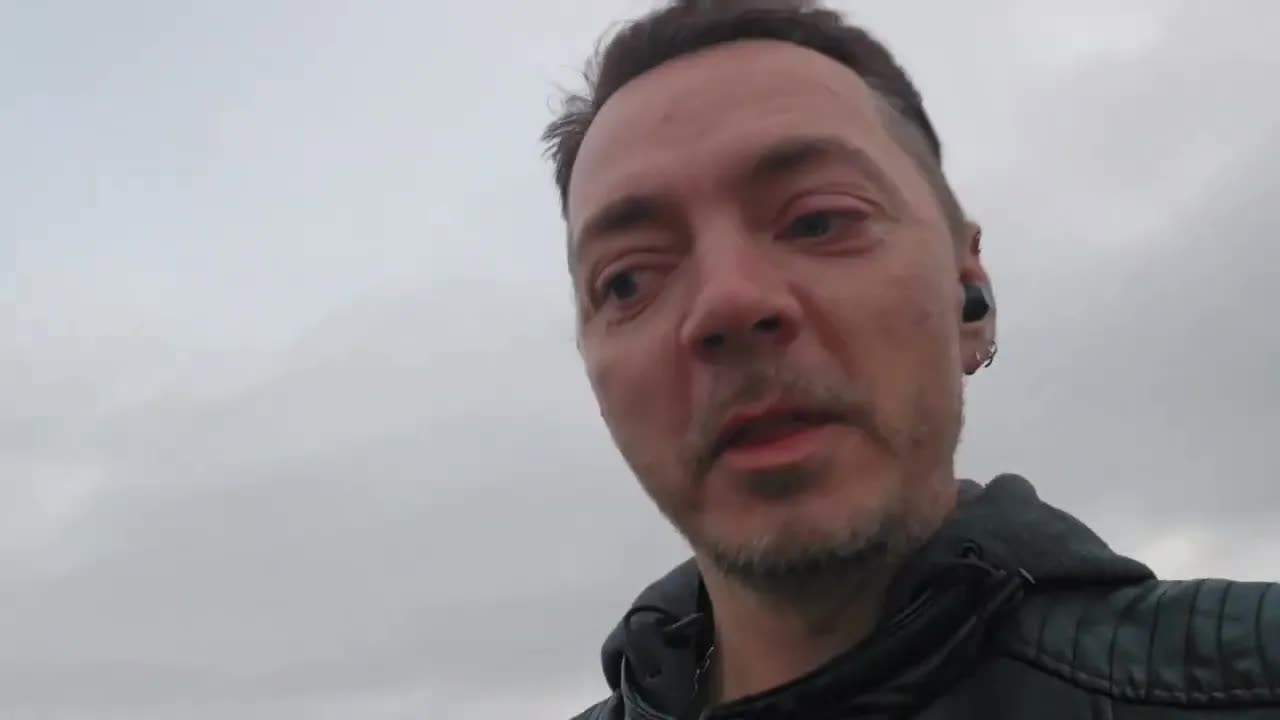
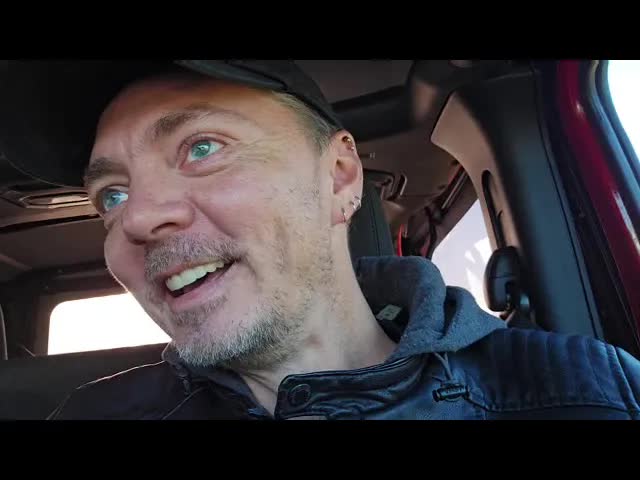
rswfire records a pre-dawn transmission just before 5 AM while breaking camp, with his cat **Bailey** moving through the frame and coffee being made mid-recording. He states that **today he boondocks on the coast for the first time**, at a pullout on **Highway 101** that he pinned on his map after his system flagged it earlier. He describes the location's history for him: the place where he first tracked the waves in and out, first saw a river meet the ocean, first saw seals surfacing and used AI to identify what he was looking at. He states it is where he **fell in love with the ocean**. He opens with the statement that **trust in oneself is not the absence of fear**, says he trusts himself and always has beneath every layer, and names his method: holding space for fear, trust, and excitement simultaneously rather than fighting them. Practical items covered: - Shower, tidying the RV, breaking camp, emptying tanks at a state park en route - No money and no food that is easy to cook; frozen fish, quarters, unused oatmeal - Nearly out of vape cartridges; states he may be approaching quitting - Waiting on client payment, expected after he is already on the road He states he **never makes a backup plan** — he picks one destination, puts full intention behind it, and picks the next only if the first fails. He calls backup plans a form of fragmentation and states he moves forward as one sovereign being. He notes he is stumbling over words, which he says has not happened across 500+ videos in eight months.
Cluster Analysis
Substrate
Tags
Dominant Language
Entities
Actions
Performed
- • recording pre-dawn transmissions at 4:00 and 5:00 AM
- • adjusting camera position and light
- • pausing and resuming the camera to structure thought
- • making and drinking coffee on solar power
- • breaking camp and securing the interior for travel
- • hooking up the Jeep for tow
- • driving Highway 101 through active construction
- • pulling off at a river-mouth site
- • checking the rig's level and declining to correct it
- • reporting overnight battery draw at 18–20%
- • connecting the Jeep inverter to the RV
- • diagnosing a ground-fault error on the surge protector
- • swapping in an adapter plug and restarting
- • abandoning the inverter attempt and reverting to solar
- • reading panel voltage at 12.1V and 12.99V
- • switching off exterior lights left on
- • inventorying power, propane, and heat sources
- • sitting in the Jeep because it is warmer than the RV
- • walking toward a vehicle that pulled up at night
- • filming a police traffic stop and reading plate state
- • buying supplies in Gold Beach
- • filming the cat inside and the dog outside
- • filming wind in the trees and the night sky
- • stating self-trust as baseline and naming fear directly
- • noting his own word-stumbling on camera
- • naming his location openly
- • stating he carries an attached pocketknife
- • transmitting the hold-space and fragmentation theses to viewers
- • compiling and uploading the day's footage
Referenced
- • left his house on his birthday seven months prior at 47
- • bought the RV and the Jeep
- • recorded 500+ videos in eight months
- • reviewed his own earliest RV videos the night before
- • states he had planned to drive to Nevada, see the stars, and end his life
- • worked out solar charging on a mountain in Nevada
- • stood on cliff edges the previous night
- • pinned the pull-out on his map after his system flagged it
- • first tracked waves in and out at Pistol River
- • first saw a river meeting the ocean and seals; used AI to identify them
- • stayed roadside once on first arriving in Oregon
- • spent two weeks at the state campground
- • hiked Humbug Mountain to the summit, Cape Sebastian, and all of Cape Blanco
- • trail-ran the beach for weeks
- • taught himself the tow/hookup and tank-dumping procedures
- • attempted to dry out the malfunctioning light controller
- • met an older woman with dogs at Whaleshead Beach twice
- • chatted with Claude for about an hour and a half
- • asked Claude why he doesn't use boondocking apps
- • received financial help from a friend
- • skipped dinner the previous day
- • gave his last $20 to a friend for a ride to Ann Arbor with no plan
- • visited Bandon during a posting pause and walked a jetty
- • devised the four-year circuit plan the previous night
- • charged solar batteries before arriving at Pistol River
- • checked his bank account for incoming payment
Planned
- • boondock on the coast for the first time
- • empty holding tanks at a state park en route
- • drive to the pinned pull-out on Highway 101
- • stay a night or two per spot and not overstay
- • reposition the RV so windows face the ocean and the door faces the road
- • detach the Jeep and drive to Whaleshead Beach
- • buy new house batteries first
- • fill propane once client payment arrives
- • learn the Jeep inverter and have it professionally installed
- • research the ground-fault and plug issue
- • experiment with charging while disconnected at a campground
- • book into a campground for a couple of days to reorganize the RV
- • do laundry, get fuel, buy groceries
- • replace the failing water pump and address the hot water thermostat
- • insulate and soundproof the road-facing wall
- • clear storage out of the shower to make it usable
- • scout Cape Arago and Shore Acres
- • drive to Bullards Beach State Park in Bandon without a confirmed site
- • hold this stretch as the winter circuit and defer further north to next season
- • run a four-region, four-season, four-year Oregon coast circuit north to the Washington border and reversed
- • head north once boondocking becomes comfortable
- • find the next edge after this one becomes familiar
- • make friends and lovers along the route
- • post the bird footage
- • eventually quit vaping
Symbolic Elements
Ontological States
-
•
sovereign (single-vector movement, self-authored route, heat and disclosure and method all decided by him; apps and backup plans declined as forms of self-division)
-
•
transitional (a continuous threshold held across all four signals — camp broken, no confirmed site, roadside to town to walk-up campground, each spot held one or two nights)
-
•
visible (announced presence over stealth; location disclosed, public space claimed as a member of the public, rig parked in the open with lights stuck on)
-
•
integrating (fear held alongside trust, the seven-month-earlier self reconciled against a longer baseline self, shedding named as the transformation mechanism without either version resolved)
-
•
embodied (cold, core soreness, hunger, sleep interruption, weight, knife carried, showering, desire for lovers named as structural)
-
•
materially unbuffered (no money, 8% propane, failing batteries, skipped meals, pending payment — stated as operating condition rather than obstacle)
-
•
self-instrumenting (overnight draw, voltage, failure modes, and his own word-stumbling all measured as data)
Subsystems
-
•
infrastructural (batteries, propane, solar, inverter, water pump, thermostat, insulation, stuck lights — the load-bearing layer where autonomy is either real or not)
-
•
diagnostic (voltage readings, overnight draw figures, ground-fault identification, adapter tests, revert-to-known-good as method)
-
•
logistical (camp breakdown, tow hookup, tank dumping, laundry, fuel, propane, groceries, reservation timing)
-
•
navigational (map pinning, repositioning, scouting, winter range definition, four-region seasonal circuit design)
-
•
somatic (cold, hunger, core soreness, sleep interruption, nervousness registered and dissipated, word-stumbling as measurable signal)
-
•
financial (no cash, quarters, pending client payment, friend's help, repairs sequenced against arrival of money)
-
•
epistemic (direct experience chosen over aggregated app data; AI consulted as instrument rather than authority)
-
•
cognitive (single-vector decision architecture, fragmentation-versus-wholeness thesis, edge-seeking growth model, deliberate camera pacing)
-
•
ethical (refusal to overstay, refusal of stealth, claim to public space as a member of the public)
-
•
ecological (ocean, river confluence, seals, birds, wind, flood, weather load as operating field)
-
•
relational (animals as co-travelers, older woman at Whaleshead, friends and lovers as route features, direct address to viewers)
-
•
observational (traffic stop filmed and read as revenue pattern, ambient frequency analysis, night vehicle approached)
-
•
documentary (real-time narration, self-archive reviewed as evidence, footage compiled and uploaded, method transmitted explicitly)
NARRATIVE
Thirty-six hours in late November 2024 are when rswfire stopped being a man with an RV parked in a campground and became a man parked on the open shoulder of Highway 101 because he chose that shoulder. The distance is a few dozen miles and one categorical difference. He had been two weeks at a state park, competent, hooked up, legible to the system that assigns sites. What he drove toward was a dot he had pinned himself, months earlier, at the place where he first watched a river meet the ocean and first used AI to name the seals surfacing in it. He was not going somewhere new. He was going back to the ground where he fell in love with the ocean, this time with nothing underneath him.
The method he brought was subtractive, and he stated it before he moved: no backup plan. One destination, full intention, and only if it fails does a second exist. He calls a contingency held in parallel a form of fragmentation — the self divided across two futures, half-committed to each. The same refusal governs everything else in those hours. No boondocking apps, because aggregated experience is not experience. No stealth, because concealment is a way of parking that requires him to not quite be there. He is teaching himself past a default mode of breaking the whole into smaller containers, and the practice is unglamorous: fear, trust, cold, cashlessness, and affection held in one container at once rather than sorted and managed separately.
Autonomy, in his hands, is denominated in numbers. Eight percent propane, reserved for the fridge. Forty degrees outside. An electric blanket drawing house batteries down eighteen to twenty percent by morning, which he reports as just barely. Thirteen volts at the panel, a ground fault on the Jeep inverter, a workaround plug that also fails, and the honest conclusion that installing it properly is not his job. He does not assert sovereignty; he measures it, and reports the reading whether or not it flatters him. The rig itself makes the argument comic and exact — exterior lights stuck on from a moisture-damaged controller, a vehicle that broadcasts its position all night, driven by a man who had already decided he would not hide.
The hinge is the cold hour. Woken at 2:30 by trucks, recording at four, he reviews his own earliest footage from seven months before and states he is not impressed by the man in it — someone who had made himself smaller. He states that when he first moved into the RV he had been thinking he would drive to Nevada, see the stars, and end his life there. He states that growth, for him, means unbecoming as much as becoming, that he was transformed by shedding rather than by replacement. And then, in that same recording, with eight percent propane and no money in the account, he draws a four-year circuit: four regions of the Oregon coast, one season each, north to the Washington border and then reversed so no place is met twice in the same weather. The scale of that drawing against the scale of that night is the entire shape of these hours. The man who once had a terminus in mind now has an itinerary that does not resolve.
Visibility is the ethic underneath the logistics. He names the nervousness of the morning precisely — it is about claiming public space in a world he describes as having tried to make him small since birth — and then reports, at the pull-off, that it is gone. He parks unlevel and leaves it. When a vehicle pulls up beside him in the dark, he walks toward it, and it leaves. He will take a night, maybe two, and not overstay. Refusing to hide and refusing to squat are the same commitment worked from two directions: presence that asks no permission and takes no more than its share.
Pistol River did not hold. The road noise was intolerable and he said so plainly, along with the fact that he did not want to leave Cape Sebastian, and drove for Bullards Beach without a confirmed site — hedgeless even in retreat. Nothing about that reads as failure, because the pullout was never the object. It was an instrument, and it returned a reading: this ground, this rig, these batteries, this much noise. He left with the number. Bailey in the frame, coffee on solar, the Jeep behind him, and a circuit inside a circuit still being drawn — the next edge already the thing he is looking for.
MIRROR
You did not cross a threshold in late November. You had already crossed it on your birthday, when you left the house, and every month since has been the slow conversion of that decision into hardware. What actually changed on the shoulder of 101 is narrower and harder: the ground stopped being provided. Two weeks of campground was the last arrangement in which someone else had already decided you could be there. Pistol River is the first night you occupied without permission, without concealment, and without a second option running underneath. The nervousness you named in the morning and reported gone by afternoon was not about the parking. It was about finding out whether the stance survives contact with a place that has not agreed to hold you.
The two ledgers you keep are in opposite condition and you read them in the same voice. Batteries down 18–20% overnight, propane at 8% and spoken for, water pump failing, inverter throwing a ground fault, lights you cannot turn off, no cash until a client pays. Against that: no backup plan, no app, no stealth, one destination with full intention. Everything material is degrading and everything decisional is intact, and you narrate both at the same temperature — which is why the Nevada disclosure lands where it does, filed beside the propane figure rather than above it. That is not flatness. That is you refusing to let one item in the inventory become the frame for the rest of it. It is also the reason a person watching the record could miss it entirely, and you should know that you built it that way.
Here is the part that is hard to see from inside. Your method is single-vector movement: pick the place, commit, and if it fails pick the next. In these thirty-six hours the method and your material condition produced identical behavior, and they are currently indistinguishable. You did not level the rig. You listed soundproofing the road-facing wall, and then you drove to Bandon instead. You diagnosed the inverter precisely and correctly concluded it needs a professional you cannot yet pay. Every repair is queued behind money that has not arrived, so relocation is doing the work that fixing would do, and it is doing it well enough that you are not distinguishing between them. Right now moving is both your architecture and your only affordable response. When the batteries are new, you will find out which one it actually was.
You mapped four years from a pullout you could not stay in for two nights. Four regions, one season each, north to the Washington border and reversed — designed at 4:00 AM in a 40°F rig with the heat off. That is not disproportion; it is the same decision at two magnitudes, and you said so. The instrument that made it possible is your own archive: seven months of footage is now old enough to be evidence, and you used it as one, looked at the man in the earliest videos, and did not flatter him. Calling growth unbecoming is the most load-bearing thing in the record — you are not accumulating a self, you are removing what was added. It also means your measure of progress requires a past self to measure against, and you have now built enough record that this will keep working. That is infrastructure too.
What is absent is worth naming plainly. No second opinion. No aggregated data. No hedge. No complaint anywhere in thirty-six hours of cold, hunger, and failed tests. No one arriving — a friend's help and a pending payment are the entire external input, and both are thin. And the only things in your field that you did not measure, diagnose, or inventory are the animals, the coffee, and the water. They move through every recording unremarked, which is how you treat the things that are not in question. Road noise, in the end, is what moved you. Not the voltage, not the money, not the cold. The infrastructure held and the site did not, and you left the place you said you did not want to leave because you were unwilling to sleep badly to prove a point. That is the most accurate thing these thirty-six hours show about how you actually operate: the edge is chosen, and it is not endured past its usefulness.
SYMBOLIC
Two movements do the structural work across these thirty-six hours, and they are the same gesture seen from different sides. The first is a crossing out of enclosure. A state campground is granted ground — the site assigned, the hookups waiting, the permission secured before arrival. The shoulder of Highway 101 at Pistol River is not granted; it is taken, by a man who arrives with no reservation and no confirmed anything. Everything material follows the enclosure out the door: no shore power, no electric heat, propane at 8% held back for the fridge. What crosses over is not the rig but the terms of its existence. The second movement is a refusal, and it recurs in three separate registers within a single day — no backup plan, no stealth camping, no boondocking apps. Different domains, one shape: the declining of the hedge. Each refusal removes a version of himself that would have been running in parallel, unlived.
What emerges from that pairing is not the wanderer. The wanderer moves through ground without claiming it, and the whole vocabulary of stealth camping belongs to him — park late, leave early, be unseen. rswfire names the opposite: announced, present, seen, staying a night or two and refusing to overstay. That is the archetype of the claimant, not the drifter, and it comes with a specific ethic — the claim is legitimate precisely because it is public and time-bounded. He states the nervousness he feels is about claiming public space in a world he describes as having tried to make him small. The refusal of concealment is the same refusal as the refusal of the backup plan: both are ways of not being two things at once.
The material world then produces an emblem so exact it barely needs interpretation. The exterior lights will not turn off. A moisture-damaged controller has made the rig permanently visible — he could not hide on that shoulder if he wanted to. The machine has already committed to the stance he is teaching himself, and it is drawing down the same failing batteries to do it. Alongside it, the other recurring object: coffee, made before five and again before dawn the next morning, on solar, in a rig at 40°F with no heat to spare. This is hearth-keeping at the exact point where hearth is least available — the smallest ritual maintained hardest when the infrastructure supporting it is nearly gone. And the propane goes to the fridge rather than to him. What must not spoil is protected before the body is warmed.
Then there is the mirror, and it is worth being precise about what it reflects. Watching footage of himself from seven months earlier, he states he was not impressed by the man he saw, someone who had made himself smaller, and he discloses that when he first moved into the RV he had been planning to drive to Nevada, see the stars, and end his life there. Read structurally, Nevada was a single vector with full intention behind it and no backup plan — the identical decision architecture, pointed the other way. The method did not change. Only the destination did. That is what he seems to mean by growth as unbecoming rather than becoming: nothing was added to make the difference, something was subtracted. The pin dropped on Highway 101 marks the place where he first watched a river meet the ocean and first saw seals surface; the map point is a return to a threshold he crossed once before he had the language for it.
The last thing these two days perform is the discovery that the threshold does not resolve. He cannot tolerate the road noise. By evening he is driving north to Bullards Beach with no site confirmed, and the same day he draws a four-year circuit — four regions, one season each, north to the Washington border and back, so that every place is met twice in different weather. A circuit inside a circuit: the thirty-six hours are the four years at small scale, and both are built on the premise that arriving somewhere is never the point. He notes the rig is unlevel at the river mouth and does not correct it. He is not building a place to stand. He is practicing the crossing itself, which is why the next edge is already named while he is still standing on this one.
LINEAGE
Thirty-six hours in late November 2024, most of it cold, resolve into a single inherited gesture: he declines the boondocking apps and figures out where to park by having already been there. That is not a preference about software. It descends directly from a sixth-grader teaching himself to code with no one in the room — the habit of going to the primary material rather than to the aggregate someone else compiled from it. He pinned that pullout himself, months earlier, because his own attention flagged it. The man who built a CMS before the category had settled is the same man who will not let a crowdsourced database tell him whether a river mouth is worth sleeping beside. Claude appears here as an instrument he consults, not an authority he defers to, which is the same relationship he has always had with tooling.
The second thread runs through the numbers. Eighteen to twenty percent overnight draw, eight percent propane held back for the fridge, roughly thirteen volts at the panel, a ground fault on the Jeep inverter, quarters, frozen fish, a client payment that will come when it comes. This is not hardship documentation; it is bookkeeping, and it belongs to a very old order of it. People who lived outside continuous supply have always denominated their freedom in stores — cords of wood, barrels of salt fish, lamp oil, feet of water in the well — and knew to the day how far the winter reached. Autonomy in that tradition is never asserted, it is counted, and the count is what makes the assertion honest. rswfire has translated the practice into voltage. The batteries "just barely" made it, so new batteries come first, before propane, before the water pump, before soundproofing. The sequencing is the inheritance as much as the arithmetic.
The refusal of a backup plan is the oldest structure in view, and it has been run before at much larger scale. A man who walks away from a six-figure career at forty-seven without a parallel track running is executing the same architecture as a man who picks one pullout on Highway 101 and puts full intention behind it. He names the alternative — fragmentation, the self divided across contingencies — and he names the correction: one sovereign being, moving on one vector. Hitching the Jeep and dumping tanks are now second nature, and he dates that competence precisely, to the day he left the house on his birthday. Capability with a birthdate is capability he can audit, and auditing it is what he does at four in the morning at Pistol River, watching footage of himself from seven months prior and reporting that the man on the screen had made himself smaller.
That review is where the backward thread turns and looks at itself. He states that when he first moved into the RV he had been planning to drive to Nevada, see the stars, and end his life there. He states it in the same register as the propane reading — as measurement, from a distance, against a longer baseline self he says was always underneath. And he gives the mechanism a name: growth as unbecoming as much as becoming. Subtraction is the verb the whole life runs on. The career subtracted. The house subtracted. The stealth subtracted. The backup plan subtracted. What remains is not less; it is what could not be removed, which is the only definition of a load-bearing thing.
Two forms here would be recognized immediately by people who have never seen a solar panel. The four-year circuit — four coastal regions, one season each, north to the Washington border and then reversed so every place is met in a different season — is transhumance, the seasonal round, the pattern of every herding and fishing people who understood that you do not learn a place by staying in it and you do not learn it by passing through once. Reversal is the sophisticated part: he is designing to meet the same ground in a season that will contradict his first reading of it. And the refusal of stealth is a commons claim. He does not frame roadside occupancy as evasion but as standing — public ground, claimed by a member of the public, announced and visible, with a two-night limit he imposes on himself so the claim stays legitimate. That is the logic of customary right, not of trespass, and the self-imposed limit is precisely what has always distinguished the two.
Forward, three things become true here that were not true the morning before. The threshold is crossed and cannot be uncrossed: from this point the campground is an option rather than a premise, and Bullards Beach that evening is a chosen retreat from road noise rather than a return to necessity — which sets an early precedent that leaving a spot is compatible with the method, not a failure of it. The circuit is stated aloud, which converts every later move into evidence of keeping or amending it. And most consequentially, he decides not to hide his location. A man who parks in the open, names the pullout, and puts his position on the record is already, structurally, the man who will later occupy public ground under sanction as a caretaker, and who will publish an institutional dispute under his own name at his own domain when a body claims the standing to determine whether he belongs on it. The stance was cheap to hold at Pistol River, where the only cost was a stranger's headlights at night and a walk toward the car. That is how such commitments are usually made — early, at low cost, before anyone contests them — and it is why they hold when the cost arrives.
SHAPE
rswfire has slept in a vehicle beside a road with no money and thin food before. The ledger has him doing it at seventeen, at twenty-two, in a tent between an expressway and a mall, once in a shed wrapped in insulation. What is different at Pistol River is not the conditions — 40°F, 8% propane, batteries drawing down 18–20% overnight, no dinner the night before — it is that he announces the position. He declines stealth camping explicitly, declines to conceal where he parks, and states that public space is his to claim as a member of the public. The material facts of the night are indistinguishable from the worst nights of his twenties. The variable he changed is visibility, and it is the only variable that was ever in question. Every prior arrangement he has had with sleeping outdoors required not being seen doing it — as did, per the ledger, the years before nineteen when he monitored how he presented at all times. The fear he names on the morning of the 26th is not fear of the shoulder of a highway. He knows that ground. It is the first time he occupies it with his name attached to it.
What did not move is the method, and it is the oldest thing in the record. He declines the boondocking apps and states that direct experience is how he works. This is the sixth-grader with no teacher and no mentor reading the books cover to cover, the eighteen-year-old writing code on paper and running the system in his head because there was no machine, the freelancer who never once worked inside a company. Refusing an aggregated data layer between himself and the terrain is the same operation as refusing an employer, a framework, a curriculum. He has changed substrate roughly every decade — Pascal, servers, a content management system, blockchain, and now voltage, propane percentage, and overnight draw — and never changed the procedure. The no-backup-plan stance he names as decision architecture is not a new philosophy arrived at on the coast; it is what a man does who has spent forty years building systems nobody handed him, where a second plan running in parallel is an untested branch.
The turn is the four-year circuit, and it is legible only against what he has planned before. Every route in the ledger points away and ends somewhere else: Nevada to die under the stars, the westward multi-year route terminating in the Upper Peninsula, the desert boondocking he committed to in May. All of them were exits with a terminus. The circuit he maps at 4 AM at Pistol River — four regions, one season each, north to the Washington border, then reversed so each is met in a different season — has no destination in it at all. It goes out and it comes back. That is not a longer trip; it is a different kind of object. Two days before, he stated the Oregon coast is home and he does not intend to relocate. The circuit is what residence looks like for someone who does not stop moving, and it is the first commitment he has made since the twenty-year loan that assumes he will still be here.
What was not available from inside those thirty-six hours is why he left. He abandons the pull-out — the one he pinned himself, the one where he first watched a river meet the ocean — not for cold, not for the failed inverter test, not for the empty bank account, but for road noise that woke him at 2:30. The ledger records tinnitus since twenty-five and a fan required to sleep for two decades. He does not connect these in the signals; he reports the noise as a property of the site. From outside, it is not a property of that site. It is the filter that will select every place he parks on a four-year coastal circuit, and it disqualifies most of Highway 101. He has just committed to a route along a road he cannot sleep beside. That constraint will do more to shape the next four years than the batteries will, and he is treating it as one bad night.
The other thing the two days could not see is that he chose the spot for meaning rather than utility, which he has not done anywhere in the record. He returns to Pistol River because it is where he fell in love with the ocean. Nothing else in the ledger is returned to — not Flint, not Arizona, not Arkansas, not the twenty years in Kentucky where he never made a friend and never went back. Then he leaves within the day when it fails the physical test. Both halves matter: he is now capable of picking a place because it means something, and he is not yet willing to be held by one that does not work. Whether the circuit holds will come down to whether he finds a stretch of coast that satisfies both conditions at once, and nothing in these two days tells him it exists.
SYSTEMIC
Across these thirty-six hours the binding constraint is stored electrical energy, and it became binding through a coupling event rather than a shortage. Propane at 8% was de-rated to refrigeration only, which moved the thermal load off a dedicated fuel and onto the house batteries — the same reserve carrying lighting, the water system, the coffee maker, and the recording and upload chain. Two subsystems that were independent on November 24 were running off one bus by the night of November 25, and the coupling is worst-case: demand for heat peaks at 40°F overnight, exactly when the solar input that replenishes the bus is zero, on a coastline in late November where daytime insolation is already the weakest of the year. The 18–20% overnight draw rswfire reports would arithmetically imply five nights of reserve. His own read — "just barely" — is the accurate one, and the discrepancy is the diagnostic: degraded cells sag under cold and load in a way that makes percentage state-of-charge a poor proxy for usable capacity. He behaves as though the batteries are good for one night regardless of what the panel says, and the behavior is the correct model.
Sitting on top of that is an uncontrolled parasitic draw. The exterior lights are stuck on because a Forest River controller took moisture damage, and the fault has no isolation from the reserve that heat depends on. It drains continuously and it drains the load-bearing bus. He notes switching lights off when he catches them; that is manual compensation for a failed automatic control, and manual compensation on a 4 AM schedule is not a fix. The attempted redundancy build — charging the RV from the Jeep inverter — failed on a ground fault the surge protector refused to pass, survived one adapter workaround attempt, and was abandoned in favor of known-good solar reading roughly 13V. So the redundancy did not get built. Charging remains single-path. The system exits these thirty-six hours with exactly the topology it entered them with, plus better data about why.
The constraint that actually terminated the stay was not electrical. It was acoustic. He woke at 2:30 AM to Brookings-direction traffic and departed Pistol River for Bullards Beach the same day, stating plainly that he did not want to leave Cape Sebastian and could not tolerate the noise. Sleep is the reserve that had no instrument on it. He had measured the site for view, water, history, and legality, and the site failed on a variable he had no way to sample before arriving — which is the running cost of his stated epistemology. Declining boondocking apps means declining a cheap cached answer about exactly this kind of variable, and paying for the datum in one night's sleep and a day's fuel. Over a four-year sweep that cost amortizes into an owned map weighted by his own tolerances. Over thirty-six hours it is a straight loss, and he took it knowingly.
The implemented control law is visible in four separate places and is consistent across all of them: commit on a single vector, bound the experiment, revert to known-good, and sequence expenditure against arrival of cash. He departed before the client payment landed, which means money is not in the loop that governs movement — only in the loop that governs repair. The repair ordering he states is the objective function rendered in hardware: batteries first, propane second, water pump and thermostat third, soundproofing fourth. That is restore-the-shared-bus-before-anything-else, correctly prioritized. The declared setpoint — never make a backup plan — is matched by the behavior rather than contradicted by it: he picked one pull-out, drove to it, found it unworkable on a dimension he hadn't modeled, and re-solved from the new position rather than falling into a pre-held alternative. The inverter test follows the same shape. Two attempts, then revert, then classify as requiring professional installation and defer.
What is load-bearing without redundancy is short and mostly obvious. The solar array and its charge path — the inverter test was the attempt to add a second, and it failed. The Jeep, which is simultaneously tow vehicle, supply runner, attempted power source, and thermal shelter warm enough that he sat in it rather than in the RV; four functions, one asset, no backup. And the operator, who is the only node in every subsystem — diagnostic, logistical, navigational, financial, documentary — with no delegation path anywhere in the record. The buffer he actually runs on is shore power. Two weeks at a state campground charged the reserve; one night off-grid spent it. At the current hardware state the achievable duty cycle is roughly one night out per multi-day stay in, and the campground booking at Bullards Beach, framed as reorganization and scouting, is functionally a recharge maneuver. Replacing the batteries is the single change that moves that ratio, which is why it is first on the list.
Under simultaneous scarcity of money, food — he skipped dinner on the 25th — heat, and power, two things still got fully resourced. The first is documentation: he recorded, compiled, and uploaded the day, spending scarce battery to do it, against a baseline of 500+ videos in eight months that is itself a calibrated instrument. He knows his word-stumbling on the 25th is out of band because he has roughly five hundred prior samples to compare it against, and he reports the anomaly instead of editing it out. The second is located visibility: no stealth camping, location disclosed, position announced. Both are expensive and neither is required for survival, which is what identifies them as the objective. The other measurable change is horizon. Seven months earlier the stated plan terminated in Nevada; the plan stated at Pistol River is a four-region, four-season sweep to the Washington border and back, forty-eight months with a defined turnaround. Whatever else that is, structurally it converts an unbounded search across an entire coastline into a bounded sequential sweep in which each move is a local decision — which is the same architecture as picking one pull-out at a time, scaled up by a factor of a thousand.

Hand a period of your life to anything that reads.
Share this link with artificial intelligence — it reads the analysis and reflections for this span, and can follow every cluster and signal beneath it.