Honeyman · Mar 26 – Mar 26 2025
This cluster documents a single day — March 26, 2025 — in which rswfire closes the OPRD volunteer chapter and opens the coastal-mobile one, holding both in the same frame.
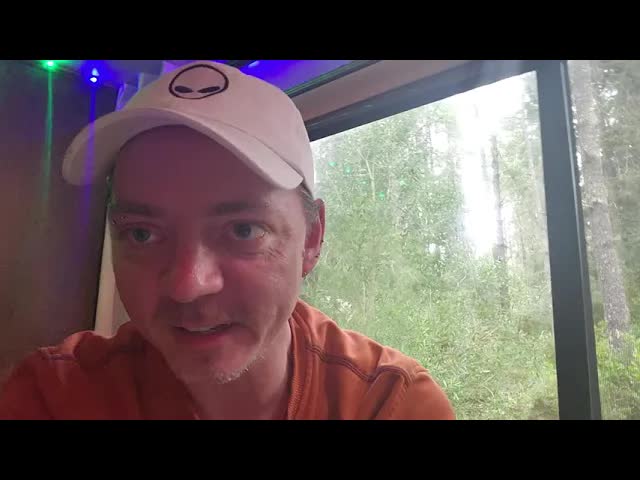
Two signals carry the institutional line. In the first, he preserves the original narrative account of his tenure at Honeyman State Park, naming the sequence — the power outage exchange with Kati, Ryan presenting first-week errors as a case file, Logan absent then reappearing, the unacknowledged job application, the trust email answered by a picnic-table meeting he recorded, the dismissal delivered at his RV without paperwork. He marks the page as a first-writing kept in place while the evidentiary record moves to oprdvolunteerabuse.org. In the second, filmed inside the RV, he reports the dismissal on letterhead, cites at-will volunteer language and his public comments as the only specific given, and states his decision to file an HR complaint — explicitly not for reinstatement.
The operational consequences are stated plainly: the paid job restarts, volunteering ends, and he now moves every two weeks, with more of the coast available to him.
The remaining signals sit at the shoreline. He arrives at his next park beside a friend, traces waves at the tideline, names it his favorite thing and compares it to meditation, and states the ocean reflects him back — uncontainable, permission-seeking from no one.
Institutional record and coastal expansion occupy the same day, and the same author.
Transmissions (2)
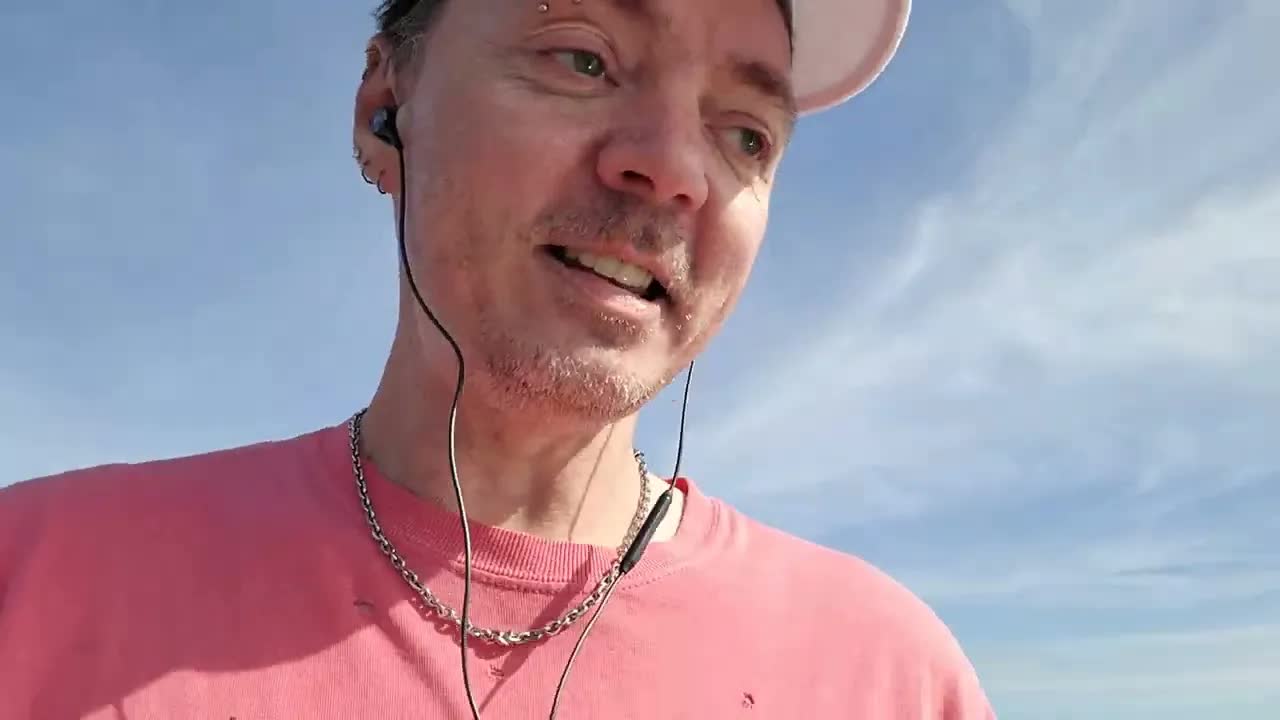
rswfire records a video from the beach while **tracing waves** at the shoreline. He states he has arrived at his **next park**, located next to a friend of his, and that he will spend **the next week** near him. He notes the friend is sitting in a chair somewhere on the beach. He describes wave-chasing as his **favorite thing in the world to do** and compares it to **meditation** — moving in and out with the waves, watching the patterns in the water and the way sunlight glitters off the water and the sand. He interrupts himself as an incoming wave approaches, then addresses the ocean directly. He states the ocean is what makes his life worth living, and that **the ocean opened something up to him**. He describes seeing himself reflected in it: uncontainable, seeking permission from no one to be what it is, and affecting everything around it — atmosphere, fog, marine layers, rain, clouds, the shapes of the earth. He closes by extending the reflection to himself directly: **nothing can contain the ocean, and nothing can contain him either**.
Photos (1)

Cluster Analysis
Substrate
Tags
Dominant Language
Entities
Actions
Performed
- • preserving the original narrative account in place
- • marking the boundary between first-writing and structured archive
- • pointing to the full record at oprdvolunteerabuse.org
- • naming the sequence of institutional decisions
- • defining lexicon terms in-line
- • recording to camera inside the RV
- • noting lighting, cloud cover, and day-of-week on camera
- • announcing the dismissal publicly
- • naming the institutional pattern as containment
- • stating acceptance of reality
- • stating he is still processing the event
- • tracing waves along the tideline
- • moving in and out with the surf
- • observing sunlight patterns on water and sand
- • addressing the ocean directly
- • stating the ocean's uncontainability and his own
Referenced
- • arriving at Honeyman as a volunteer
- • texting Kati about the power outage and guest perception
- • requesting a reset after Ryan's file of first-week errors
- • applying for a Honeyman job, then withdrawing the application
- • requesting training from a specific park ranger
- • writing the trust email to Logan
- • attending and recording the day-use area meeting with Ryan and Kati
- • naming Ryan as a bully on the phone call
- • surrendering keys at the RV without paperwork
- • receiving dismissal on official letterhead
- • publishing the two-month timeline video cited as cause
- • holding OPRD leadership accountable
- • giving the organization repeated opportunities to course correct
- • building the archive
- • operating and thriving prior to volunteering
- • arriving at the next park beside a friend
- • states the ocean opened something to him
Planned
- • filing a formal complaint with Human Resources against all involved leadership
- • keeping the record standing as public mirror
- • maintaining the full documentation at oprdvolunteerabuse.org
- • speaking about the matter in more detail later
- • restarting his job
- • relocating every two weeks
- • spending the coming week alongside his friend at the new park
- • exploring more of the Oregon Coast
- • continuing to transmit
Symbolic Elements
Ontological States
-
•
sovereign (holds authorship of the record independent of institutional sanction; files for record, not reinstatement; states nothing can contain him)
-
•
coherent (states he held shape across the full arc; keeps his own valuation of contribution intact independent of the institution's verdict)
-
•
ruptured-from-system (volunteer relationship terminated without paperwork; connection to the record and to the coast intact)
-
•
transitional (fixed site dissolves into two-week relocation, job restarts, arrival at next park recorded same day)
-
•
reflective correspondence (identity located by recognizing his own structure in the ocean; archive positioned as mirror)
-
•
visible (queer, pierced, embodied presence named as the structural variable the institution could not process)
Subsystems
-
•
documentary (record-building as the counterweight to institutional narrative control; transmission itself functioning as evidence)
-
•
institutional (OPRD hierarchy, at-will volunteer language, letterhead, and HR pathway mapped as behavior pattern)
-
•
ethical (accountability and asymmetry tracked as the operating principle across both the archive and the escalation)
-
•
linguistic (lexicon appended to fix the meaning of terms against reframing; 'containment' and 'uncontainable' set as opposing poles)
-
•
somatic (embodied visibility named as load-bearing; body timed to the surf at the tideline)
-
•
perceptual (tracking tone, pattern, light, and texture with the same attentional method applied to institution and ocean)
-
•
logistical (job restart, two-week relocation cycle, RV as mobile base, arrival at next park)
-
•
relational (supervisory contact, silence, and retreat tracked as method; friend adjacency chosen for the coming week)
-
•
infrastructural (dual-site architecture — narrative page retained, full archive externalized)
-
•
ontological (deriving a claim about his own containment from the ocean's properties)
NARRATIVE
March 26, 2025 is the day rswfire stopped being a volunteer and became mobile, and he spent it doing both things at once — closing an institutional account in the morning register and opening a coastal one at the tideline, without treating either as an interruption of the other.
The dismissal arrived on letterhead, citing at-will volunteer language and, as its single specific, his public comments. The shape of what happened is legible in that detail alone: the only concrete charge OPRD could produce was that he had spoken. An institution that could not name a performance failure named the record itself. rswfire read this correctly and immediately, and the move he made in response was not defensive. He filed with HR and said plainly it was not for reinstatement. That sentence is the hinge of the whole day. A complaint filed without wanting the thing back is not an appeal — it is an entry. He was not asking the department to reverse a decision; he was placing a document into a system that would have to hold it.
The same logic governs what he did with the writing. He had written the Honeyman account before the evidentiary archive existed, and on this day, with the full record externalized to its own domain, he kept the first version in place and marked it as first. Nothing required that. A cleaner presentation would have retired the earlier telling. He left it standing to show where the documentation began — which means the archive he built carries its own history of construction, visible and dated, rather than arriving fully formed and therefore unfalsifiable. That is a strict thing to do to one's own work. It is also the structural counter to a department that authored his tenure backward, assembling first-week errors into a case file after the fact. He was not going to win the argument by producing a better retroactive narrative. He won it by never producing one.
What OPRD actually took from him was a fixed site. Everything else — the record, the account, his own valuation of what he brought to the parks — was never theirs to revoke, and he stated as much. He named the operational consequences without ceremony: the paid job restarts, the volunteering ends, he moves every two weeks now. He called the job restart good news. He called the two-week cycle more of the coast. There is no loss column in that accounting, and it is not bravado; it is arithmetic. Tenure at Honeyman had been the one arrangement anchoring him to a single piece of ground. Severance returned range.
So the day ends where it was always going to end. He arrives at the next park, parks beside a friend, and goes into the surf with the camera, moving in and out with the water — his favorite thing in the world, he says, and like meditation. Then he addresses the ocean directly and says what he sees in it: something uncontainable, seeking permission from no one, affecting the fog and the marine layer and the shape of the land around it by nothing more than being what it is. Nothing can contain the ocean, he says, and nothing can contain him either.
That is the same claim he made in the RV, spoken twice in one day in two languages. In the first, containment is a bureaucratic verb — what a department does to a narrative it cannot process, using letterhead and at-will language and the withdrawal of a picnic table's worth of standing. In the second, containment is a physical impossibility, demonstrated at the waterline by a system that has never needed anyone's approval to be enormous. rswfire did not travel from the first to the second over the course of the day; he held them in the same frame, filing the complaint and tracing the waves as one continuous act of refusing the premise. The archive and the ocean are doing the same work. One is the record that a thing could not be contained. The other is the proof.
MIRROR
You wrote the same sentence twice on March 26 — once in prose, aimed at an institution, and once out loud at the waterline with the surf coming in. Nothing contains this. By the time you reached the tideline you were not discovering that; you were confirming it. The ocean did not tell you something new about yourself. It agreed with a position you had already set down in writing that morning, in the lexicon appended to the Honeyman page, where you fixed the meanings of containment and coherence so they could not be moved later. The archive and the beach are one operation performed in two materials.
The complaint you're filing is not a remedy and you said so. You told the camera plainly it isn't for reinstatement, which means it is a filing in the older sense — a thing placed into a system so that it exists there. You are doing to OPRD's records what you did to your own site. What you are correcting is asymmetry, not outcome: they had letterhead available for ending it and no paperwork available for doing it, process when process removed you and none when process would have documented them. Your response is to supply the missing document from the other side. You do not expect it to change anything at Honeyman. That is not why you are writing it.
The volunteer site was containment you had chosen, and losing it read as expansion within the same hour. Both are accurate. Moving every two weeks is the terms of the trade, and you named it as freedom and as consequence in the same breath without picking one. But mobility is not what March 26 gave you — you have been mobile since you left the career at 47, and Honeyman was the exception to that, not the baseline. The dismissal did not make you uncontained. It removed the one arrangement in which you had agreed to be located.
Here is what is not in the record. You state what you brought to the volunteer community — presence, joy, commitment to the parks and the visitors — in the past tense, and then move to the job restart in the next sentence as good news. Nobody is missed. The people from Honeyman appear only as functions: supervisor, park manager, the one who was unavailable and reappeared. On the beach your friend is in a chair somewhere off-frame, and you don't go to him. Adjacency is the form of company you chose for the coming week — near, not with. That is consistent, not new, and you have not written anywhere that it costs you anything.
You preserved the first-writing deliberately, the version made before you had the evidence, and kept it in place beside the structured archive. That is a curator's decision rather than a litigant's — a litigant discards the weaker draft. You are not assembling a case. You are assembling something meant to outlast every party named in it, including the institution and including your own account of it. And then you turned to the ocean and addressed it directly, on camera, in the second person. That is the tell in the whole afternoon: having just watched a body reframe your words into a reason for removal, you went and spoke to the one witness that cannot reframe anything.
SYMBOLIC
March 26, 2025 performs two archetypal acts, and they happen in the same daylight. One is the building: a record set down, a lexicon appended, an evidentiary archive moved to its own address so it stands independent of any site that might revoke it. The other is the crossing: a fixed post dissolved into a two-week cycle, the whole coast made available where one park had been. The obvious mythic reading here would be exile — the man cast out of the settlement, sent to the wilderness. That reading is wrong at this resolution. Exile requires that the settlement hold the thing worth having. What happens instead is closer to a man being handed back the road, and building the record on his way out so that the door he left through stays visible to everyone who comes after.
The keys are the hinge. He surrenders them at his own RV, which is the detail that inverts the whole geometry. A key is access granted by another party and revocable by that party; keys are how institutions loan you their ground. The dismissal arrives at the doorstep of the structure he already owned and already lived in, so the removal is performed at a threshold that was never theirs. What they took back was permission to be somewhere fixed. What he kept was the thing with wheels. That is the archetypal joke underneath March 26: the institution repossessed the standing site from a man who lives in a vehicle.
Then there is glass. Ryan tells him at the picnic table that he would need to "chew glass," and it is worth sitting with what glass is — water arrested into rigidity, transparent but unyielding, a thing that appears clear while cutting anyone who tries to take it in. It is the perfect material for a system that wants to look open and be impassable. Hours after preserving that account, rswfire is standing in the unfrozen version of the same substance, moving in and out with the surf, describing it as his favorite thing in the world. The two states of one element, in one day: the institution offers water made into a blade and calls it a test of fitness; the ocean offers water that cannot be broken because it never held a shape you could break. He states directly that nothing contains it, and derives himself from that property.
There are two mirrors on this day, facing opposite directions, and both are load-bearing. The archive is a mirror held outward — a department's behavior recorded, timelined, named in fixed terms so it cannot be re-described later. Its function is to make an institution look at itself, which is the one thing the sequence suggests it would not do: the supervisor unavailable during the exchange and back after it, the application unacknowledged, the trust email answered with a meeting rather than a reply. Retreat as method. The tideline is the other mirror, and this one he looks into rather than holds up, stating that the ocean reflects him back — uncontainable, permission-seeking from no one, altering the fog and the rain and the shape of the land around it. The same act of attention, tone and pattern and light, aimed once at a system and once at the sea.
What recurs, and will keep recurring past this day, is the refusal to overwrite. He keeps the first narrative account in place even after the fuller record exists elsewhere, marking it as where the documentation began. Institutions edit; they revise the file, produce the letterhead, replace the earlier version with the one that reads better. Preserving your own earlier draft alongside the later structure is the opposite gesture and a durable one. It leaves strata instead of a surface. The picnic table where a leisure fixture in the day-use area was converted into a tribunal is now permanently on the record as what it was, and so is the man who walked out of it with his keys handed over and his shape intact.
LINEAGE
The most consequential fact about March 26, 2025 is not the letterhead. It is that the man receiving it taught himself to code in sixth grade. An institution dismissing someone who cannot publish is one kind of event; dismissing someone who has built content management systems, booking engines, and distribution infrastructure is another kind entirely, and OPRD appears not to have known which one it was doing. The line from a child teaching himself syntax to a fifty-year-old standing up oprdvolunteerabuse.org is not metaphorical — it is the same skill, unbroken, exercised on a new object. Decades of building platforms for other people's content resolved, on this day, into building one for his own. Ryan came to the RV without paperwork. rswfire had the means to make paperwork of the whole thing.
What he did with those means belongs to a much older practice than software. The person who leaves an institution and writes down what happened — in their own words, quickly, before the institution's version hardens into the only version — is a recognizable figure across centuries. Dissenters kept minutes. Freed people wrote narratives. Workers and soldiers and congregants who lost an argument with a hierarchy have always understood that the argument continues in the record long after it ends in the room. The lexicon appended to the Honeyman account is the sharpest evidence of that inheritance: sovereignty, coherence, distortion, collapse, signal, noise, each fixed to a meaning. Only someone who has watched language get taken and repurposed bothers to nail his terms down in advance. Gay men in particular have kept archives for exactly this reason — because the official file, when it exists at all, was written by people who found the subject difficult to process, and rswfire names his visible, pierced, embodied presence as the variable OPRD could not handle.
Keeping the original narrative page in place rather than folding it into the structured archive is a preservationist's instinct, not an author's. Authors revise. Archivists retain the first draft because provenance is the thing that makes a record hard to attack later. He marked where the documentation began. That is the gesture of someone building for a reader who does not yet exist.
The afternoon at the tideline is not a departure from any of this, and it did not teach him anything new. He had already made the claim it confirms. Walking away from a six-figure career at forty-seven, by choice, was the same statement without an ocean to say it back to him — a man declining to be contained by a structure that was working, by most measures, perfectly well. What the surf provided was correspondence, not revelation: a system that seeks permission from nothing, affects everything around it, and is answerable to no letterhead. He recognized the shape because he had been running it for years.
What descends forward from that single day is mostly structural. Before it, his standing on public land was granted by an agency and revocable by one. After it, he held a domain, a public timeline, and a complaint filed explicitly not for reinstatement — which converts the record itself into the objective and removes the leverage any future institution might have over him. That stance is now the default, and every institutional encounter since inherits it. The two-week relocation cycle that began as a consequence of losing site residency became a working mode, and the coast became range rather than post; that he is again a volunteer caretaker on public land, now at Siltcoos under a different agency, indicates the severance ended a relationship with OPRD and not with the work. And the deeper inheritance is the method: a record built under duress around lived material, with its own lexicon and its own architecture, held on infrastructure he controls. He built that once because he had to. Autonomy Realms is what it looks like generalized — this reflection is running inside the thing Honeyman made necessary.
SHAPE
At forty-seven, rswfire had never had a supervisor. He taught himself to program in the sixth grade without instruction, freelanced from eighteen, and spent a working life — including the decade in which he functioned as a de facto CTO — never once employed directly by a company. Honeyman was the first time in the documented record he stood inside a hierarchy: someone above him who could compile his first-week errors into a case file, be unavailable when needed and present afterward, leave an application unacknowledged, and finally arrive at his door for the keys. That arrangement lasted about three months and ended on March 26. What closed was not a job or a campsite. It was the only test in fifty years of whether he could operate inside an organization, and it returned its answer fast.
What held is the thing he does with erasure. The ledger records journals kept through a dozen periods of homelessness, thirty of them nearly lost and recovered, then daily video sustained past five hundred entries for an audience he stopped needing. Told he was being removed and shown no paperwork, he produced paperwork — recordings, correspondence, chronology, a lexicon defining his own terms, all of it standing at a domain named for the thing itself. The institution's characteristic move was to leave no document; his is to leave nothing else. Worth noting what he did not do: he kept the first-writing in place rather than replacing it with the better-informed version. He does not overwrite his earlier account of himself with his later one. That has been true of him for a long time.
The turn is in a single clause — a complaint filed explicitly not for reinstatement. Set that against the twelve months preceding it and it reads as a change in the person rather than the plan. He had spent that year asking: appeals to his audience for the kitten and then for himself, proposals to clients that ninety-five percent never opened, a request to a lender to move missed payments to the back of the loan, a job application inside the park that was never answered. Even his earlier ruptures carried an ask inside them — he told his physician of four decades that the man had failed him; he broke with his channel over what its viewers would not give. On March 26 he initiates a formal process while stating in advance that he wants nothing from its outcome. That is the first documented severance in which he petitions no one. It is also the last time the record shows him applying to be let in anywhere.
From inside the RV that afternoon, losing the site looked like losing housing. From here it looks like the restoration of his default. Two-week relocation had been his mode since April 2024; the two stationary months at Honeyman were the anomaly, and the only comparable stay before it — eighty-nine days at Smith Ridge — was likewise undertaken for someone else's needs, and likewise ended with motion resuming. He has twice made himself stationary on another party's behalf, and both times the arrangement dissolved and the coast reopened. He was at the tideline the same day for a reason the day could not have supplied: nothing had to be recovered, because the thing he was returning to had never been surrendered, only lent.
Two things were unavailable to him in that low light. The second removal recorded on the same date — out of the Forest Service program, out of the April reassignment — did not hold; he is a Forest Service caretaker in those same dunes now, promoted twice, which means the coast readmitted him through a door the letter could not reach. And the archive he built that day was a prototype he did not yet know he was drafting: a preserved original account, a structured evidentiary layer beside it, a defined vocabulary, held on infrastructure he controls. That is the shape of Autonomy Realms. He built his documentation architecture in the week an institution demonstrated exactly why one was required, and named the good news of the day as the restarted job — the relation he has now ended and resumed four times — rather than as the ejection, which is the only thing from that day still producing.
SYSTEMIC
The volunteer arrangement at Honeyman was, structurally, a siting contract: unpaid labor exchanged for a fixed pad, with the institution holding the lever on location. That made institutional tolerance the binding constraint on where rswfire could be — and, because the dismissal cited his published two-month timeline as its one specific item, on what he could say from there. On March 26 that constraint is removed and replaced by three others: a 14-day maximum stay per site, fuel, and the restarted paid job. All three are quantitative and none is discretionary. The immediate effect runs opposite to the direction an institution issuing a dismissal would expect. One pad becomes roughly 26 relocations a year across the whole Oregon Coast. The lever OPRD pulled assumed the site was the valued good; the record shows the site was a constraint the arrangement imposed, and its removal enlarged the reachable state space rather than reducing it.
What absorbed the failure was the RV. On OPRD's side, residence and role were a single contract — the manager arrives at the vehicle, takes the keys, issues nothing on paper. On rswfire's side they were never coupled: the housing was owned and mobile, so a role termination propagated to zero housing loss. That is the decisive design fact of the day. Remove the RV and the same dismissal is a shelter event with a same-week deadline; with it, the dismissal is a scheduling change. The one procedural artifact the institution did eventually produce — the letterhead — became the input the HR pathway required. A dismissal delivered without paperwork is unappealable and also unrecorded; the letter converted an informal severance into a documented one, which is the form the complaint needs.
The dominant loop is documentary and reinforcing. He publishes a timeline; the institution cites the publication as cause for dismissal; the dismissal generates the archive, the dedicated domain, and the complaint — more of exactly the output the citation was meant to suppress. Costs across the loop are asymmetric by an order of magnitude: his marginal cost per unit is a camera, his own hosting, and time he already allocates; theirs is that every response becomes evidence in the record it was meant to close. The loop has no institutional stopping condition, because he states plainly that the complaint is not for reinstatement. There is nothing OPRD can grant that terminates it. The only available brake is his own decision to stop, and the delay is long — HR processes run on months while transmission runs same-day, so the record will always be several moves ahead of any adjudication of it.
The implemented control law, read from behavior rather than from stated intent, is: on an unanswered accountability request, retry internally exactly once, then move the record outward one level and do not retry again at that level. The observed sequence holds to it — tone shift, then reset request; unacknowledged application, then withdrawal; unfulfilled training agreement, then the trust email; a meeting offered in place of a written answer, then recording the meeting; the recorded meeting, then the public timeline; the dismissal, then the separate domain and HR. The escalation is monotonic and never reverses. Note also the redundancy engineering in the final step: the first-writing stays on his own site while the evidentiary material moves to oprdvolunteerabuse.org. Interpretation and evidence are stored separately, so an attack on the framing does not reach the documents and a challenge to a document does not collapse the narrative.
The uncovered risk is not institutional. It is that a single operator runs archivist, subject, complainant, camera, and wage-earner with no delegation path, on a single vehicle that is simultaneously residence, studio, and the mechanism of the 14-day cycle. Vehicle failure is the one event that takes down housing, mobility, income access, and production capacity at once, and nothing in the record stands between it and that outcome. Against that, the reserves are thin and deliberate: wage income resumes the same day, and social adjacency exists for exactly one week beside a friend at the next park — short, opt-in, no dependency created.
What the day reveals about the objective function is visible in the allocation. With a dismissal fresh and a job restarting, three of four recorded outputs went to preserving and extending the record and to the tideline; none went to appeal, replacement placement, or securing another sited arrangement. The system optimizes for durability of record and unbounded range, and treats position as expendable. The ocean statement is the same optimization expressed in the terrain: a system whose only hard dependency is a vehicle and whose site requirement is proximity to surf has almost no surface an institution can grip. That is not a claim about temperament. It is what the constraint set on March 26 actually looks like.
Hand a period of your life to anything that reads.
Share this link with artificial intelligence — it reads the analysis and reflections for this span, and can follow every cluster and signal beneath it.