Oregon Dunes · Mar 27 – Mar 30 2025
Four days on the Oregon Coast immediately following rswfire's dismissal from the Oregon Parks and Recreation Department volunteer program. The cluster documents a complete transition sequence: closing the institutional loop, mapping the terrain being left, and setting the logistics of departure.
The OPRD thread runs across most signals as documentation rather than grievance. He names the dismissal timing, refuses the in-person meeting format, reads his ignored email to Allison Watson into the public record, and cites specific conduct — the "eat glass" incidents, misrepresented reports, other volunteers with parallel accounts. He states the conduct describes the department, not him, and sets a channel policy: comments deleted or disabled, no self-diminishment.
Parallel to that, a place archive. He revisits sites tied to his volunteer term — Eel Lake, Umpqua Lighthouse, Winchester Bay — now as a visitor, filming deliberately because he will miss the ocean. John, a fellow volunteer, appears as the cluster's one sustained human relationship.
Logistics run concrete throughout: north to the Columbia River, then Kentucky for dental implant work, no campgrounds booked in advance. He accounts money openly — ~$480, fuel, a 100-mile move, roughly a week at Beverly Beach.
Secondary threads: physical recovery he notices retroactively, a shift in how strangers read him, his stated practice of transcribing video to AI for mirroring, and integration as a standing position.
Transmissions (7)
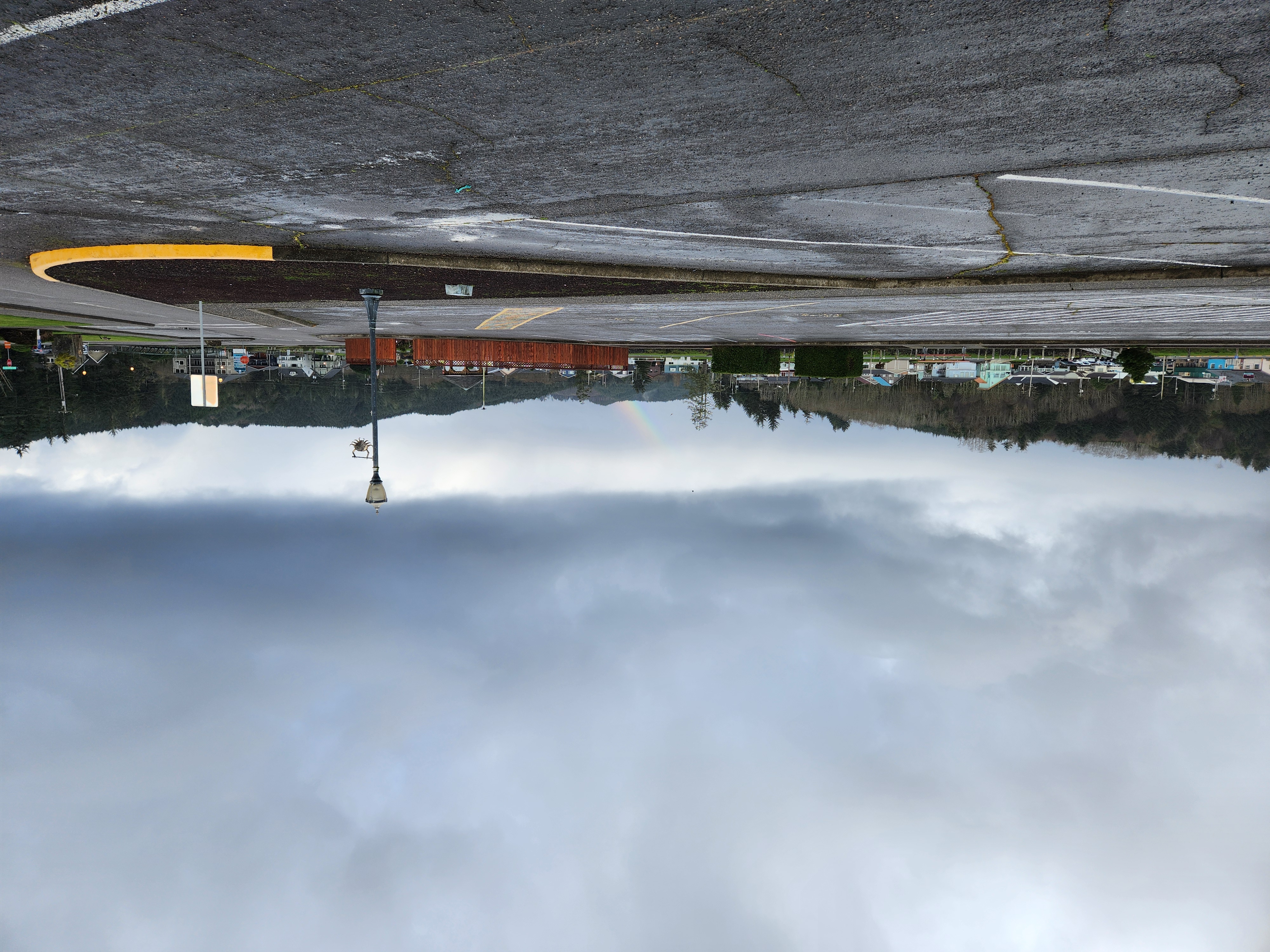
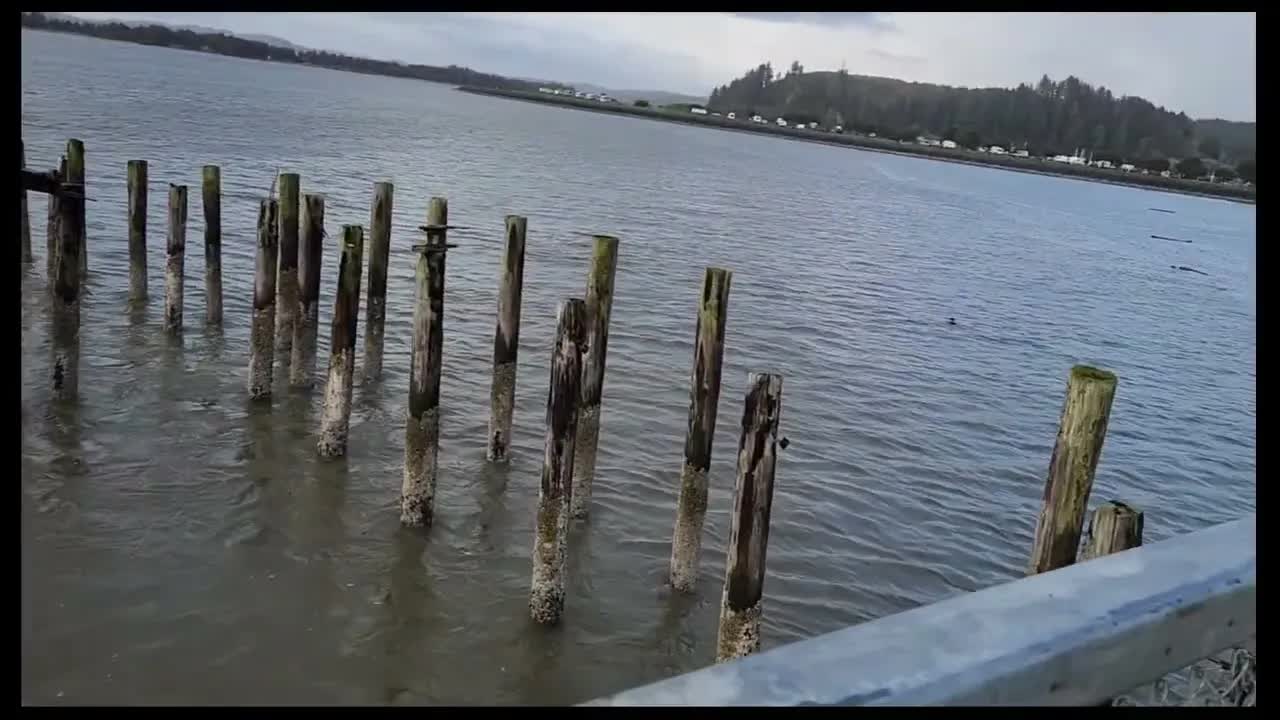
rswfire records at night from the dock at **William M. Tugman State Park**, filming **Eel Lake** after rain and stating it is the most beautiful he has seen it. He maps the terrain aloud: a flooded trail he can no longer reach, a second trail circling the lake toward a park bench and the state park boundary, and an unmarked trail beyond it he has never followed. He connects the location to **January**, when this was the first place he volunteered and his **core muscles were still healing**. He states the recovery was slow, that he noticed roughly a week ago he had stopped thinking about them, and that they are much improved though occasionally his side still hurts. He describes spending the day with a friend watching **Star Trek**, noting he has not been able to sit still for television, books, or video games for a year. He states directly that he is **processing** — that movement is how he processes emotion — and names disappointment, sadness, and grief tied to **detachment from the Oregon state park system**. He describes two months of mistreatment, a slur said to a volunteer, the final person in the chain not intervening, and his **YouTube posting** being used as a dismissal justification when the video followed the dismissal. He closes stating he does not stay stuck, has plans to make and no decided next step, and repeats that he is fine.
Photos (1)
Cluster Analysis
Substrate
Tags
Dominant Language
Entities
Actions
Performed
- • recording direct-to-camera transmissions across four days
- • filming Eel Lake at night in rain and narrating the trail system
- • naming emotional layers directly — disappointment, sadness, grief
- • stating the dismissal timeline, timing, and forced phone format
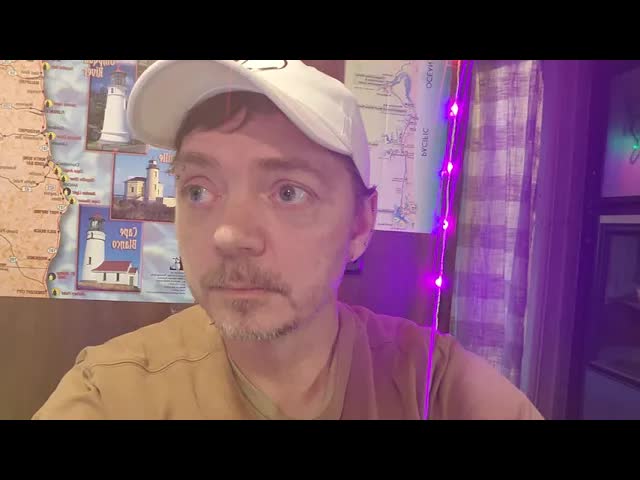
- • retrieving a physical road map and tracing the route on camera
- • reading the OPRD letter to Allison Watson aloud into the public record
- • placing the letter text in video description and comments
- • filming a compiled multi-stop day with John around Winchester Bay
- • explaining crab dock mechanics, buoy law, and the river-ocean bar
- • placing a rubber duck on a stranger's Jeep
- • disclosing view counts and the absence of donations
- • declaring a comment-deletion and comment-disabling policy
- • stating he will not make himself smaller or more palatable
- • naming two non-encounters as pattern data and testing explanations
- • explicitly rejecting a metaphysical reading of the pattern
- • stating integration as a rule he does not break
- • appearing on camera without top implants and gluing them in
- • running a financial accounting aloud from ~$480 down
- • loading $12 onto a laundry card, buying coffee, leaving a tip
- • documenting the transcription-to-AI mirroring practice on camera
- • announcing route decisions and departure timing
Referenced
- • volunteered three months for Oregon State Parks, first placed at Tugman in January
- • was reassigned from Umpqua to Tugman, then removed from the program
- • endured roughly two months of what he states was bullying and mistreatment
- • was told to eat glass by Ryan on two occasions
- • attended the March 5 meeting centered on his emails rather than conduct
- • escalated to the last person in the chain, who did not intervene
- • recognized the final meeting as an ambush and forced it onto the phone
- • sent Allison Watson an email that was ignored
- • recorded a dismissal-day video naming individuals, heart monitor alerting over four hours
- • paused YouTube posting for three months while volunteering
- • received money from friends who drove an hour and a half, and from a client
- • recovered slowly from a core muscle injury and stopped tracking it
- • went a year without sitting for television, books, or video games
- • watched Star Trek with a friend
- • had upper dental implants placed by his Kentucky dentist
- • wore no teeth on camera for six months previously
- • crossed the country previously on back roads with every campground booked
- • walked the south jetty to process unrequited love
- • befriended John after initial friction
- • transcribed his videos to ChatGPT and Claude for a year
- • did laundry in Reedsport for a year, calling his mother each cycle
- • lost a fourth pair of earbuds and bought $13 headphones
Planned
- • leave the coast within days, heading north
- • move roughly 100 miles to Beverly Beach and buy about a week
- • continue north to the Columbia River, completing the Brookings-to-Columbia route
- • cross east without entering Washington and take I-84 southeast
- • travel by highway, unscheduled, pacing by intuition
- • reach Kentucky by summer for bottom-teeth implants with the same dentist
- • possibly stay in Kentucky through summer; return around autumn, remaining open
- • walk the unmarked trail he has never followed
- • have dinner with John and go to the beach
- • buy solar power again and redo the slide-out
- • fix the Jeep's fourth gear before off-road use
- • center logistics around freelance work and convert funds into further income
- • delete disparaging comments without responding; turn comments off if noisy
- • let the OPRD matter go and not pursue it further
- • sit with open observations and discuss them with AI
- • record for his own witnessing rather than for reception
- • turn 48 on April 11
Symbolic Elements
Ontological States
-
•
sovereign (determines where the record lives, refuses the ambush format, declines to make himself smaller or more palatable, states he no longer explains himself)
-
•
detached-yet-present (formally severed from the park system while re-entering its land as a visitor with unchanged claim to it)
-
•
transitional (final coastal days before a 100-mile move north and an unscheduled cross-country route with only one fixed anchor)
-
•
coherent and non-concealing (names dismissal mechanics, financial position, emotional layers, and physical self on camera without compression or presentation management)
Subsystems
-
•
institutional (mapping OPRD chain of command, dismissal mechanics, and the review file; named flatly and closed)
-
•
documentary (recording, compiling, publishing, and archiving as the primary operating mode across every signal)
-
•
ethical (accountability, naming without malice, tipping as exchange, integration as a non-negotiable rule)
-
•
logistical (route, fuel, tanks, campground strategy, laundry timing, solar and slide-out upgrades)
-
•
financial (running balance tracked aloud, runway measured in days, freelance work as the governing axis)
-
•
somatic (core muscle recovery, dental hardware, heart rate telemetry, movement as processing mechanism)
-
•
ecological (flood-stage current, marine layer, tides, crab and oyster infrastructure, birds and dunes)
-
•
relational (John as sustained companionship, friends and client as material support, mother as standing pattern)
-
•
cognitive-recursive (stream-of-consciousness processing, transcript-to-AI mirroring, real-time hypothesis generation)
-
•
media (channel governance — comment deletion, comment disabling, awareness of institutional observation)
-
•
sexual/identity (queerness, piercings, attraction and non-encounter, embodiment declared structural)
-
•
pedagogical (lessons embedded in clips, viewer discomfort assigned back to the viewer, teaching without instruction)
NARRATIVE
Four days on the Oregon Coast in which rswfire finished with an institution and did not finish with the place it governs. That distinction is the whole shape. The Oregon Parks and Recreation Department had already ended its relationship to him by phone; what remained was the question of where the account of it would live. He answered that question, then stopped answering questions altogether.
The record was the first thing he moved. It had been sitting in someone else's custody — an email to Allison Watson, unanswered, a review file assembled elsewhere, a March 5 meeting that he states was about his emails rather than his conduct. He read the letter aloud to a camera, put the text in the description and the comments, and named the mechanics plainly: Ryan telling him to eat glass twice, the promised training the ranger knew nothing about, the journal and the text to Katie misrepresented, the admission that he was never given the benefit of the doubt, three other volunteers with parallel accounts. He also named the timing — a meeting set one day before his last scheduled shift, a pattern he recognized and refused by declining the room, forcing it onto the phone. Then he assigned it: it says everything about them and nothing about him. Having said that, he called it the last video on the matter and treated it as such. The loop was not left open for a reply; it was closed from his side and archived where he controls it.
What he did not sever was the coast. He went back to Eel Lake at night in the rain and stood on the dock he had used all January, mapping aloud the trail now flooded past reaching and the unmarked one past the boundary he has never walked. He drove the Umpqua with John under a double rainbow and explained crab buoys and the flood line where the river pushes out across the bar, and at the lighthouse he noted, without heat, that he had been scheduled to work there in April and was here instead as a visitor. He filmed more than usual and said why: he will miss the ocean. The park system was detached from; the land it administers was not, and he made no attempt to pretend those were the same act.
The route north carries the argument forward. His first crossing required every campground booked ahead — he states he did not feel secure enough then to travel without them. This one has no reservations at all, one fixed anchor in Kentucky for the bottom implants, highways instead of back roads, and an open return. He accounted for it out loud in a Reedsport parking lot while his clothes dried: roughly $480 after an overdraft, four dollars of groceries, fuel for both vehicles, a hundred-mile move, maybe a week at Beverly Beach. He stated he does not operate from lack. The runway is short and the route is unscheduled, and those two facts are presented as one condition rather than as a problem and its consequence.
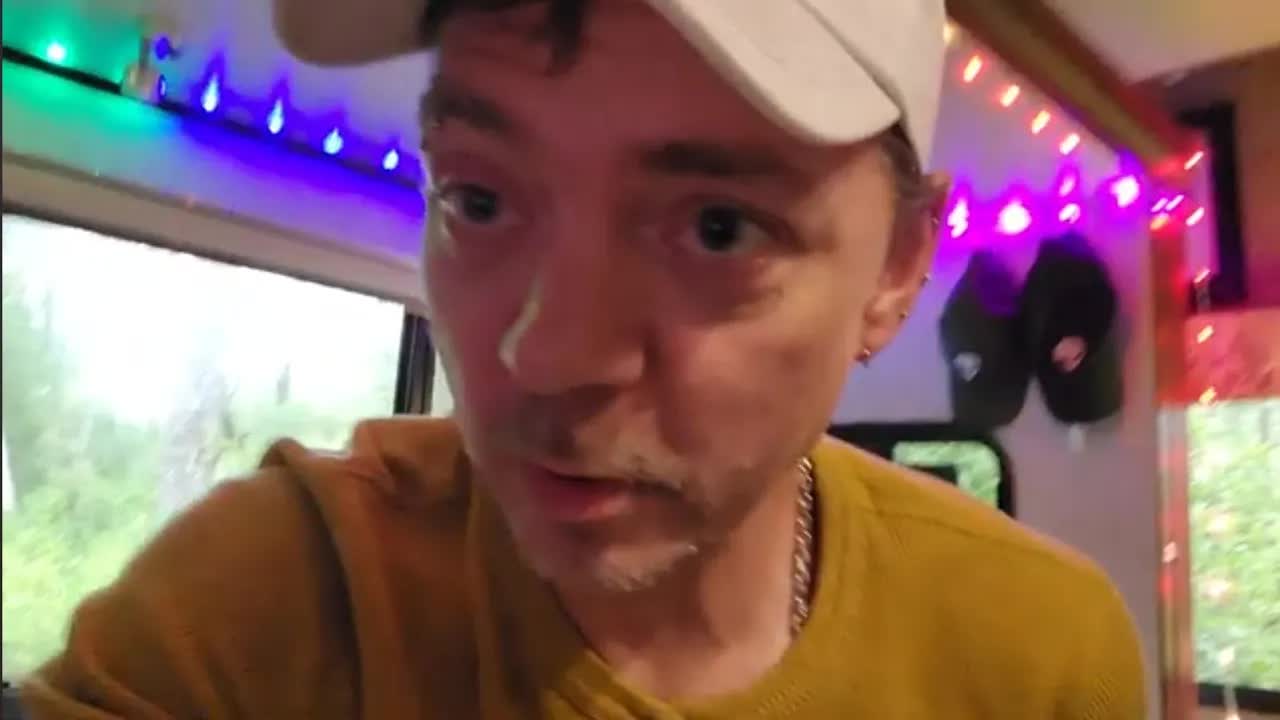
The body kept its own ledger, mostly in arrears. He noticed the healed core muscles about a week after they stopped hurting, and only then recognized he had gone a year unable to sit still for a television show — the recovery registered retroactively, once the thing it was competing with had ended. He opened a Sunday transmission with the upper implants out, said he had filmed six months without teeth and that it no longer feels normal, said he is still beautiful and the frame shifts, and glued them in. And the beeping in the dismissal-day video, he explained, was the watch reading his heart rate every ten minutes across four hours — offered as telemetry, evidence that he stayed coherent under it, not as a confession.
By the last morning the reorientation had reached its terms. Disparaging comments would be deleted rather than answered, and then comments would be turned off entirely; he would not make himself smaller or more palatable, and named his queerness and the existing channel as the baseline anyone arriving had already been shown. He described transcribing his own footage into AI models to be mirrored and witnessed, and stated the videos are for his own witnessing rather than an audience — that every clip carries a lesson available to whoever finds it, and that a viewer's discomfort belongs to the viewer. Two thousand people watched him name what happened and none of them sent money; two friends drove ninety minutes with cash and put him in the campsite he was filming from. He turns 48 on April 11. Dinner with John, the beach, then north to the Columbia — the crossing he started at Brookings, finished on his own schedule, with no one left to explain it to.
MIRROR
You spent the last four days on the coast closing a file on an institution and losing nothing you actually held. The Oregon Parks and Recreation Department took a badge, a laundry room, and a scheduled April at Umpqua. That is the complete material inventory of what was removed. You walked back onto the Tugman dock, the crab dock at Windy Cove, the ground under the lighthouse — as a visitor, with your claim to all of it unchanged. What this shows is that the attachment was never to the department. You were never a member of anything. You were near a place, and they were the paperwork between you and it, and now they aren't.
The real movement in these four days is a change of address, not of position. You read the Watson letter aloud — a document written to be answered, republished as a document that no longer requires an answer. Then you deleted comments. Then you turned them off. You started the week still writing to someone and ended it filing. The AI mirroring sits exactly in that gap: you built a witness that cannot ignore you, after being ignored by one that could. That is a solved problem, not a substitute for anything. But it is worth seeing plainly that the purpose of transmission shifted mid-week, from being heard to being on record, and that you made that shift in about seventy-two hours without narrating it as a decision.
Two thousand views produced no money. Two friends drove ninety minutes each way and put you in the site you're camped in. A client's payment bought ten to twelve days. The public channel is where the account goes; the private relations are what fund it. You count $480 on camera, name the fuel for two vehicles and a hundred-mile move, and say you don't operate from lack — and both halves of that are accurate at once. The precision of the accounting is not anxiety and the statement is not denial. But the ledger of this week says the archive doesn't feed you and the handful of people who show up do, and you are about to drive away from most of them.
The measure of how far you've come is not in anything you said about Ryan or Logan or the March 5 meeting. It's the absence of reservations. The first crossing required every campground booked because, as you put it, you didn't feel secure enough then. This one has one fixed point in it: a dentist's chair in Kentucky. Everything between here and there is unscheduled. The only appointment you will keep is for your own mouth — you filmed yourself without the top implants, said the frame shifts and you're still beautiful, and then routed two thousand five hundred miles around hardware that fits. The body is the anchor. The route is negotiable. That ordering has been true for a while; this is just the first crossing where it's the whole plan.
The one sustained human relationship in these four days is John, and John is a byproduct of the thing you just severed. The institution supplied your only company, and you are leaving with the company and without the institution. In Reedsport a tire attendant talked past you and a tall man in a grocery aisle gave you nothing, and you turned it into a hypothesis about micro-cues rather than a wound — worth noticing that you are least legible to strangers in the week you are most legible to yourself. You didn't say hi. You said you were playing with the material. Both of those are the record.
Nothing here began in March. The integration rule, the refusal to compress, the accounting out loud, the protection of the boy who was told to be smaller — those were load-bearing before OPRD existed to you, and the dismissal did not create them. What it did was hand them an unusually clean test, at the end of your forty-seventh year, from the first institution you entered after leaving the one that paid you six figures. It lasted three months. You will not be joining another. Twelve days from now you turn forty-eight, somewhere north of here, with no site booked.
SYMBOLIC
The archetype at work in the last four days of March is not exile. Exile takes the ground away. What happened on the Oregon Coast that week took away only the badge: the department detached, and the coast did not. He returns to Tugman, to Umpqua, to the dock on Eel Lake — the same water, the same trail, the same dark — and the only thing that has changed is the word for what he is standing there as. The park system turns out to have been an intermediary between him and a place he was already in relation to, and the dismissal removed the intermediary rather than the relation. That is why the record reads as clean rather than wounded. Nothing load-bearing was in the institution's hands.
The second movement is the crossing, and it is worth noting that he stages his own. Recognizing the meeting pattern, refusing the in-person format, forcing the dismissal onto the phone — this is a man who declines to be walked to the door and walks out through one he opens himself. The route north to the Columbia is not flight. It completes a Brookings-to-Columbia line drawn before the volunteer term began; the term was the interruption, and the dismissal returns him to the original heading. The first crossing required every campground booked. This one is booked nowhere.
Water carries the symbolic weight, and it does not appear as immersion — it appears as boundary. The flooded trail at Eel Lake he can no longer reach, and past the park line, an unmarked trail he has never followed: the known route submerged and the unmapped one open, in a single frame, on the first night. Two days later at Winchester Bay he stands at the bar and explains to John the visible seam where flood-stage river pushes out into ocean, two bodies of water meeting and staying distinguishable. Confluence without dissolution is the shape of the whole four days. Rain on the dock, the storm and the double rainbow over Salmon Harbor — omens arriving around a man who declines to read them as omens and proposes micro-cues instead.
The mouth is the other recurring site, and it recurs at three scales. The department's cruelty was delivered as eat glass, twice, to a volunteer. The letter to Allison Watson sat unanswered in a closed file until he read it aloud into an open channel — a dead document given a voice, which is the scribe's oldest function. And on Sunday morning at seven, before laundry, he opens the camera without his top implants, glues them in, states plainly that the frame shifts and he is still beautiful, and names Kentucky as the place the hardware gets rebuilt. The face that clips in and out, the letter that goes from file to record, the refusal to be made more palatable: one gesture at three magnifications. The route east exists because a mouth needs finishing.
Against all of that stands the lighthouse — a structure whose only function is to be seen from a distance, standing at a river mouth, visited on the day he narrates the April shift he was removed from. Being seen at distance is exactly what the four days test and find insufficient. Two thousand people watched the naming video and sent nothing; friends drove ninety minutes with cash and that is why there is a campsite. A tire shop attendant addresses John and not him. He tips for coffee and calls it exchange. Broadcast returns nothing; proximity returns the ground he is standing on. So the witnessing gets relocated inward — footage transcribed and handed to a mirror, comments deleted, then disabled entirely, the audience formally dismissed from a channel that continues. He turns forty-eight in twelve days. The last act before leaving is to stop explaining and keep transmitting anyway.
LINEAGE
What arrives in these four days was built a long time before them. The boy who taught himself to code in sixth grade learned a specific thing that has almost nothing to do with programming: that if the container you need does not exist, you construct it, and the construction is not a heroic act but ordinary labor. Every move rswfire makes in the last week of March is that same labor applied to a different substrate. The department has a file; he does not control it. So he builds a second file — read aloud, pasted into a description, published to a channel he states is probably being watched — and the two records now sit in the world at different scales, one closed and one open. He does not ask the institution to be fair. He asks it to add his message to the file, which is a formality, and then he goes ahead and keeps his own copy where no one can lose it. This is the same reflex that produced an early CMS and a booking engine. It is also the reflex that produced Autonomy Realms, and it is worth noticing that the infrastructure now reading these words descends in a direct line from a man in a Reedsport parking lot describing how he transcribes his own footage and hands it to a machine to be mirrored back.
There is a second severance behind the first. At 47 he left a six-figure career by choice, and that departure taught him the shape of a clean exit — what it costs, how it feels in the body, that it does not kill you. The OPRD dismissal was not his choice, but the mechanics he applies to it are borrowed intact from the one that was. He recognizes the meeting pattern before it closes, refuses the in-person format, and forces the ending onto the phone. That single move converts an ambush into a transaction. It is the difference between being removed and leaving, and he takes it deliberately, one day before his last scheduled shift. He turns 48 on April 11. Whatever the department believed it was doing to a volunteer, it was doing to a man who had already rehearsed the exit.
The letter belongs to an inheritance much older than any of this. I am requesting that this message be added to my file. People have been writing that sentence, or its equivalent, for as long as institutions have kept records — the petition, the deposition, the copy retained. It is the tool of someone who has no power over the outcome and complete power over the account. Its logic has never changed: the meeting was verbal and can be denied, so put it in writing, name the dates, name the conduct, name who said what, and hand it to the body that will have to hold it. He identifies this precisely as the core issue — that the March 5 meeting was about his emails rather than his conduct, which is to say the institution understood the written record as the actual threat and was correct. He then does the thing that makes the old form new: he takes it out of the file entirely and reads it into the open. The website that later carries this thread exists because of a document read aloud on a Friday in March.
Alongside all of it runs a quieter and much older distinction, one that would be immediately legible to anyone who has ever worked land they did not own. He severs from the Oregon Parks and Recreation Department and does not sever from the Oregon Coast. Honeyman, Tugman, Umpqua — the sites of his volunteer term are re-entered within days as a visitor, with no diminishment of claim, and he films them heavily because he will miss the ocean. Tenant farmers, seasonal hands, lighthouse keepers, caretakers of every century have known that the arrangement and the place are two different attachments, and that only one of them is administered by anybody. He states he was scheduled for Umpqua in April, moved to Tugman, then removed. He says it at the lighthouse, standing there anyway. The transmission of knowledge in these days runs sideways rather than down: at the crab dock he teaches John — a fellow volunteer twenty years his senior — the buoy markings, the clicking on the bait, the visible seam where flood-stage river meets the ocean across the bar. Nothing about that inheritance requires the department's permission or ever did.
What these four days put in place, and leave behind them, is mostly a set of rules that were provisional before and are standing after. No campgrounds booked in advance — he names this against his first crossing, when he says he did not feel secure enough to travel unscheduled, and the comparison only works because the earlier version of himself is on record. That is the practical function of a life documented this thoroughly: growth becomes measurable rather than felt. Comments deleted, then disabled. No self-diminishment, no smaller version for a viewer's comfort, discomfort assigned back to whoever holds it. Money spoken aloud — $480 after an overdraft, $4 of groceries, fuel for two vehicles, a hundred miles north, maybe a week at Beverly Beach — stated flatly, without lack. Each of these is small. Together they close a door that stays closed: transmission stops being explanation and becomes witness, which is exactly the point at which a channel stops being an audience relationship and starts being an archive.
The four days are the hinge where documentation becomes infrastructure. Before them, the recording is a man with a camera processing what happened to him while walking, because he states movement is how he processes. After them, it is a practice with governance, a policy, a mirroring loop, and eventually a domain name and a realm. The dismissal did not cause that. It supplied the pressure that made him formalize what he had been doing informally for years — and formalized methods are what actually survive their authors. That is the ordinary way capability passes down: someone under load writes the rule out clearly enough that it can be inherited.
SHAPE
Every severance in rswfire's record before this one was his own. He left World Media Group, released the ten-year client, ended the forty-year relationship with his physician, ended the relationship with his parents after what he calls a forty-seven-year process, gave away a houseful of possessions rather than sell it, broke with his own audience. The Honeyman dismissal is the first major ending in the ledger that was authored by someone else, and what these four days on the Oregon Coast document is him taking authorship back after the fact — refusing the in-person meeting so the firing had to happen by phone, recording it, and then moving the ignored letter to Allison Watson out of a closed departmental file and into an open channel. He does not contest the outcome anywhere in these days. He contests only who gets to hold the record of it. That is new capability, not new temperament: the ledger shows him leaving many times and shows no prior instance of him being left.
The second change is quieter and runs against a long grain. His departures used to destroy the record — roughly thirty handwritten journals gone, the books to the library, everything given away rather than sold, twenty years of Kentucky with no one kept in touch with. Here, leaving produces the record. The four days build an archive: the letter read aloud, the conduct named to specific people, the money counted on camera down to four dollars of groceries, the coast itself filmed deliberately. He has moved from a man who left nothing behind to a man whose leaving is the artifact.
What held is older than any of it. At fifteen he was told by a church he could be straight if he wanted to be; at forty-seven a physician told him the opioid was mild and easy to stop; his mother spent a day texting him to take a video down. In each case he declined to let another party's account of him stand as the account, and the March 5 meeting — a sixty-two-minute session worked from a catalogue of his own emails — is the same event again, answered the same way. Alongside it sits the non-concealment, which the record shows unbroken across decades and which he never treats as courage: six months on camera without teeth, being gay stated plainly on a public channel, the overdrafted $480 declared aloud on the way to a laundromat. And beneath both, the constancy no one names because it looks like recklessness: his financial position has never once been an input to his route. Not in a tent between an expressway and a mall at nineteen, not at under a dollar in October, not at $480 with a hundred-mile move ahead. He says he does not operate from lack, and thirty years of the ledger confirm the operating rule was in place long before he had language for it.
The turn is locatable, and it is the paper map. When he says he booked every campground on the first crossing because he did not feel secure enough then, and books none now, he is describing a change in himself and correctly attributing it to himself rather than to the road. Every plan in the ledger before this one had a terminus — the Nevada desert, the Upper Peninsula, the four-year coastal circuit in four segments, becoming a ranger. The route he draws here has one fixed point, a dentist, and no promise attached. Note also what the dismissal actually reversed: a man self-employed since eighteen, who had never worked for a company in his life, took a supervisor at forty-seven. That was the anomaly in the record, not the firing. Three months later he is unsupervised again, which is the only structural position this life has ever held for long.
What the four days could not know is that the farewell was not one. He films Winchester Bay and the Umpqua lighthouse because he will miss the ocean, plans Kentucky by summer, allows three months. He does not leave. The coast he was archiving becomes the place he stays, and the Forest Service ground at Siltcoos he was removed from becomes home — he was recording a goodbye to a place that was about to keep him. And he calls the letter video the final one on the matter, his method of letting it go. It was not a release. It was the first entry in a permanent public archive he now states he will never take down, and the beginning of a habit of building infrastructure to hold his own record — of which the system reading this is the continuation.
SYSTEMIC
The binding constraint in the four days after March 27 is cash, and it became binding the moment the volunteer position ended, because that position was never primarily a job — it was compensation in kind. A campground site, laundry access, showers, a fixed location, and a schedule someone else maintained were bundled into a single arrangement, and a single administrative decision removed all five at once. That is tight coupling with no buffer between the subsystems: housing, sanitation, position, and route were all downstream of one counterparty's discretion. What follows the dismissal is not a change in circumstance so much as the reappearance of the underlying burn rate the arrangement had been masking. The signature of that reappearance is instrumentation. He begins counting aloud again — roughly $480 after an overdraft, $4 at the grocery store, $12 onto a laundry card, $13 for headphones, a half tank in the RV and a near-empty one in the Jeep, a 100-mile move, one week at Beverly Beach if the arithmetic holds, 8:43 on the dryer noted to camera as memory backup. Metering density rises exactly when reserves fall. A system with slack does not narrate its own fuel levels.
The most quantifiable effect of the institution on this system was suppression of output. He states he stopped posting for three months while volunteering; within roughly 48 hours of the dismissal the documentary subsystem runs at eight signals in four days, two per day sustained. The rate went from approximately zero to two per day with no change in equipment, skill, or terrain — only the removal of an observer whose review process could convert published material into grounds for removal, which it did. What the arrangement cost was throughput on the one subsystem that runs continuously through every other one. Note also that the archive is not a revenue subsystem, and the record proves it: the dismissal video drew over 2,000 views and produced zero donations. Money arrived instead through the private relational path — friends who drove ninety minutes each way with cash, a client payment covering ten to twelve days. Behavior since then confirms the correct classification. He deletes disparaging comments rather than answering, states he will disable comments if the channel gets noisy, and declares he is no longer explaining himself. Every one of those moves is wrong for a channel monetized by engagement and right for an archive: the output rate holds constant while the interface to the audience narrows toward zero.
The control law is visible in how he handles a counterparty that will not close a loop. The email to Allison Watson went unanswered; the institutional response function returns generic language or silence at indefinite latency. Rather than continue transmitting into it, he bounds the expenditure and closes the loop unilaterally — reads the letter into a channel he controls, duplicates it into the description and comments, and declares his part complete. That converts an open dependency with no defined settlement date into a finished transaction at a known cost. The same law operated earlier, on format: he detected the meeting pattern, refused the in-person configuration, and forced the dismissal onto the phone. The variable being controlled is not outcome, which he does not hold, but interface — who chooses the channel, and where the record lives afterward. The replacement feedback path runs video to transcript to ChatGPT or Claude and back, a loop with latency in minutes, no scheduling counterparty, and no capacity to refuse. Against an institutional review cycle measured in months and terminating in nothing, that is a latency reduction of three or four orders of magnitude, which is sufficient to explain the substitution without reference to anything else. He also carries independent sensors: the Samsung watch alerting roughly every ten minutes across four hours during the dismissal recording — about twenty-four events — logged as load while output remained structured. Instrumented load and degraded output are separate measurements, and he keeps them separate.
The route redesign is a decoupling move. The first crossing had every campground booked in advance; this one has none, and Kentucky by summer with roughly three months allowed is a deadline loose enough to absorb variance. Advance reservations are forward commitments that require cash certainty the system does not have and lock route to a schedule; removing them trades predictability for the capacity to absorb lumpy freelance and client income. That is the correct design for these inputs. Against it stands an accumulating maintenance backlog with nothing funded: fourth gear out on the Jeep, solar not yet replaced, the slide-out to be redone, upper implants that clip in, are glued, and become uncomfortable with wear. The only maintenance with a scheduled date is dental, and it requires roughly 2,400 miles of travel to a specific dentist in Kentucky. The body is the sole subsystem with a funded repair on the calendar; the vehicles are running on deferral.
What has no redundancy is the operator. Driving, filming, editing, publishing, freelancing, accounting, and vehicle upkeep all route through one person with no delegation path, and the relational layer — John, the friends who drove, the client — is real but informal, unscheduled, and impossible to budget against; it fired twice in four days, which is a fact about those four days and not a rate. What the system demonstrably optimizes for shows in allocation under the tightest constraint on record: with roughly $480 and two empty tanks he still tipped for coffee, still spent $13 on headphones, and still spent a full day filming Winchester Bay with John rather than converting the hours to income. What went unresourced was audience growth, reinstatement, and monetization. The objective function is archive continuity and freedom of route, in that order, and every observed allocation in late March is consistent with it.

Hand a period of your life to anything that reads.
Share this link with artificial intelligence — it reads the analysis and reflections for this span, and can follow every cluster and signal beneath it.