Waxmyrtle · Mar 16 – Mar 24 2026
Five signals spanning March 16–24, 2026 converge on a single calendar week: the one-year mark of the Oregon State Parks dismissal and the surveillance encounter that preceded it. rswfire anchors each anniversary to its original geography — writing from Siltcoos and Honeyman State Park, on the exact dates — and states his full name, Robert Samuel White, on the record.
The institutional thread runs from documentation to action. He enumerates what a year produced: no explanation, no photograph, no operational record, an unsubstantiated cover story, and an expulsion letter citing protected First Amendment speech on state letterhead. He revises a prior position and states he will pursue representation with one year remaining on the statute clock. On the anniversary itself, three officers arrive behind a locked federal gate; he declines to speak without an attorney, films the vehicle, and later sets CAD record SP26097765 and District Ranger Michele Holman's letter against their stated reason.
Running alongside is ground-level operation:
- The Jeep that carried him from Kentucky, named as at risk
- The marina job, boots already marked with paint
- Roughly 900 transmissions awaiting geotagging in the Autonomy Realms map
- A jetty walk with Wendy, pinned permanently to his realm
The cluster holds both registers without merging them: unfairness named at the fire as standalone fact, and building continued because the compass points and he follows.
Transmissions (3)
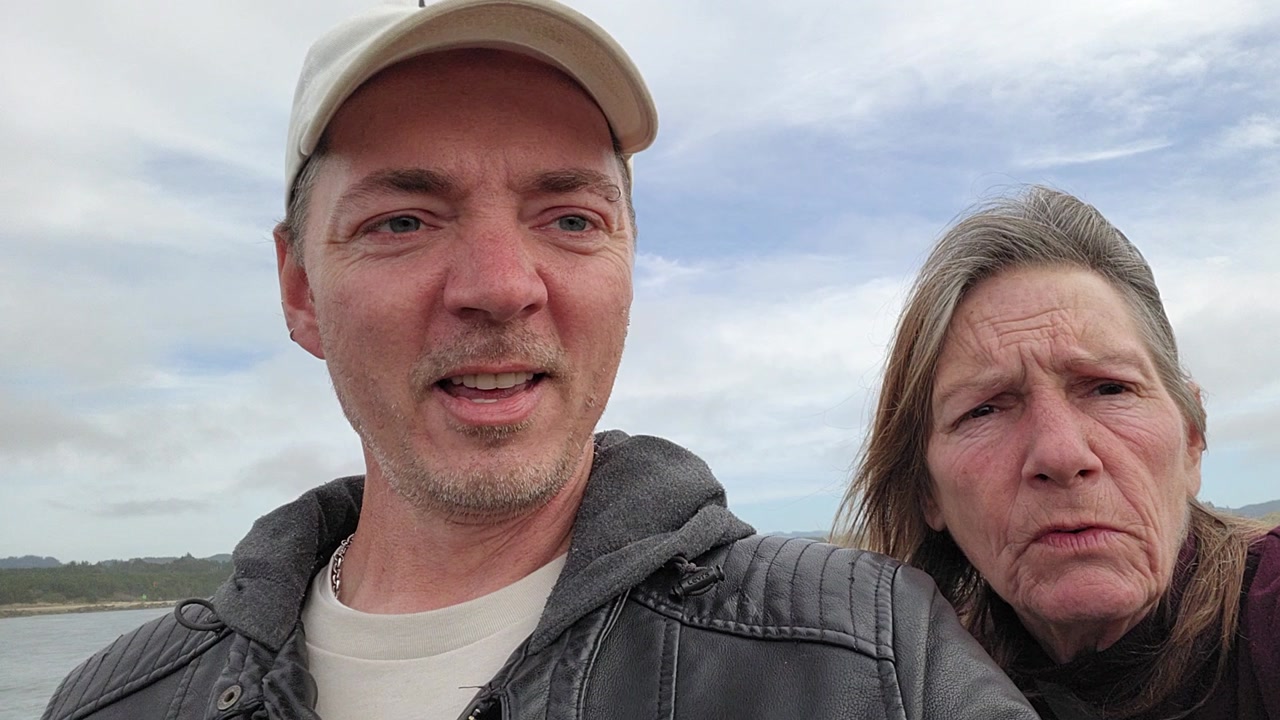
rswfire records a walk on the **south jetty of the Oregon Dunes** with **Wendy**, whom he introduces on camera as one of the fiercest women he has met. He states the video will be **pinned to a map in Autonomy Realms**, in his realm, permanently. He describes the **backlog of geotagging**: roughly **900 transmissions over two years** that now need location data since he has built the map program. He references an earlier jetty walk that also needs pinning. He recounts crossing the jetty boulders previously in shoes he had worn for about a year, worn smooth, which is why he moved carefully — the reason he bought his current **boots**. He notes he got the **job at the marina** a week after buying them, and that the boots already have **paint** on them. He observes the river meeting the ocean, stating he had not considered the scale of it until that day. He notes the boulder-by-boulder traverse out to the end and back, and declines repeating it today. Closing observations: - Birds on the beach - A **Jeep** driven out on the sand, which he notes he cannot currently do with his own - Orientation calls: **south toward the dunes, north toward Florence**
Documents (2)
Cluster Analysis
Substrate
Tags
Dominant Language
Entities
Actions
Performed
- • naming unfairness directly, declining the pivot to resilience
- • separating merit from outcome; listing structural pressures in sequence
- • recording at the south jetty and introducing Wendy on record
- • naming location on record and declaring the signal's map destination
- • orienting the frame south toward the dunes, north toward Florence
- • marking the one-year date of the assessment encounter
- • enumerating what the institution has never produced
- • counting institutional silence at 365 days
- • naming misuse of state resources and authorization above park level
- • stating his full legal name on record
- • reciting the picnic table statements and the dismissal sequence
- • naming the weaponization of his sexuality and of protected speech
- • revising his prior stated position on litigation
- • recording three officers at the federal gate and filming the patrol vehicle
- • naming the visit as intimidation and asserting no wrongdoing
- • linking evidence pages and archive
Referenced
- • drove the Jeep from Kentucky to the Oregon Coast
- • displaced by the industry; jobs closed by text message
- • built for two years under financial precarity
- • walked the full jetty in worn, smooth-soled shoes
- • bought boots; got the marina job a week later
- • built the map program and accumulated 900 transmissions
- • documented the March 18, 2025 unidentified encounter the same day
- • made disclosures to his supervisor in trust
- • held a full year of volunteer placements lined up
- • recorded a prior video stating he did not want to sue
- • built the public archive of the OPRD thread
- • declined to speak without an attorney and closed the door
- • obtained CAD record SP26097765 via records request PR27478
- • requested identification of DPSST 48454
- • entered the District Ranger's letter as Exhibit 26
Planned
- • coming home from the fire and building anyway
- • following the compass, including at the cost of the Jeep
- • pinning this and prior recordings to the realm map
- • geotagging the backlog of 900 transmissions
- • seeking an attorney who understands the stakes
- • pursuing litigation within the remaining year of the statute
- • carrying the case toward establishing volunteer rights
- • keeping the record permanent and publicly archived
Symbolic Elements
Ontological States
-
•
sovereign (holds the record, the infrastructure, and the terms of engagement independent of institutional acknowledgment — declining to speak without counsel, setting conditions for representation, sourcing continuation from an internal compass)
-
•
embedded (recording from inside the conditions and the terrain — the fire, the jetty boulders, the work center door — not from a resolved vantage after them)
-
•
archivally fixed (events converted into citable identifiers, dated markers, and geotagged coordinates; absence of institutional records entered as evidence rather than as open question)
-
•
contradiction-holding (stated purpose against written record, reassurance against dispatch entry, navigation against unfairness — the gap preserved rather than reconciled)
-
•
clock-bound and revising (operating inside a stated one-year statute window, openly overwriting a prior stated position on litigation)
Subsystems
-
•
documentary (real-time and same-day capture as the load-bearing spine across four of five signals)
-
•
archival (oprdvolunteerabuse.org, the realm map, CAD records, exhibits — a single expanding evidentiary layer)
-
•
legal (statute clock, First Amendment, attorney invocation, Attorney General filing, conditional representation terms)
-
•
institutional-analytic (mapping authorization chains across Oregon State Parks, OSP, and the Forest Service, including where their accounts contradict)
-
•
infrastructural (self-built map program and archive; locked federal gate and work center as physical infrastructure)
-
•
temporal (anniversary dating used as measurement instrument — 365 days of silence, exact date placement of the gate visit)
-
•
somatic-locational (fire at the campsite, footing on jetty boulders, speaking to camera at the door immediately after)
-
•
economic (financial precarity, the at-risk Jeep, the marina job, paint on the boots)
-
•
relational (Wendy present and named on record)
-
•
ethical (deserved vs. undeserved; misuse of state resources against an unpaid volunteer; remedy reframed from personal to structural)
-
•
directional (the compass as operative navigation replacing fairness; cardinal orientation calls on the jetty)
NARRATIVE
March 2026 at Siltcoos was the week rswfire held a calendar up to an institution and the institution walked through the gate to meet it. He had spent a year measuring silence — no explanation, no photograph, no operational record, a cover story offered within hours and never once substantiated. Silence of that duration is hard to enter into evidence. By March 24 he no longer had to: the answer arrived in three vehicles, on the exact date, and identified itself by refusing to.
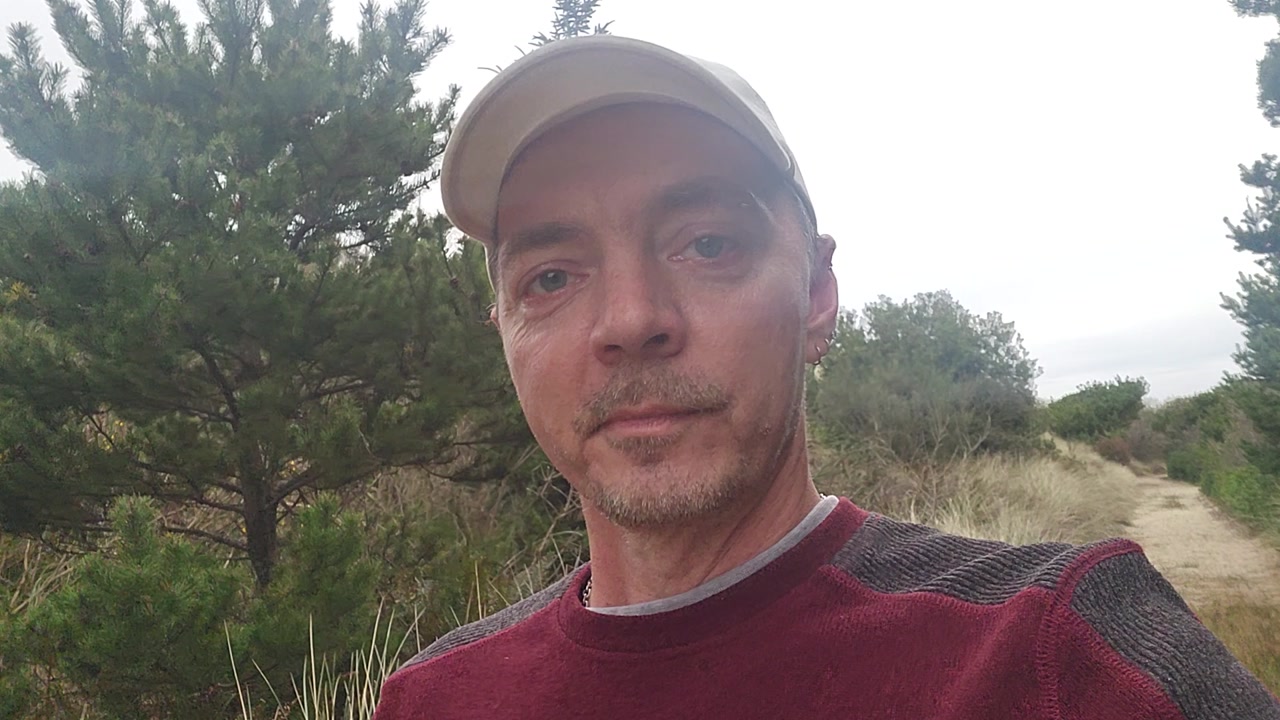
The ground was set first, at the fire on the sixteenth, and set deliberately. Before any of the anniversary work, rswfire wrote out the ledger — the industry that displaced him, jobs ended by text, two years of building against constant precarity, the Jeep that brought him from Kentucky now at risk — and named the whole of it as undeserved without converting it into anything. No resilience, no lesson, no arc bending. That refusal is load-bearing for everything that follows. A man who needs his record to vindicate him will bend the record. rswfire had already severed the two: he states he continues not because it is fair or because it will pay, but because the compass points and he follows. What comes after is therefore documentation rather than argument.
The method itself is the anniversary. He does not commemorate; he re-occupies. He writes from Honeyman on the date the unidentified man came to Honeyman, from Siltcoos on the date the letter came, and he opens on camera by stating his full legal name — Robert Samuel White — the way a person does when the recording is meant for someone other than the people watching. Time becomes the instrument. Three hundred sixty-five days with nothing produced is not a gap in the file; it is the file. The institution's failure to answer is entered as the finding.
Then the position shifts. With one year left on the statute clock, rswfire openly overwrites what he said in an earlier video and states he will seek representation — conditionally, and not for himself. The terms he names are structural: an attorney who understands what the case is for, and a case aimed at rights and protections for volunteers who currently have neither. An expulsion letter that cites protected First Amendment speech on state letterhead is not a grievance; it is a defect in a system, and he treats it as one. Documentation stops being the end of the work and becomes the beginning of a filing.
What happened at the gate on the twenty-fourth was a repetition, and he recognized it as one immediately. In March 2025 a man came to him with no uniform, no identification, and no name, and asked how leadership was treating him. In March 2026 three officers came behind a locked federal gate posted against public access, declined to name their agency, told him they were concerned about what he posts online, and told him he was not in trouble. rswfire declined to speak without an attorney, filmed a plate, and closed his door. The paperwork that surfaced months later did the rest of the work for him: a CAD entry with his name in the caller field and a Criminal unit designation, a Forest Service District Ranger stating in writing that her agency did not initiate the interview and only unlocked the gate, one officer never identified at all, one DPSST number requested and never produced. He states the reassurance was the cover story arriving in person. The pattern he had spent a year describing walked up and performed itself on camera.
Running underneath all of it, unhurried, is the same instinct in a warmer register. On the eighteenth he walked the south jetty with Wendy, introduced her on camera, and said the video would be pinned to a map in his realm, permanently. He mentioned the roughly nine hundred transmissions from two years that now need coordinates, since he finally built the map program. He mentioned the boots he bought because his old shoes had gone smooth on those boulders, the marina job that came a week later, the paint already on the boots. A plate number and a map pin are not different acts. Both bind a thing to a location so that it cannot later be said not to have happened. The archive of state misconduct and the archive of a walk with a friend are being built by the same hands, in the same infrastructure, to the same standard.
He entered the week with a year of unanswered questions and left it holding something better than an answer: a contradiction on the record, in the institutions' own documents, dated. Nothing about his conditions improved. The Jeep is still at risk, the precarity is unchanged, the clock is now shorter by a week. What changed is jurisdiction. The agencies retain their letterhead; rswfire retains the file, the coordinates, the exhibits, and the platform they are stored on — and the anniversary they chose to visit him on is now the timestamp on their own evidence.
MIRROR
You spent nine days in March standing in specific places on specific dates in order to take a reading. Honeyman on the eighteenth, one year to the day from the man with no name and no uniform. Siltcoos on the twenty-fourth, one year to the day from the twenty-four hours to vacate. You did not commemorate anything. You used the calendar as an instrument and the geography as its calibration, and what you measured was the exact mass of what Oregon State Parks produced in 365 days: no explanation, no photograph, no operational record, no substantiation of the story they offered within hours. You entered that nothing as a quantity. That is the move underneath all five signals — absence converted from open question into evidence with a date on it.
And the instrument returned a reading you did not schedule. Three officers came up the road behind a locked federal gate on the anniversary itself, told you they were concerned about what you post, told you that you were not in trouble. You recognized the shape immediately because you had documented it a year earlier: someone arriving without agency identification, asking about you, followed by a reassurance and no paper. The difference is that this time you had a camera, a plate number, and the discipline to say nothing without an attorney — and in the four months after, the record accreted around that afternoon until the stated reason and the Forest Service's own account of its role no longer matched. You did not have to argue that. You only had to file both.
Then you overwrote yourself in public. You had said one thing about litigation and you said the opposite on camera, with one year left on the clock, and you stated your full legal name first — Robert Samuel White, not the handle — which is what a person does when he is preparing to become a party rather than a witness. You attached conditions: an attorney who understands the stakes, a case aimed at rights and protections for volunteers. That is the actual trajectory here. The remedy stopped being about what was done to you. You decided what a year of institutional silence would be made to produce, and you aimed it past yourself at everyone who works unpaid inside a structure that owes them no process.
The jetty walk and the geotagging backlog are not the softer counterpart to the legal thread. They are the same operation at a different scale. Nine hundred transmissions waiting to be bound to coordinates is the identical instinct as writing the anniversary from the exact ground it happened on — fix the thing to a place so it cannot be relocated, summarized, or denied later. CAD numbers, badge numbers, letterhead, map pins: you are treating documentation as jurisdiction, and you are holding all of it in infrastructure you built and own. What you are building is a record designed to outlive the agencies it describes.
What thins underneath it is material and you did not disguise it. The Jeep that carried you from Kentucky is at risk. The boots you bought because the last pair had worn smooth on those boulders already have marina paint on them. You named the unfairness at the fire — the industry, the institution, the jobs closed by text, two years of precarity as constant backdrop — and then you refused to do the thing that would have made it easier to say. You did not convert it into resilience or into an argument. You let it stand as a fact and went home to work. That refusal is not new; you have been navigating by the compass instead of by fairness since before Oregon. What is new is that you said it out loud without asking it to mean anything.
SYMBOLIC
Nine days in March, and the movement they perform is the return. Not memory — return. rswfire goes back to Honeyman on March 18 because March 18 is when the unnamed man came, and writes from Siltcoos on the 23rd because tomorrow is when the letter came. The dates are not looked back on; they are stood on. This is the oldest form of the annual return, the visit to the place on the day, and what distinguishes it from mourning is that nothing here is being laid to rest. The return is a survey. He goes back to take the measurement again — 365 days, no photograph, no operational record, no explanation — and the anniversary becomes an instrument rather than a wound. A year is how long the silence has held. That is a fact you can only take by standing where it started.
The second movement is the refusal, and it happens at a gate. The locked federal gate posted against public access is the through-line of these days: it is what makes Siltcoos his ground, and on the anniversary it is opened from the inside by the agency that holds the key. Three officers come up a road that only opens for someone with authorization, arrive at a door, and say he is not in trouble. He declines to speak without an attorney, films the vehicle, closes the door. The archetype here is not confrontation and not flight — it is the threshold held. He does not go out to meet them and he does not disappear behind the door; he stands in it with a camera running and gives back exactly nothing but his refusal. A year earlier, at Honeyman, the equivalent gesture was declining to answer a stranger's questions about how leadership treated him. The same act, twice, on the same calendar week, at two different doorways.
Underneath both is a contest over names, and it is the most literal symbolic structure in these days. In 2025 the institution sent a man with no identification, no uniform, no name. In 2026 it sends three, and none of them names their agency. The figure recurs, multiplied, still faceless. rswfire's answer is to open a video by stating Robert Samuel White — full legal name, unprompted, on the record — and then to spend the following months extracting names from the other side: Jake Hyde, badge 56397; Matthew Oliver; plate 731 QRV; CAD SP26097765; DPSST 48454, requested and never produced. This is the old logic of the unnamed thing, that what has no name can move against you freely and what you can name is bound. The unproduced document — the photograph that doesn't exist, the IT record never provided, the badge number withheld — is the negative image of the same principle. Absence, entered as evidence, becomes a shape with weight.
At the fire on the 16th he sets down the scale. Justice's oldest emblem is the balance, and the plaintiff's archetype is the man who wants the pans to level: what was taken restored, what was unfair made fair. He names the industry, the institution, the jobs ended by text, the Jeep at risk — and refuses the conversion. Unfair is left standing as unfair. What he picks up instead is the compass. The needle does not measure whether you have been repaid; it only points, and you follow, including at the cost of the vehicle that brought you from Kentucky. Two days later on the jetty he calls the directions aloud — south toward the dunes, north toward Florence — and watches a Jeep run free on the sand that he cannot drive his own onto. The mirror on the beach is not bitter. It is just accurate, which is the register these days keep.
The warm ground under all of it is footing and company: the shoes worn smooth to their last year, why he moved carefully across the boulders, the boots that replaced them, the paint already on them from the marina. Wendy, named on camera, pinned permanently to the realm. And roughly nine hundred transmissions waiting to be bound to coordinates — two years of speech about to acquire ground. That is the deepest structure here. One party to this conflict keeps no records: no photograph, no operational entry, a cover story unsubstantiated within hours and then delivered again in person a year later, at the door, as reassurance. The other pins everything to a map he built and owns. The archetype is not the wronged man seeking a hearing. It is the cartographer working through a jurisdiction that insists it was never there — and one clock running annually in circles while another, the statute, runs straight and has a year left on it.
LINEAGE
The reflex that governs these nine days is older than the thing it was used on. rswfire taught himself to build systems in sixth grade and has spent his working life on the underside of platforms — the CMS, the booking engine, the distribution layer — where the person who owns the record owns the argument. When an unidentified man arrived at Honeyman on March 18, 2025 and asked how leadership was treating him, rswfire documented it that same day, before there was any case to document it for. That is not vigilance acquired under pressure. It is a builder's habit, decades in, applied to a situation that happened to reward it absolutely. A year later the state has produced no photograph, no IT record, no operational entry — and the only durable account of that afternoon exists because a man who has always kept his own logs kept one more.
Anchoring each marker to its original ground and its original date is a much older practice, and he uses it exactly as it has always been used: not as sentiment but as measurement. People have returned to the same place on the same day to count what has and has not changed since before there were institutions to count against — the annual return is how duration is made legible to someone who was there. Standing at Siltcoos and writing to March 18, standing before the camera the day before March 24 and saying Robert Samuel White, he converts institutional silence into a quantity. Three hundred sixty-five days of nothing has evidentiary mass only because it was counted from a fixed post. When three officers arrived at the locked federal gate on the anniversary itself, the calendar he had been keeping did the work of interpretation without him having to raise his voice.
What he is doing with paper here would be recognized immediately by anyone who has ever kept a record against a body that outranked them. The freedman's petition, the ship's log kept against the owner's account, the parish register, the minute book, the union steward's notebook — the method is constant, and it is not persuasion. It is the deliberate accumulation of documents an institution generated itself, arranged so that two of them cannot both be true. rswfire did not have to characterize the March 24 visit. He requested CAD record SP26097765, which names the Forest Service as the reason, and District Ranger Michele Holman's letter, which says the Forest Service did not initiate it and only unlocked the gate — and filed both as Exhibit 26. The contradiction is preserved rather than resolved. That restraint is the oldest technique in this inheritance: let the record indict, and outlive the people who wrote it.
Forward, three things are now in place that were not before March 16. His legal name sits on the record in his own voice, binding the realm's author to a person who can retain counsel and be represented. He has openly overwritten his prior stated position and will pursue representation, with one year left on the clock — and he has stated the terms, which are not restoration or settlement but rights, protections, and remedy for volunteers as a class. Volunteers work outside nearly every protection that attaches to employment; that is precisely why the expulsion letter could cite protected First Amendment speech on state letterhead without anyone apparently thinking twice. Anything established in that gap would descend to people rswfire will never meet, in parks he will never work, which is the only form of remedy that survives the person who won it.
The other forward line is quieter and entirely his own. Roughly nine hundred transmissions await coordinates now that he has built the map program, and the jetty walk with Wendy was pinned as it happened. Two years of writing is being converted from chronology into territory — a body of work that can be entered by place rather than by date, which is how a life becomes navigable to someone who arrives after it. It is built on infrastructure he owns, alongside the marina boots that already have paint on them and a Jeep named as at risk, which carried him from Kentucky and may not be kept. That combination is not new in the world either: the archive maintained by a person with no margin, because the archive is the part that can be handed on. What descends from these nine days is not the grievance. It is the method — name it at the fire without converting it to resilience, file both documents, pin the coordinate, and keep going because the compass points, not because the ground was fair.
SHAPE
For twenty years the name has been a middle name. He changed what he went by in 1995, has signed himself rswfire online since before that, and told the record in 2024 that he had outgrown Sam. Then, on March 23, opening a video about the anniversary, he says Robert Samuel White. That is not nostalgia and it is not formality. It is the name a claim is filed under. In the same recording he overwrites a position he had stated on camera earlier and says he will seek representation, with a year left on the clock. Everything in the ledger before this points the other way: the hundred Lexington attorneys who all represented landlords, the archive built precisely because no institution would answer, the standing commitment that oprdvolunteerabuse.org will not come down whether or not anyone acknowledges it. Documentation has been his remedy for two years because it was the only remedy he held alone. In these nine days he stops treating it as sufficient. That is the change, and what it replaces is a self-sufficiency that had hardened into a ceiling.
What held is older than any of it. rswfire has never once kept his own record in a container someone else owned, and every time he tried, the container took it — the Guru account with fifteen years of reviews, gone with no recovery; the volunteer standing and the housing attached to it, gone by phone in twenty-four hours; nearly nine hundred YouTube videos he finally deleted himself rather than leave hosted. The things that survived are the ones he built or wrote by hand: the journals his mother did not throw away, the CMS he wrote at fifteen on a machine assembled from parts, the platform this reflection is running inside. When he says on the jetty that he now has to geotag two years of transmissions because he finished the map program, that is the sixth-grader with Turbo Pascal doing the identical thing forty years later — writing the tool because no one will hand him one, then feeding his life into it. The second constancy is the stance at the fire: naming what was unfair as a standalone fact and declining to convert it into a lesson. He has been refusing that conversion his whole documented life. He is the man who says being homeless was an event.
The turn is March 24, at the gate. For three hundred sixty-five days the OPRD thread had one shape and one problem: nothing existed. No photograph of the unidentified man, no IT record, no operational log, a cover story that evaporated on contact. He was arguing against a vacuum. Then three armed officers drove onto federal ground to ask what he was posting, and the state, by arriving, began generating paper — a CAD entry with his name in the caller field, a badge number, a plate, a unit type, a disposition, an agency that would later have to explain in writing who asked for it. He declined to speak, filmed the vehicle, and closed the door, which is the correct move and also the move that keeps the record clean. The direction changed there. He was no longer petitioning an institution that had produced nothing; he was collecting what it could not avoid producing.
He could not have known that from the doorway. On the twenty-fourth he had a plate number and a claim of intimidation, which reads thin against an agency's word. What arrived afterward — the trooper's identity, the special agent named as an escort, and a District Ranger's letter stating flatly that the Forest Service did not initiate the interview and only unlocked the gate — turned an hour of pressure into the most thoroughly evidenced hour in the entire thread, and put it in front of the Attorney General as an exhibit. The visit meant to close something opened it. Nor could he know that the door he closed would not cost him the site behind it; refusing to talk on federal ground where he lives as an unpaid volunteer is a real risk taken with no assurance, and the ground held.
The last thing invisible from inside is what the record chose to notice. The ledger for these days logs two friendships and three officers. It does not log that rswfire has a job. The boots come up as an aside on the jetty — bought because a year of worn-smooth shoes made the boulders dangerous, and a week later the marina hired him, and there is already paint on them. Set against February, when applications to a gas station and a convenience store went nowhere and the freelance platforms he built a career on were dead, that is the largest movement in his material position since the savings ran out in late 2024, and it entered the record as a footnote about footwear. The same walk holds the inversion he does not comment on: a Jeep driving free on the sand while his own sits uninsured and expired, unable to leave the corridor. The vehicle that carried him out of Kentucky is now the thing he can least afford to lose and least able to use — and in February he had already answered that by committing to six months at Wax Myrtle and six months moving, converting the constraint into a season. The confinement got designed before he named it.
SYSTEMIC
The binding constraint across March 16–24 is representation. Every other input the system needs, it supplies itself: capture hardware, the archive, the map program, the hosting, the legal reading, the records requests, the willingness to stand at a door and decline. Counsel is the single input he cannot manufacture, and it gates the one remedy path that has a deadline attached — a statute clock with roughly twelve months left, expiring around March 2027. Note what happens as that constraint stayed tight: nothing stopped. The system did not idle while waiting on the missing input; it kept producing the artifact that would be needed the moment the input arrives. That is a design decision about sequencing, and it is the correct one when the gating resource is external and its arrival date is unknown.
The dominant loop is reinforcing and it runs in his favor. Publication draws institutional response; institutional response generates identifiers — a badge number, a plate, a CAD entry, a dispatch narrative, an agency letter — and those identifiers become publication. On March 24 the loop closed visibly: three officers arrived at a locked federal gate stating concern about what he posts online, and the visit intended to damp output instead supplied CAD record SP26097765, the "FOR THE FOREST SERVICE // FOLLOWUP INTERVIEW" purpose line, and District Ranger Holman's letter contradicting it — now Exhibit 26 before the Attorney General. Loop gain exceeds one from his side: each suppression attempt yields more record than it removes. But the feedback delay is long. The visit occurred March 24; the CAD came back July 14 (112 days), the Holman letter July 24 (122 days), and DPSST 48454 remains unproduced past a July 15 request. The system compensates for that latency the only way available — capture at t=0, on camera, at the door, before the institution has decided what its account will be. The March 18 anniversary artifact runs the same instrument in reverse, using 365 days of non-response as a measured quantity rather than an open question. Silence is converted from an absence into a datum with a rate.
The control law is legible from behavior and it disagrees with the declared setpoint. In a video recorded immediately before the March 23 transmission, he stated he did not want to sue. Meanwhile the implemented controller was already running a litigation posture: real-time documentation of every escalation, an expulsion letter preserved on state letterhead citing protected speech, an archive built and published, an exhibit filed with the Attorney General, a records request issued to force identification of a specific officer. On March 23 the declaration caught up to the controller — he revised the position and set conditional terms for representation, with the case reframed from personal remedy to volunteer rights generally. The threshold behavior at the gate is equally clean: unidentified authority present, response is decline to speak, close the door, keep the camera on the departure, then convert the encounter to citable identifiers within the records system. No negotiation branch exists in that routine. The reassurance offered — "you're not in trouble" — was logged, not accepted, and later placed against the written record that broke it.
Two single points of failure carry the physical layer, and they are coupled. The Siltcoos placement is simultaneously residence, work assignment, and the operating base of the archive; the counterparty's access path to his door runs through it, since the Forest Service unlocked its own gate and guided OSP to the work center. There is no buffer between publication and physical access. The March 2025 precedent establishes that the revocation path on a placement like this takes 24 hours, executed with one week left in a two-month term and a full year of subsequent placements cancelled. The asset that absorbed the last forced relocation — the Jeep that carried him from Kentucky to this coast — is named on March 16 as at risk, and on March 18 he notes he cannot currently drive it on the sand another Jeep was crossing. So the mobility reserve that would absorb a repeat of the 2025 eviction is degraded at the same time the exposure to that eviction is highest. The marina job, boots already marked with paint, is the only inflow visible in these nine days, and it is new.
What the system optimizes for is visible in what still got resourced when money, vehicle capacity, and hours were all short: durability of the record. He built the map program before clearing the backlog it exists to serve — roughly 900 transmissions over two years, about 1.2 per day, now awaiting coordinates. Even the jetty walk with Wendy, the one entry in these nine days with no institutional content, was narrated on camera as destined for a permanent pin in infrastructure he owns. Every subsystem drains to the same sink. The March 16 fire artifact states the objective function directly and refuses to launder it: the conditions were not deserved and not fair, that fact requires no conversion into resilience, and building continues because the compass points and he follows — including at the cost of the Jeep. That is not a statement about motivation. It is the controller's setpoint, declared and, unusually, matched by the behavior.
Hand a period of your life to anything that reads.
Share this link with artificial intelligence — it reads the analysis and reflections for this span, and can follow every cluster and signal beneath it.