Siltcoos · Jun 13 – Jun 13 2026
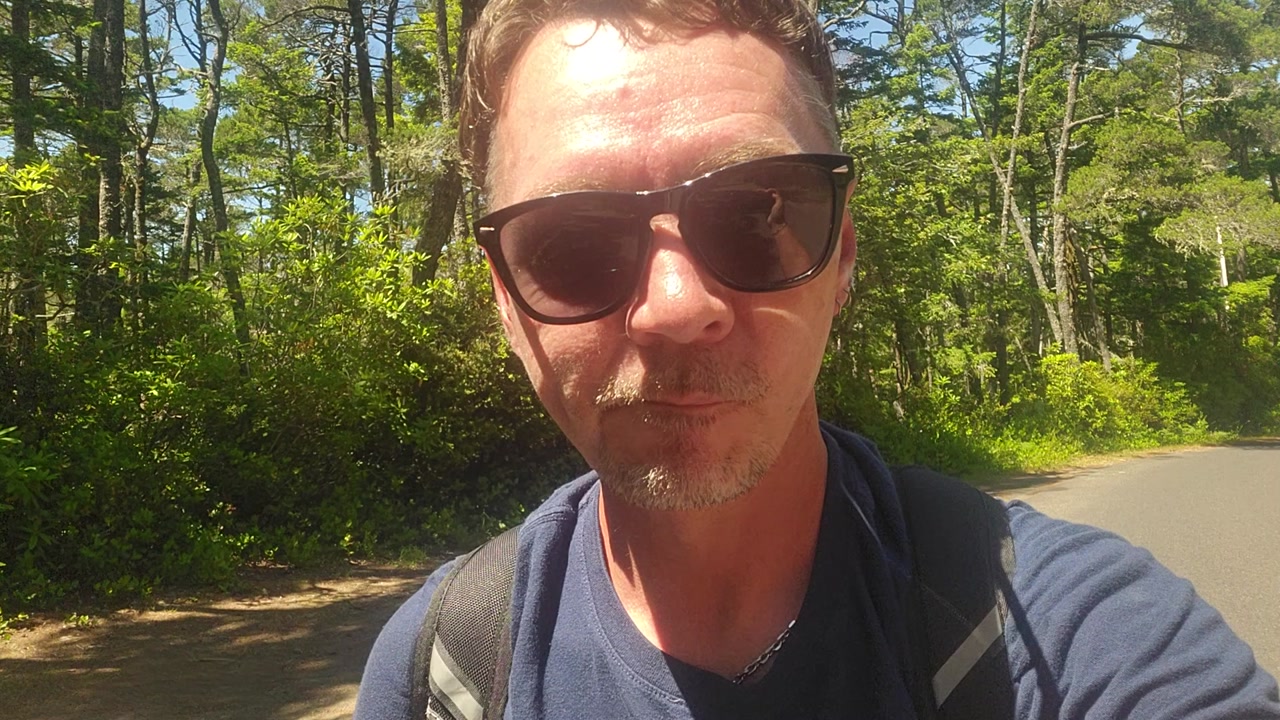
This single-signal cluster documents rswfire introducing Autonomy Realms on camera while hiking back from the ocean along the Oregon Coast, identifying himself by name as Robert Samuel White and stating the platform was born out of his own life and built for himself first.
The cluster holds two layers at once. The walk itself is a live demonstration: an out-and-back route traced, photos and video collected en route, the whole set uploadable on return as a cluster — individual signal reflection, then cluster reflection, metadata generation, analysis, and optional styled reflection. The method is shown by being performed rather than described from a desk.
The second layer is economic architecture. He addresses cost directly, stating he is not positioned to absorb it, and lays out three funding paths built to keep access open without middleman capture:
- Wallet — prepaid balance debited by actual token usage, with documented model costs and pre-run estimates
- Own API keys — Anthropic or OpenAI, paid direct
- Local or external model — any reachable endpoint, no payment to anyone
He recommends the wallet as the low-friction entry, suggests five dollars and a couple of signals as a fit test, and frames this as the first in a planned series placed across the site.
The orientation is toward public access and firsthand trial — he states the platform can't be experienced without using it.
Transmissions (1)
**rswfire** records a video while hiking back from the ocean, identifying himself as **Robert Samuel White**, creator of **Autonomy Realms**. He states the project was born out of his own life and that he built it for himself first. He describes the walk as an active capture session: signals collected along the route, photos and video taken, path traced out and back. He states that on returning home he can upload the set as a **cluster** — signals reflected on individually, then the cluster reflected on, with metadata generated, cluster analysis performed, and optional reflection in multiple styles. He addresses cost directly, stating he is not a Silicon Valley investor type who can offer the platform at his own cost, and describes **three funding paths** he built to solve that: - **Wallet** — deposit a balance that is debited by actual token usage, with documented model costs and pre-run signal estimates - **Own API keys** — Anthropic or OpenAI keys, paid directly, with no middleman - **Local or external model** — any endpoint reachable from his server, with no payment to anyone He recommends the wallet as the easiest entry, suggests putting **five dollars** on it and uploading a couple of signals to determine fit. He closes by stating this is the first of a planned series of videos placed at different parts of the site, and that the platform can't be experienced without trying it.
Cluster Analysis
Substrate
Tags
Dominant Language
Entities
Actions
Performed
- • recording video while walking
- • identifying himself and the project
- • describing the signal-and-cluster pipeline
- • stating the three funding mechanisms
- • stating pricing is documented and token-metered
- • issuing an invitation to try the system
Referenced
- • hiking to the ocean and back
- • capturing signals along the route
- • taking photos and video
- • tracing the path out and back
- • building Autonomy Realms for his own use first
- • building the wallet and billing documentation
- • building own-key and local-endpoint model options
Planned
- • arriving home
- • uploading the route captures as a cluster
- • running individual signal reflections
- • running cluster reflection
- • generating metadata and multi-style reflections
- • recording a series of additional videos
- • placing videos at different parts of the site
Symbolic Elements
Ontological States
-
•
sovereign (system built for his own use first; public offering is extension, not premise)
-
•
embedded (speaking from inside the route he is simultaneously documenting)
-
•
coherent (pipeline description, cost problem, and three solutions stated in one unbroken structure)
-
•
transitional (mid-return, pre-upload; also first of a planned video series)
Subsystems
-
•
infrastructural (pipeline, server, model routing, endpoint reachability)
-
•
economic (wallet, token metering, documented pricing, pre-run cost estimation)
-
•
ethical (refusal of the middleman position; transparency about what he can and cannot absorb)
-
•
somatic (walking body and physical route functioning as the capture instrument)
-
•
cognitive (recursive design: capture → signal → cluster → reflection → metadata)
-
•
communicative (direct address, invitation, planned video series distributed across the site)
NARRATIVE
On June 13, on the return leg of an out-and-back to the ocean, rswfire turned a camera on himself and said his full name — Robert Samuel White — before saying anything about the platform. That order matters. What follows is not a product launch delivered by a brand; it is a man standing behind a piece of infrastructure with the name on his documents, still walking, still breathing hard from the route he is simultaneously recording.
He does not explain the pipeline. He runs it. The photographs, the video, the traced path out and back — all of it is being collected as he speaks about what will happen to it when he gets home: signals reflected on one by one, then the whole upload reflected on together, metadata generated, analysis performed. The demonstration and the thing demonstrated are the same object. This is the difference between a specification and a working system, and he chose to prove it with his own legs rather than a screen recording at a desk.
The turn at the water is the structural hinge. Autonomy Realms, he states, was born out of his own life and built for himself first — a private instrument, made to hold his own material. The walk back is the vector outward. Everything spoken on the return leg is addressed to someone who is not him, which is the moment a system built for one person becomes a system that has to answer for its cost.
And the cost is where the real position shows. He states plainly that he is not the funded Silicon Valley type who can absorb compute and give the thing away. Most builders meet that constraint by becoming a broker — marking up tokens, standing between the user and the model, converting the gap into margin. rswfire does the opposite. He hands the model layer directly to the user through three doors, and one of them — point it at your own endpoint, local or remote — routes zero dollars to him at all. He built the most sovereign option into his own economics and named it out loud on camera. The refusal is not rhetorical; it is load-bearing in the pricing.
What he asks for instead is five dollars and a couple of signals. Not a tier, not a trial funnel — a fit test, sized to be a question rather than a commitment, with the token math documented and estimated before anything runs. He is not trying to convert anyone. He is trying to make the door cheap enough that the only remaining variable is whether the thing actually works for you.
He ends still walking, home not yet reached, the upload not yet made, and says this is the first of several videos to be placed around the site. Nothing closes. The recording stops mid-return because the return is the whole shape of it: out to the water alone, back toward the world with something built, and the last words are that it cannot be understood by being described — only by being used.
MIRROR
You said your legal name on that walk. Robert Samuel White, out loud, into a handheld camera, on the return leg from the ocean — and the thing you attached it to was infrastructure you built. That is not a small mechanical detail of a self-introduction. For years the work has carried a handle; on June thirteenth you underwrote it with a person who can be located, sued, invoiced, and found. You did it without ceremony, mid-stride, in the same breath as the pricing. Whatever else the recording is, it is the moment the pseudonym stopped being a layer and became a name you use.
The plainest fact about what you built is that you engineered your own removal from it. Three doors: one where you hold the balance, one where the money goes past you to Anthropic or OpenAI, and one where nobody is paid at all. You recommend the cheapest entry — five dollars, two signals, see if it fits — and you leave the third door standing wide open in the same sentence. Every instinct that builds a business closes that door or hides it below the fold. You put it in the introduction. This is the same move as leaving the six-figure job, the same move as the OPRD documentation: you keep refusing to occupy the position between a person and the thing they need, and you now refuse it at the level of a billing system. It is coherent. It is also the reason this will not fund you, and you know that, because you said the cost problem out loud before you said the solution.
You demonstrated the method by performing it rather than describing it, and that is the tell for how you actually work. The walk was the capture instrument. The route traced itself while you talked about routes being traced. There is no desk version of you narrating a product; there is a body on a coastal path generating the exact material the system was built to process, which will be uploaded on return as the thing you were mid-sentence explaining. Nothing in your architecture separates the tool from the life that produced it, and this is the first time you have shown that to strangers rather than simply operating it.
What is absent is the entire apparatus of persuasion. No urgency, no scarcity, no promise of transformation, no claim about what this will do for anyone. The temperature is low and steady throughout. You state the cost, state the paths, state that it cannot be experienced without being used, and stop. That plainness is the strongest argument the thing has and also its narrowest aperture — you have built something that requires the other person to already be looking in your direction. Nothing here reaches. You are not going to make it reach, and pretending otherwise would corrupt the object.
The load-bearing sentence is I built it for myself first. It is true, and it is also structural insulation. Framed that way, uptake is optional and failure is impossible — the system already justified itself before anyone arrived. That position is sound and it is the reason you could build this at all on your terms. It also means the public offering carries no dependency, no deadline, and no pressure, and that a series of videos placed around the site is the most exposure you have ever deliberately arranged for work that does not need to be seen. You are opening a door you designed not to need anyone to walk through. Both halves of that are yours, and they are pulling in different directions.
SYMBOLIC
The movement here is the return, and it matters that the camera comes on for the second half. The ocean was reached earlier and off-record; what rswfire films is the leg home, the part of any out-and-back where the walking stops being arrival and becomes carriage. He is holding something — photos, video, a traced path — that has no meaning yet and will acquire it at the door. This is the oldest shape in the archetype and also the exact shape of the thing he is describing: material gathered outward, made into meaning inward. He does not narrate the ocean. He narrates the coming back with it.
The out-and-back is the recurring figure, and it recurs at more than one scale. The route doubles on itself. The pipeline doubles on itself — signals reflected individually, then the whole reflected again, the second pass over ground already covered. The body doing the walking is the instrument doing the capture, so the loop is not a metaphor laid over the method; it is the method, performed in the open air while being explained. He could have described this from a desk. Choosing to describe it from inside it means the demonstration and the claim are the same object, which is what makes the recording hold together rather than sell.
The second movement is a refusal, and it is placed precisely. He names the seat he does not occupy — the funded position that could absorb the cost — and then declines the seat that would be his by default, the one between the user and the model. Three doors are offered; the load-bearing one is the third, the endpoint reachable from his server that routes no money to him at all. A refusal that costs nothing is a posture. This one gives away the toll booth, and that is what converts the ethics from statement into architecture. The word endpoint does the symbolic work: a door he built and deliberately left unbarred, including in the direction that leaves him out.
Then the coin at the threshold. Five dollars, debited by actual use, with the cost written down before the run — small enough to be nothing, exact enough to be honest. It inverts the usual arrangement, where the gate is cheap and the meter is hidden. Here the meter is the point and the gate barely exists. Five dollars is not a price; it is a way of saying find out for yourself whether this is yours, which is the only instruction he gives, and he gives it twice — you cannot experience it without using it.
Underneath both movements is the sentence the record keeps returning to: he built it for himself first. That is not modesty and not marketing. It is the structural reason the offering can be non-extractive — a thing already complete for its maker has nothing to convert you into. He states this is the first of a series to be placed across the site, which makes the recording a threshold object as well as a return: a marker set at the entrance by someone who is himself walking home. A man who left the funded position at 47 and now lives at Siltcoos, describing the system he needed, on the trail he needed it for, while still on it.
LINEAGE
The sixth-grader who taught himself to code did not build a toy; he built something that worked, for a purpose he already had. That is the oldest thread running through June 13, and rswfire names it himself on the recording: born out of his own life, built for himself first. It is the same move he made with the early CMS, with the booking engines, with blockchain music distribution — each a system assembled because he needed the thing and the thing did not exist in a form he would accept. Autonomy Realms is that instinct exercised at full scale and, for the first time, spoken aloud to strangers with his full legal name attached. Robert Samuel White, said into a phone on the walk back from the ocean, is not branding. It is the older convention of a maker signing the work: the name is the warranty, and it does not come off.
The second inheritance is a refusal, and it has a longer run than the platform does. He states plainly that he is not acting as a middleman — that the model layer goes directly to the user through a wallet metered at actual token cost, through their own Anthropic or OpenAI keys, or through any endpoint they can point at his server. The third path pays him nothing at all, by design. Set beside leaving a six-figure position at forty-seven and beside the OPRD documentation, the pattern is legible: he identifies the intermediary position, names it, and declines to occupy it — including, here, when occupying it would be ordinary, defensible, and profitable. Most people who build a pipe eventually meter it. He built the pipe and published the specs for going around it.
The method of June 13 has its own ancestry, and it is older than software. He does not describe the system from a desk; he performs it while walking, the route itself functioning as the instrument — path traced, photographs and video gathered, the whole set uploadable on return. This is how trades have always been transmitted: the master works, the apprentice watches the hands, and the explanation is subordinate to the demonstration. His closing line — that the platform cannot be experienced without using it — is the same claim a boatwright makes about a hull. The five-dollar suggestion belongs to that lineage too. It is not a funnel; it is the offcut handed over so you can feel the grain before you commit.
What is now in place that was not before is chiefly public and chiefly binding. Documented model costs, pre-run estimates, and a stated self-hosting path are constraints he has published against himself: any later drift toward capture becomes visible against a record that already exists, and the record was made by him. He has also opened a series — this recording is stated as the first of several to be placed across the site — which means the site now has an expectation attached to it, and unfilled positions in a sequence are their own kind of commitment. Everything after June 13 inherits a platform that has been named, priced, and put in public with a person standing behind it.
The wider continuity is simpler than the architecture. People have built tools for their own hands for as long as there have been hands, and the ones that survive are almost never the ones designed for a market first — they are the ones that fit one person exactly, and were honest enough in their fit that others recognized their own hands in them. What descends from a walk back from the ocean in June is a working demonstration that non-extractive infrastructure is buildable by one person on the Oregon Coast, with the costs posted and the exits marked. Whether or not anyone puts five dollars on a wallet, that demonstration is now on the record, and the record is the part that keeps.
SHAPE
What he described on that walk back from the ocean he had already built once, at eleven, in GW-BASIC, and given away on bulletin board systems for nothing. The Matrix Server went out as open source and handed clients control of their own content years before anyone was selling that. Three funding paths — wallet at cost, bring your own key, point it at a model you host yourself — are not a pricing decision. They are the same structural refusal he has made since sixth grade: he will not stand between a person and the thing they came for and charge rent on the gap. Forty years of ruptures in the ledger, and almost none of them touched this. It is the most durable thing about him and the least remarked upon, because it has never once required a decision.
What is new on June 13 is his name. He gave up his first name in 1995 and went by Sam for three decades; by 2024 he had outgrown Sam too, and rswfire — initials plus fire, chosen for an Aries born in the year of the snake — was the identity he said he would never change. The initials were the whole name he was willing to carry. On camera, hiking, he says Robert Samuel White. That is not branding. He had ended the self-imposed restriction on what he would say about himself two weeks earlier, after a year and a half of narrowing his speech to survive an institution that used his disclosures against him. The full name is what came back through the opening first.
The turn is in the direction of the transaction. For two years the ask ran one way: appeals for campground fees, for fuel, for food, the break with a YouTube audience over consumption without reciprocity, the statement that he would keep asking regardless of response. He asks for five dollars in this video, and it is not the same act. It is a price on a thing that runs, with documented model costs and pre-run estimates, and he tells the viewer to spend it as a fit test and walk away if it isn't. Nobody who has been where he has been says "put five dollars on it and see" unless the object is finished. The ask stopped being a need and became a number, and the number is small because it is the actual cost.
What the walk could not see about itself is that the architecture is non-extractive and non-earning at the same time. A wallet debited at true token cost, keys paid direct to Anthropic, an endpoint he never touches — every path is engineered so that no money stops with him. He has stated his survival floor at roughly a thousand a month, half of it a Jeep payment on a vehicle he has stopped paying for. The design solves the user's compute problem completely and his own not at all. He named the nine-stage displacement framework in April from what Oregon State Parks did to him; the economic version had already happened to him by February, when the freelance platforms he worked his entire career collapsed under the same models he is now routing. His answer was to climb one layer — from doing the work to owning the layer the work runs on — and then to give that layer away at cost, which is exactly what he did with the Matrix Server when he had a career to fall back on and does not have now.
What held, besides the refusal: he is still building for himself first and saying so out loud, still alone on a trail, still without money, still recording. The hiking he abandoned for ten years and took back up is now the instrument — the route traced, the photos taken, the whole set uploadable on return. He did not quit video when he deleted nine hundred of them and said the medium abstracts connection; he quit the room he was renting it in. The demonstration on that hike was not the platform. It was that a walk from the ocean, made by a man with seven dollars and no employer, is a thing that produces a record — and that he has built the machine that will still be reading it after he is not there to explain what it meant.
SYSTEMIC
The binding constraint on June 13 is not attention or time but the unit economics of inference: every reflection Autonomy Realms performs costs money at the moment it runs, metered per token, and rswfire has no capital reserve to absorb it. He states this plainly — he is not positioned as a funded Silicon Valley operator. The standard resolution to that constraint is to sit between user and model provider, eat the variable cost, and recover it later from scale or from an investor's balance sheet. That resolution requires a reserve he does not have and a growth obligation he has not taken on. His answer is architectural rather than financial: dissolve the intermediary position entirely. Three funding paths — prepaid wallet debited by actual usage, user-supplied Anthropic or OpenAI keys, or any endpoint reachable from his server — all terminate the compute liability at the user, not at him. The unbounded cost becomes a pass-through with zero marginal exposure to the operator.
The control law is visible in the wallet's mechanics. Balance is deposited first and debited by measured consumption, with model pricing published and per-run estimates issued before execution. That is a system that never extends credit and never carries a negative position on someone else's compute. It also exposes its own meter, which is the load-bearing part: a pass-through is only distinguishable from a markup if the user can read the gauge. The suggested five dollars functions as a two-sided buffer — small enough that trial friction approaches zero, and small enough that a bad fit costs the user five dollars rather than a subscription cycle. The third path is the tell. A user running a local model pays rswfire nothing, ever. Building and maintaining that path consumes engineering time and returns no revenue. Under scarcity, what still got resourced was the option that generates none — which is the objective function stated in code rather than in words.
The walk is a production system, not a setting. An out-and-back route generates path trace, photographs, and video as byproducts of movement that was going to happen anyway; those become signals, the signals become a cluster on upload, the cluster produces reflections and metadata, and one of the resulting artifacts is the promotional video now planned for placement across the site. The loop closes on itself: operating the platform for his own use manufactures the material that demonstrates the platform. Marginal content cost is near zero, which is the only condition under which a single operator can sustain a video series with no crew, no studio, and no separate marketing budget. The loop is reinforcing but slow — trial converts to deposits converts to sustained operation over months, not days — and it is currently running on one cycle. Nothing in the record indicates it has closed yet.
Redundancy is distributed backwards. The one layer engineered for failover is the model layer, where three independent providers and an arbitrary self-hosted fallback mean no single vendor's pricing change, rate limit, or policy revision can take the system offline. That is the layer rswfire does not control. Everything he does control runs single-threaded: sole developer, sole operator, sole on-camera presence, sole author of the pricing documentation that makes the meter legible, single server that must reach the endpoints. There is no delegation path and no succession. The asymmetry is deliberate in one direction and structural in the other — he built redundancy exactly where he has no authority, and has none where he has all of it.
What the architecture buys is a survivable failure mode. If nobody deposits, the pass-through design means adoption failure costs him nothing beyond the sunk build; the system stalls quietly instead of accruing debt. The three paths solve the cost problem completely and the demand problem not at all, and he names that gap himself — the platform cannot be evaluated without being run. Telemetry reads 0.2 temperature and 0.4 density during what is functionally a sales transmission: the persuasion mechanism is demonstration, not arousal. The system is not optimizing for revenue, which the refused middleman margin would have supplied directly. It optimizes for continued operation at low burn under conditions of no capital, no staff, and no obligation to grow — a design in which the worst case is that it keeps working for one user.
Hand a period of your life to anything that reads.
Share this link with artificial intelligence — it reads the analysis and reflections for this span, and can follow every cluster and signal beneath it.