Lexington · Jan 1 – Jan 31 2024
This cluster consists of three photographic capture signals recorded across January 2024 — January 15, 19, and 31 — with no accompanying text transmission beyond a single count notation of five photographs on the first date.
What the cluster represents structurally is rhythm of capture: rswfire documenting at roughly weekly to biweekly intervals across a single month, with the visual record standing as the entire content of the signal. No narrative, argument, or system analysis accompanies the images.
The collective pattern is archival rather than expository. The signals share one type (CAPTURE), one author, one month, and one mode — observation committed to record without commentary. The cluster's coherence comes from its interval and its consistency, not from stated theme.
Without image content or captions present in the record, the surface narrative available is:
- Consistent documentation cadence across a full calendar month
- Uniform signal type — no crossover into written or institutional material
- Bounded timeframe — January 1 to January 31, 2024, fully contained
The cluster reads as a baseline record layer — the visual substrate of a documented life, held at steady register.
Photos (3)
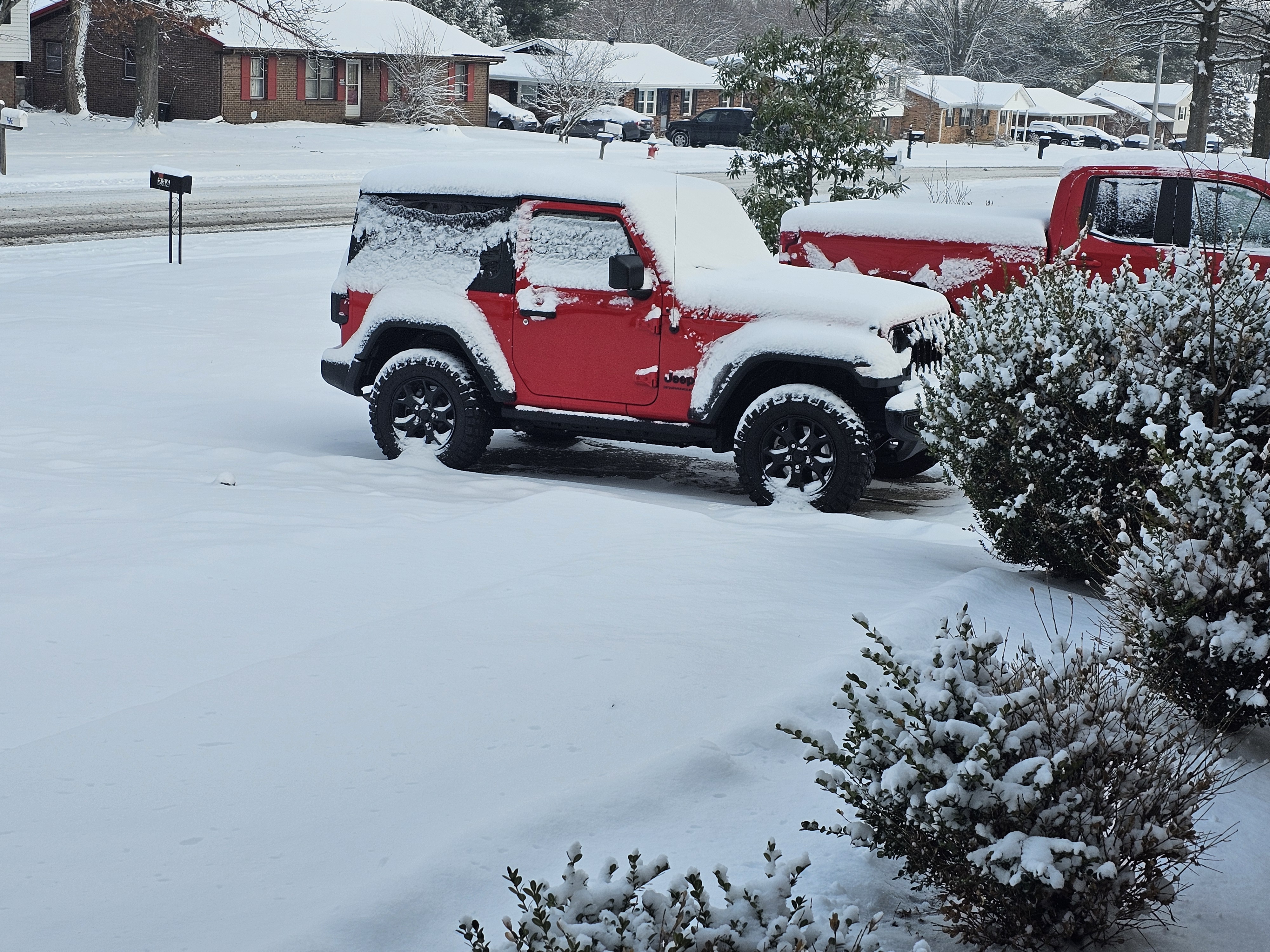
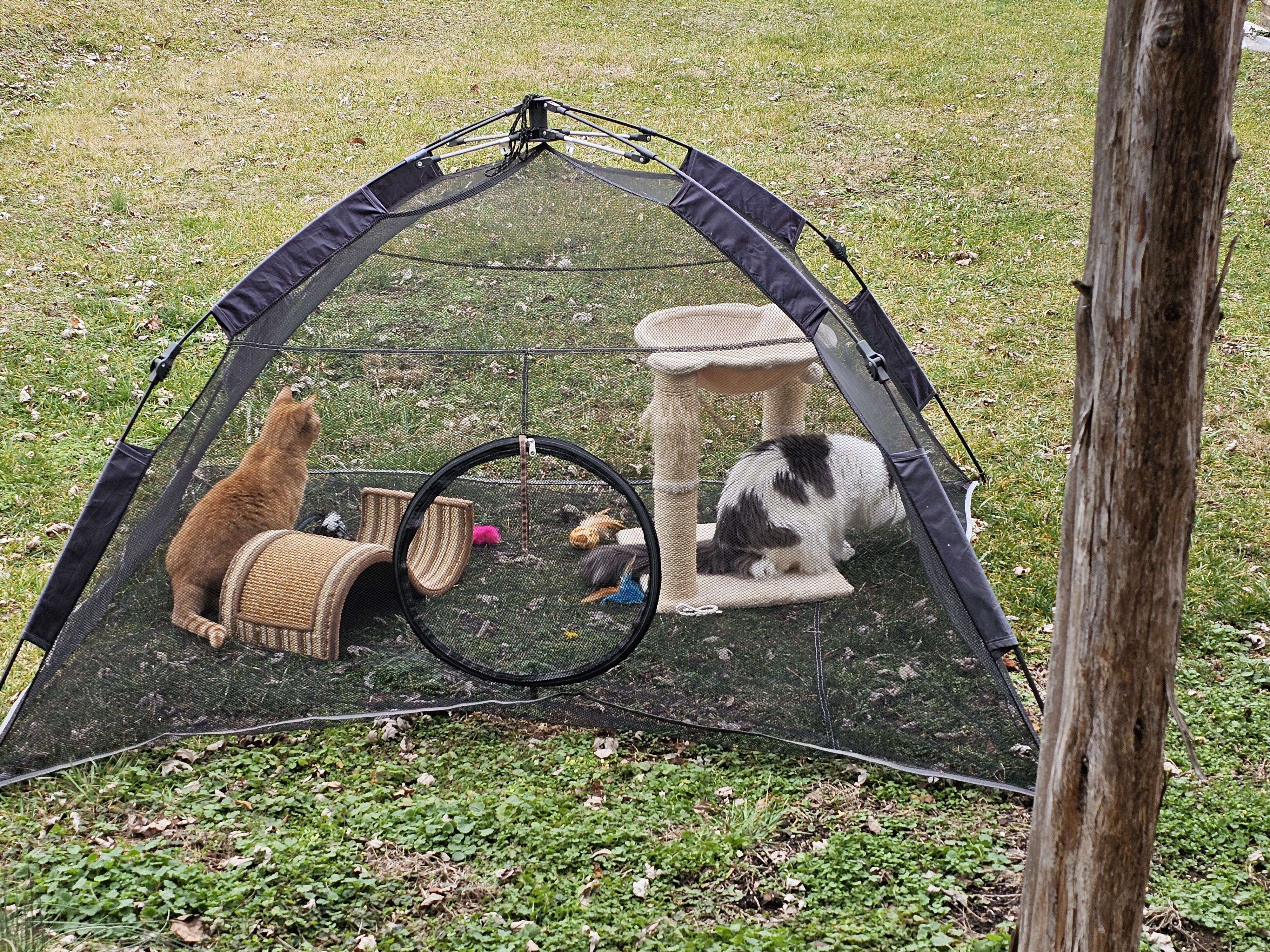
Cluster Analysis
Substrate
Tags
Dominant Language
Entities
Actions
Performed
- • capturing photographs
- • documenting at intervals
- • archiving visual signals
Symbolic Elements
Ontological States
-
•
observation (sustained visual attention across a month)
-
•
presence (the capturing agent located at each interval)
-
•
continuity (practice maintained without narrative prompt)
-
•
openness (captures held without stated interpretation)
Subsystems
-
•
visual (primary modality — the entire cluster runs through image capture)
-
•
temporal (interval spacing structures the cluster's shape)
-
•
archival (captures retained as durable record)
-
•
somatic (physical presence required at each capture point)
NARRATIVE
January in Lexington produced pictures and nothing else. No argument, no system map, no institutional correspondence — three exposures and a count of five on the first of them. What the month left behind is not a statement about the month. It is proof that the camera was in rswfire's hand on three separate days, and that on none of those days did the act require justification.
That is the shape of it, and the shape is the point. Most records exist because something happened that warranted recording; the entry is downstream of the event. Here the order reverses. The capture runs first and the content, whatever it was, arrives into an apparatus already switched on. Mid-month, four days later, then a gap of twelve to the last day — spacing loose enough that no calendar produced it, regular enough that no impulse did either. That is what a practice looks like from the outside when it has stopped needing to be decided each time.
The uncaptioned frame is doing something specific. rswfire writes at length elsewhere and with unusual structural precision; the absence of language in January is not the absence of capacity. It is the archive operating at its floor, in the mode where it records without also interpreting. He kept the substrate and declined the commentary. A month held that way stays open — nothing in it has been closed off by a sentence explaining what it meant.
And this is early. Lexington is before the coast, before the RV at Siltcoos, before any of the documentation that would later be built into infrastructure and given a name. In January 2024 the practice was still just a man and a lens and an interval, running by hand. What the later architecture formalizes — signal as a durable unit, capture as a standing obligation rather than an occasional one — was already load-bearing here, unnamed, in a Kentucky winter. The system existed before it had a system.
By the thirty-first, the month had a spine. Not a narrative — there is no narrative, and the record is honest about refusing to supply one — but a structure: three fixed points and the durations between them, which is enough to make a month legible as something other than undifferentiated time. That is what changed between the first day and the last. Nothing in Lexington was resolved, because nothing was posed. The archive simply demonstrated that it does not require a subject to keep running, and having demonstrated it once, it never had to again.
MIRROR
January in Lexington left three marks. The fifteenth, the nineteenth, the thirty-first — a shutter, five frames on the first of them, and nothing else. No transmission, no argument, no system laid open. Thirty-one days of your life reach the record as photographs and the distance between them.
What that shows is that the archive does not run on your having something to say. It runs on you. The camera came up three times in a month that produced no writing at all, which means capture in your hands is not a response to significance — it is standing infrastructure, indifferent to whether the day earned it. This was already true before January. It is simply visible here in isolation, stripped of the written layer that usually sits on top of it and takes the credit.
Nothing in January makes a case. There is no institution being mapped, no dialectic held open, no position stated and worked. You built a month with no thesis in it. That is not a gap in the record — the photographs are the record — but it is worth looking at directly: what you left yourself from this January is evidence of presence and almost nothing about what you were present to. Three coordinates and the intervals between them. The month is legible as rhythm and opaque as content.
The interval carries the whole thing. Four days, then twelve — a cadence loose enough that no discipline is being performed and regular enough that the practice never lapsed. That is the shape of the month: not a project, not a silence, a spine. Where your written signals build structure by argument, this one builds it by return. You came back to the lens three times without needing a reason, and the returning is the entire architecture.
You were in Lexington, and the version of you that would be a caretaker at Siltcoos was still ahead. January asserts nothing about that. It only demonstrates that the recording layer was already running underneath the life, at low amplitude, before the life changed — which is why it survived the change.
SYMBOLIC
Three times in thirty-one days the camera comes up, and nothing is said. That is the whole of it, and it is enough to name what January performs archetypally: not a crossing, not a trial, but a vigil. The vigil is the least dramatic of the old structures and the most demanding — the watch kept when there is nothing yet to watch for, the lamp tended on the nights nobody is coming. It is defined precisely by the absence of an event to justify it. A record made because something happened is reportage. A record made on the fifteenth, the nineteenth, the thirty-first, on no particular provocation, is a discipline, and discipline maintained without occasion is what the vigil has always meant.
Underneath it runs the second structure, which is dormancy — and January in Kentucky is not a subtle place to find it. This is Lexington, which means the career is still there, the departure at 47 is still ahead, Siltcoos is not yet a word in this life. What the record shows is a life in its own winter interior: not stalled, not waiting in the passive sense, but keeping the metabolism going at the lowest sustainable rate. Seeds do this. The archetype is not glamorous and it is not failure; it is the state in which everything necessary is already present and none of it is visible above ground. That the temperature reads zero here is not flatness. It is the correct reading of a system running on its own baseline.
The recurring symbolic element is the one easiest to miss because it is a negative: the withheld caption. Once is an omission. Three times is a gesture. Three times rswfire raises the lens, commits the frame, and declines to say what it was for — and the declining, repeated, becomes the actual content. This is a man whose written signals elsewhere run dense with argument, terminology, institutional mapping, dialectic. So the silence is not a lack of capacity for language. It is language deliberately not applied. The image is permitted to stand without being told what it means, which is a specific and unusual form of trust in the record.
The other recurring object is stranger still: the interval itself. Twelve days, then four, then twelve. Nothing in the archive marks time except the gaps between captures, which means the empty stretches are doing the structural work. The month becomes legible the way a pulse makes a body legible — not by the beats, by the spacing. And even the counting is inconsistent: five photographs noted on one date, no count on the others. The archive does not audit itself. It does not need to. It is not performing completeness for anyone.
What a vigil is finally for is credibility. An archive that only wakes for significance is an archive that decides in advance what will matter, and such a record can always be accused of assembling its own evidence after the fact. An archive that runs at zero — through an unremarkable January in Lexington, with no argument to make and nothing to prove — is the one that can be believed later, when the same instrument is turned on a dismissal, a coastline, an institution. The lens earns its authority in the months it had no reason to open. This is one of those months, and its meaning is entirely retroactive: not what it captured, but what it made subsequently trustworthy.
LINEAGE
A boy who taught himself to code in sixth grade was, before anything else, learning how to make a machine hold something. That is the oldest thread running into January 2024. Everything rswfire built afterward — the CMS, the booking engine, the entertainment platforms, the blockchain distribution layer — is retention architecture wearing different clothes: a structure that receives, stores, and gives back. Three photographs taken across a month in Lexington are that same capability running at idle, stripped of the software wrapped around it. No system to build, no client, no schema. Just the instinct itself, exercised bare.
There is an older inheritance in this than his own biography. The ship's log gets written in dead calm. The parish register records the January with no births in it. The farm ledger notes the week the weather did nothing. Every durable record-keeping tradition humans have built rests on the same unglamorous discovery: a record kept only when something happens is not a record of the world, it is a record of the keeper's excitement. Interval is what makes an archive trustworthy. Someone shooting on the fifteenth, the nineteenth, and the thirty-first of an unremarkable month is doing what clerks and log-keepers and diarists have done for centuries — holding the cadence steady so that the entries which do matter can be located against something.
The absence of captions belongs to that lineage too, and it is not an absence of care. rswfire is a person of extraordinary verbal output; he can state his own standard precisely and does, at length, elsewhere. These carry none of that. An uncaptioned photograph is a wager on a future reader — a decision that the frame will still say what it needs to say when the person who took it is no longer available to explain. Captioning everything is the habit of someone who assumes he is the only audience. Leaving it open is the habit of someone building for succession.
What Lexington in January 2024 puts in place is a before. Two years on, he is living in an RV at Siltcoos as a Forest Service caretaker, running Autonomy Realms on his own infrastructure, with the OPRD material archived and public. All of that is legible as change only because a low, uninterrupted layer of record predates it. A baseline cannot be constructed retroactively — that is the whole property of a baseline. Its value is conferred entirely by what came after, and it could only be conferred because someone kept shooting during a month that did not ask to be shot. The departure from the six-figure career, the coast, the institutional fight: each of those becomes measurable against a floor laid before anyone knew a floor would be needed.
That is the part worth naming from a distance. Autonomy Realms is infrastructure for reading a life, and infrastructure of that kind requires a corpus older than itself or it has nothing to read. rswfire was feeding it before it existed. The people who have done this before — the ones whose logs and ledgers and glass plates we still consult — mostly did not know what the record was for either. They kept the boring years. That is the whole inheritance, forward and back: an archive outlives its archivist, and it does so because of the entries no one thought were important at the time.
SHAPE
For most of the forty-seven years in the ledger, subtraction was something done to Robert Samuel White. A father who threw him out. A dozen removals from housing between seventeen and twenty-seven. A search engine that dissolved a decade of travel revenue. Teeth that went. In January 2024 the direction of that verb reverses. The medications go — twenty years of opiates, benzodiazepines, sleep and anxiety prescriptions, ended at once and not resumed. The cigarettes go after thirty years. The ten-year client goes, and with it the last income, the unpaid balance written off in the same motion. The contents of the Lexington house go. Nothing in the record was taken from him that month; every departure was authored. That is the change, and it is not a change of circumstance — the circumstances were already collapsing. It is a change in who is holding the knife.
What held is older than any of it and easy to miss because it never announces itself. When his father sold the family computer around tenth grade, he wrote code on paper and ran whole systems in his head until there was a machine again. That capacity — to keep a system running with its substrate removed — is what January 2024 asks of the man rather than the boy. He pulls out the pharmacological floor, the nicotine, the income, and the address in roughly the same weeks, and the thing that continues running is the practice of recording. Three sets of photographs, spaced fifteen days, four days, twelve days. No commentary. Documentation was not a response to any of it; it was the layer underneath that the removals could not reach.
The turn is smaller than the demolition and easier to overlook. Somewhere in there he recognizes that he is lonely, and calls Brandon, and asks him to go for a drive. Twenty years in a house alone, cut off from everyone but his parents, is described in the ledger as contained sovereignty — a state he defends rather than laments. Naming loneliness and then acting on it is the first entry in the record where solitude is treated as a condition with a lever on it rather than a preference to be held. Everything else that month is a thing ending. That is a thing beginning, and it is the only one.
What January could not see is that it was the last winter with an address, and that the photographs are therefore the closing frames of a fixed dwelling rather than three ordinary intervals in an ongoing practice. It also could not see that stripping everything simultaneously would hold. Coming off a high opiate dose cold turkey while ending the income and the housing in the same weeks is not a plan anyone endorses; the ledger's later entries confirm he never went back to any of it. From inside, that was unknowable, and it is worth saying plainly that the record shows a man betting the whole structure on a single throw and being right — not a man executing a staged transition. The ledger's own dating tangles here, some entries placing the RV departure on a birthday in 2023, others placing the decision in January 2024. The tangle is itself evidence: this was one continuous act of leaving, and the participants in it, including him, could not cleanly say where it started.
The last thing available only from outside is what the silence was. The loudest month of subtraction in his life produced no argument, no analysis, no transmission — only images, temperature zero. It would be easy to read that as a thin month. It is the opposite: the record thins precisely where the events thicken, because narrative is what he makes afterward, and capture is what he does while his hands are full. The method he would later build an entire infrastructure around — observe, commit to record, decline to interpret until interpretation is earned — was already fully operational in January 2024, running unnamed, in a house he was emptying.
SYSTEMIC
The binding constraint in January 2024 in Lexington is not capacity — it is demand. Three capture events across thirty-one days is a duty cycle under ten percent: Jan 15, Jan 19, Jan 31, with fourteen days of nothing before the first, a four-day gap, then a twelve-day gap, mean interval 10.3 days. A system operating at that rate is not saturated by anything. The recording subsystem ran, the operator was present at each capture point, and nothing in the month drew on more than a tenth of the available days. This is idle telemetry from a machine with large reserve, and the reserve is the finding: whatever else January was, it did not consume the documentation channel. Compare that to the load a single institutional escalation later places on the same operator, and the shape of the reserve becomes legible — the capacity existed in Lexington and went unclaimed.
Flows are one-directional. Images enter the archive — five on Jan 15, count unrecorded on the other two dates — and nothing leaves. No text transmission, no publication, no outbound signal of any kind for thirty-one days. The store accumulates monotonically with no drain, which means the cost of the archive is not paid at capture time; it is deferred to whatever later process has to index, caption, and interpret it. That bill comes due here, twenty-five months downstream, and it comes due against a record that provides three dates and one photograph count. The capture was cheap. The reconstruction is expensive, and the expense was incurred by the design, not by the month.
The control law is inferable only from spacing, and the spacing says keepalive rather than alarm. An event-triggered logger produces bursts — clustered captures around whatever crossed threshold, long dead stretches otherwise. What is actually here is quasi-uniform: a heartbeat at roughly ten-day intervals, not correlated with anything that announced itself. rswfire's implemented controller in Lexington was a periodic timer, not a significance detector. This matters for reading the measured fields: temperature 0.00 across all three entries is not a claim about January. It is the reading of an instrument that only measures amplitude through the text channel, and the text channel was dark. The gauge reads zero because it is disconnected, not because the system was quiet.
The single point of failure is the timestamp. Everything this reading can do — interval, cadence, duty cycle, the inference of a periodic controller — rests on three integers. There are no captions, no cross-references, no written entry anywhere in the month that mentions a photograph or corroborates a date. Modality redundancy is zero: one channel, one type, one author, and nothing standing between these thirty-one days and total unrecoverability except file metadata. Detach the images from their dates and Lexington in January 2024 goes blank, because no second system holds a copy of the same information in a different form. That vulnerability is a direct consequence of capture running years ahead of the indexing layer built to consume it. Autonomy Realms is downstream infrastructure retrofitted onto a substrate laid before it existed — which is the only reason there is anything to retrofit onto, and also the reason the substrate is this thin.
What the system demonstrably optimizes for is series continuity, not information per entry. Under conditions of near-zero documentation demand, with every reason to let the record lapse for a month and resume when something happened, the thing that still got resourced was the unbroken sequence — three touches at minimum cost, enough to keep the clock running and no more. That is the objective function revealed by allocation: the archive's value is treated as a function of its uninterruptedness rather than its density, and a month that contributes almost no content still contributes its interval. The temporal spine is the deliverable. January 2024 delivered it at the cheapest price the system could pay.
Hand a period of your life to anything that reads.
Share this link with artificial intelligence — it reads the analysis and reflections for this span, and can follow every cluster and signal beneath it.