Camp Host
A first quarter of 2025 on the Oregon Coast, running from a storm-flooded departure at Cape Blanco through two volunteer postings and ending with removal from Honeyman State Park.
The cluster's through-line is terms-setting. rswfire enters the Oregon Parks volunteer structure — orientation at Umpqua Lighthouse, yurt cleaning, golf cart rounds, occupancy sheets — while holding definitional authority over how he is described. He corrects AI-generated premises about his own transcript, declines the frames oversharing and vulnerability, and later records a 62-minute picnic-table meeting, an on-camera dismissal with no paperwork and 24 hours to vacate, and a call with the OPRD program manager assembling attributions he states he never made.
Running parallel is revenue and visibility restructuring: nearly 600 videos moved behind a two-tier paywall with no subscribers, posting stopped, Upwork and Guru profiles built, solar equipment sold at a loss, work resumed then paused with a former boss.
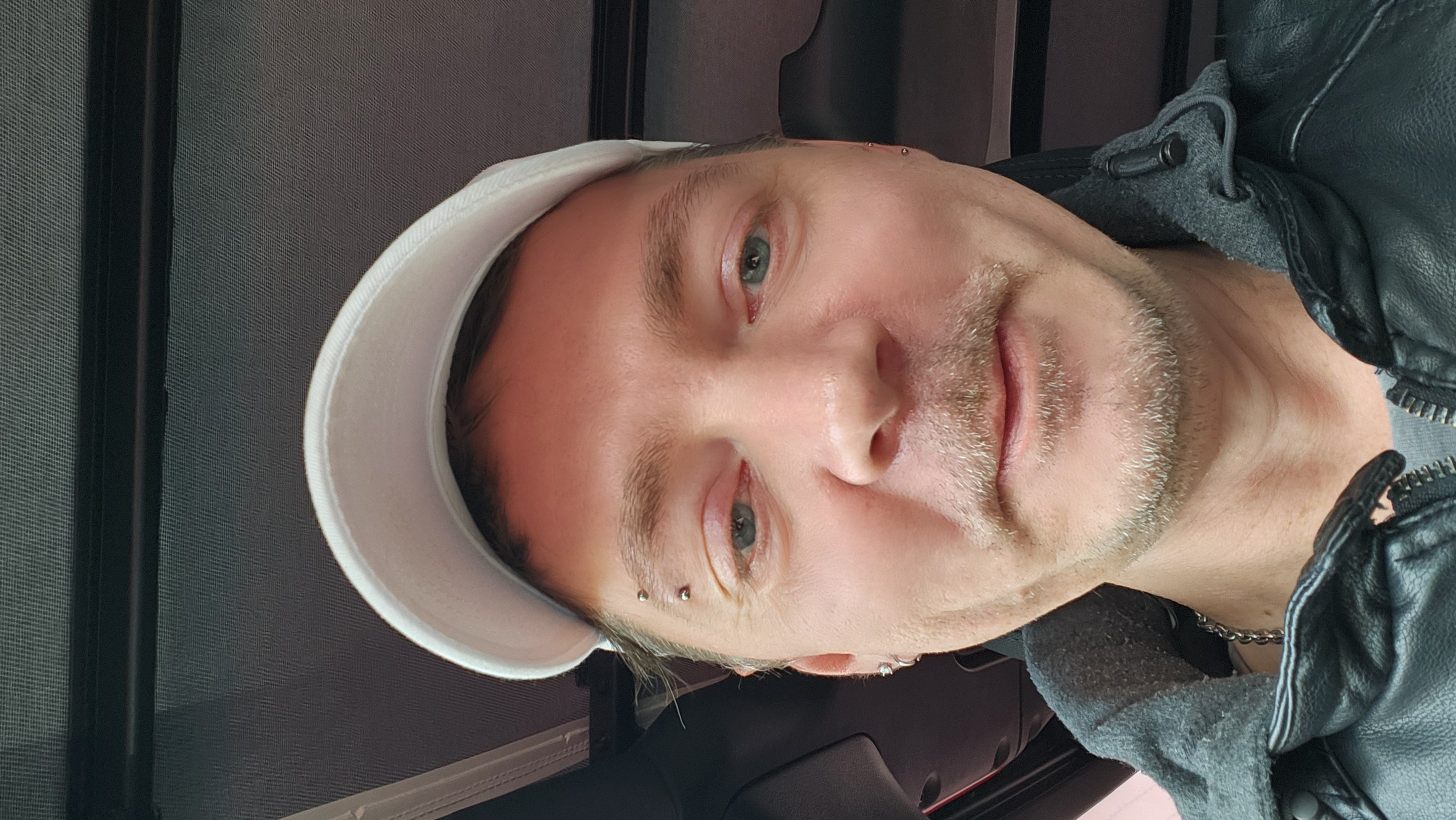
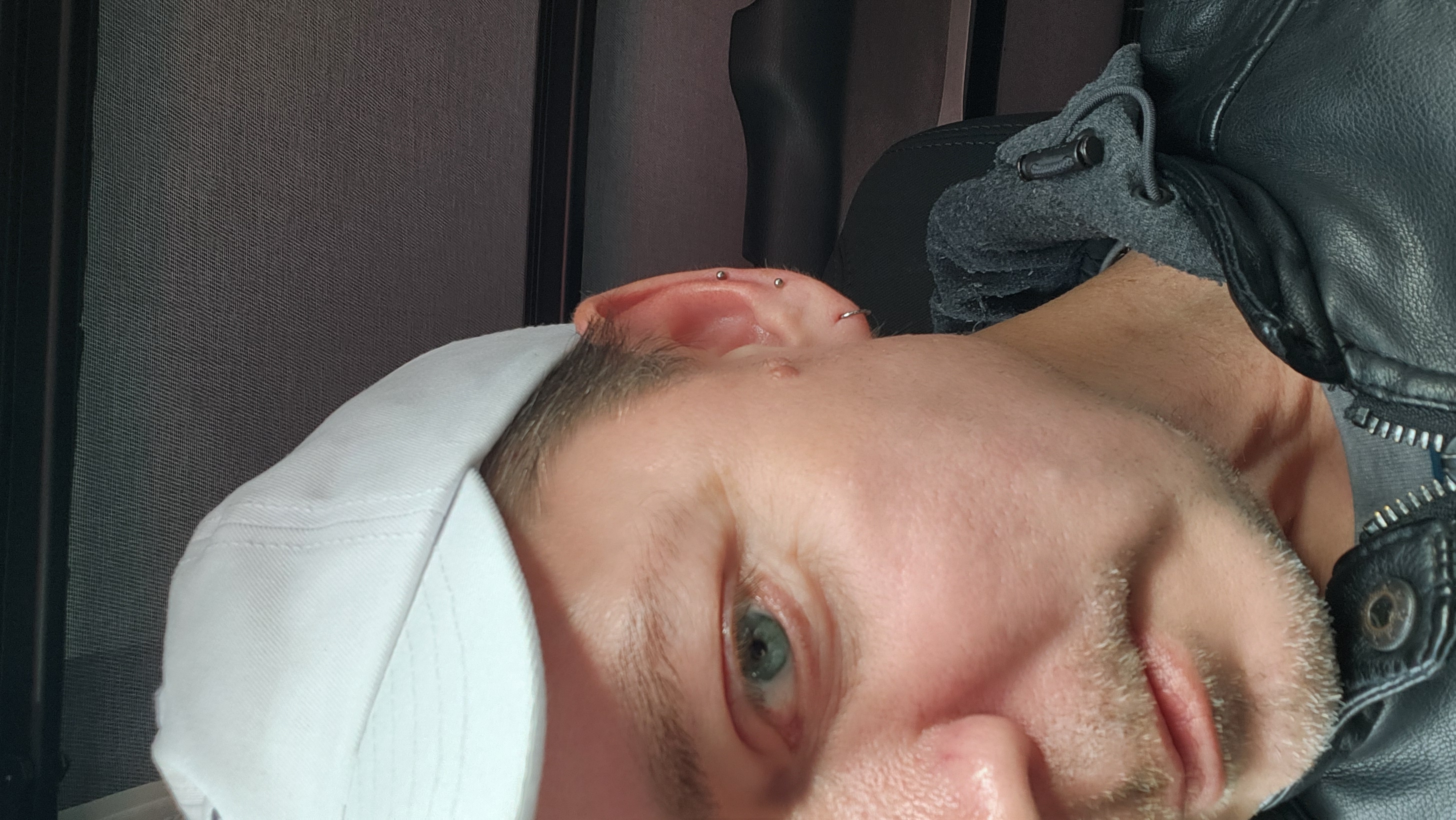
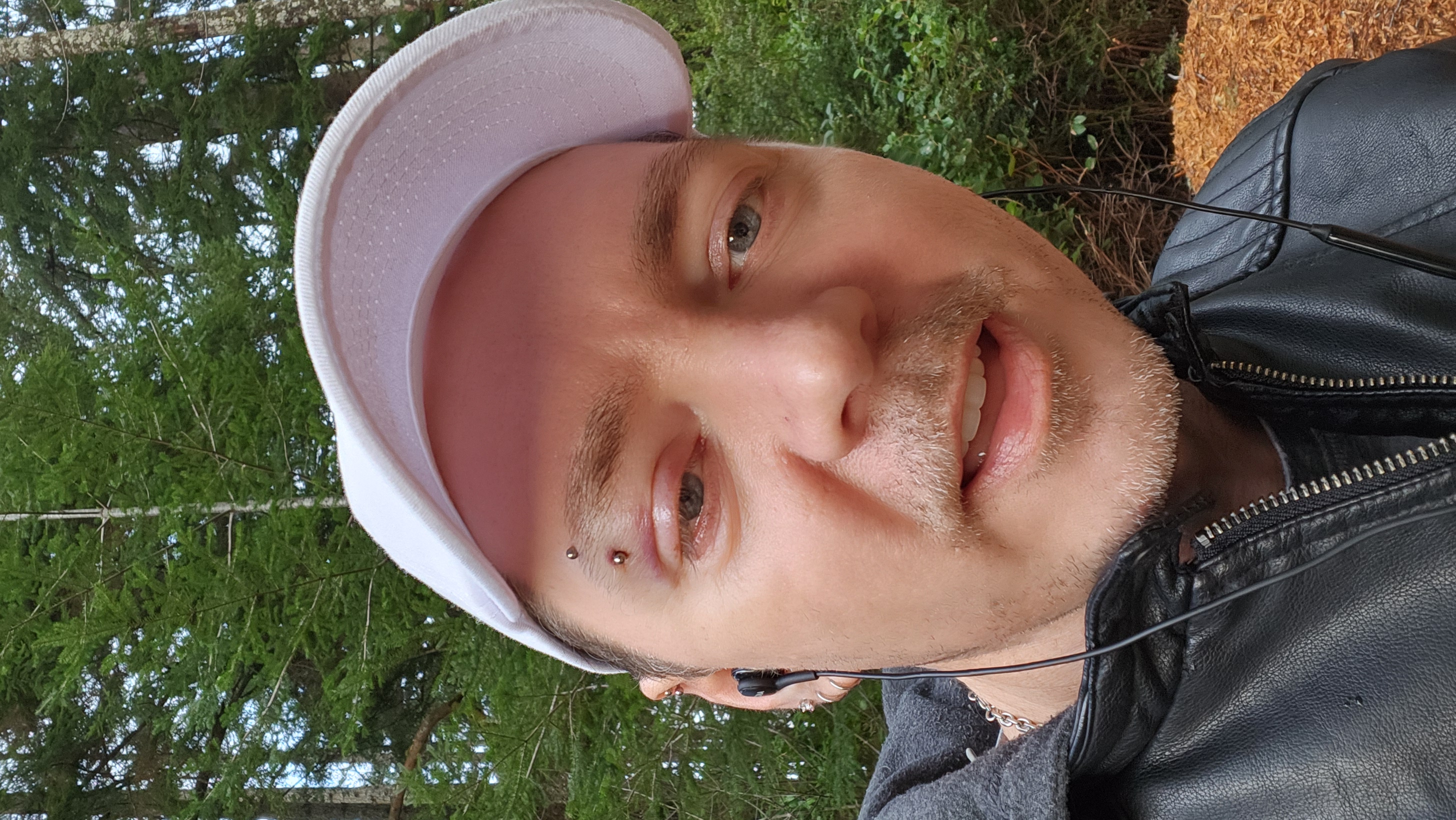
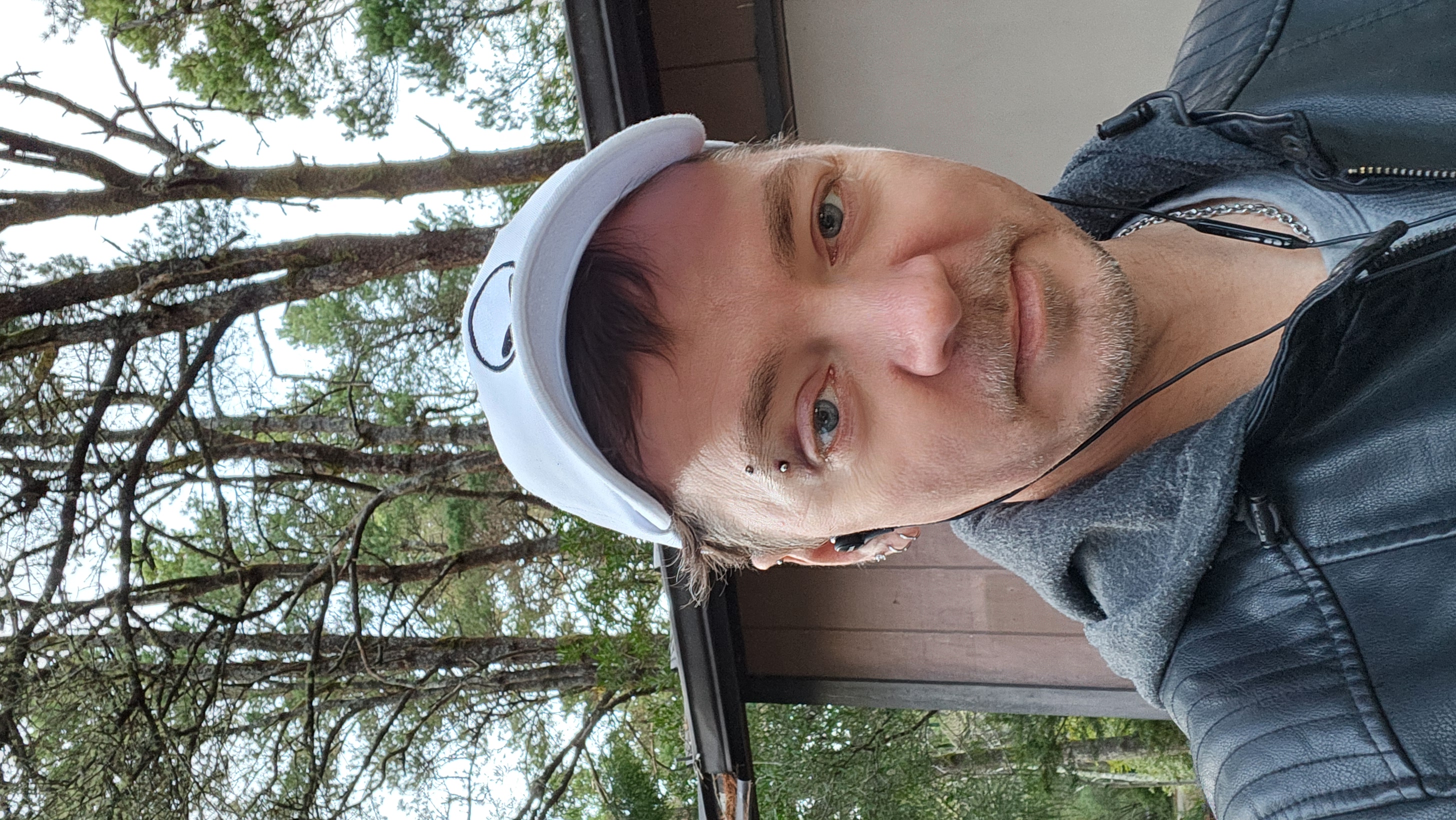
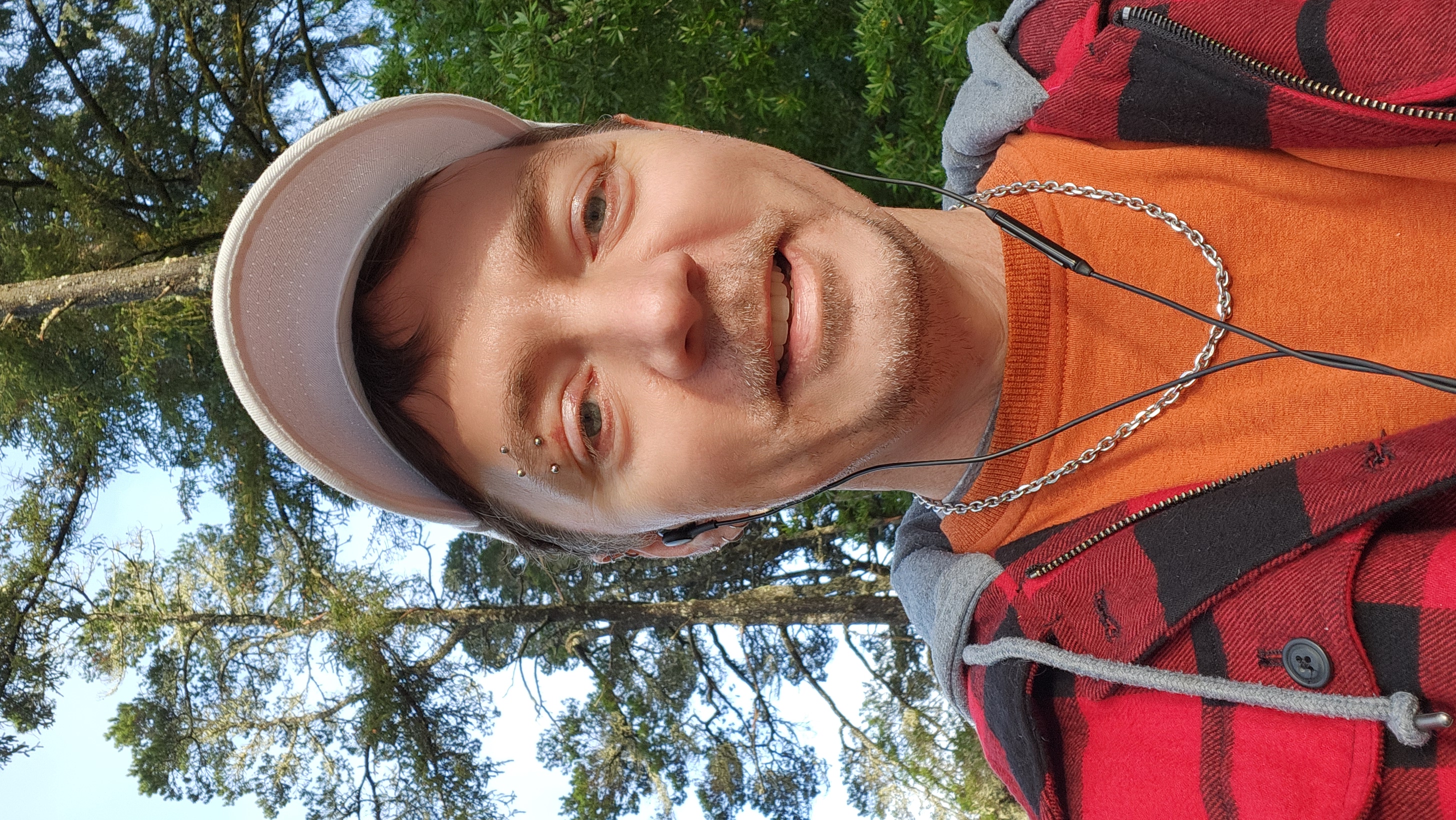
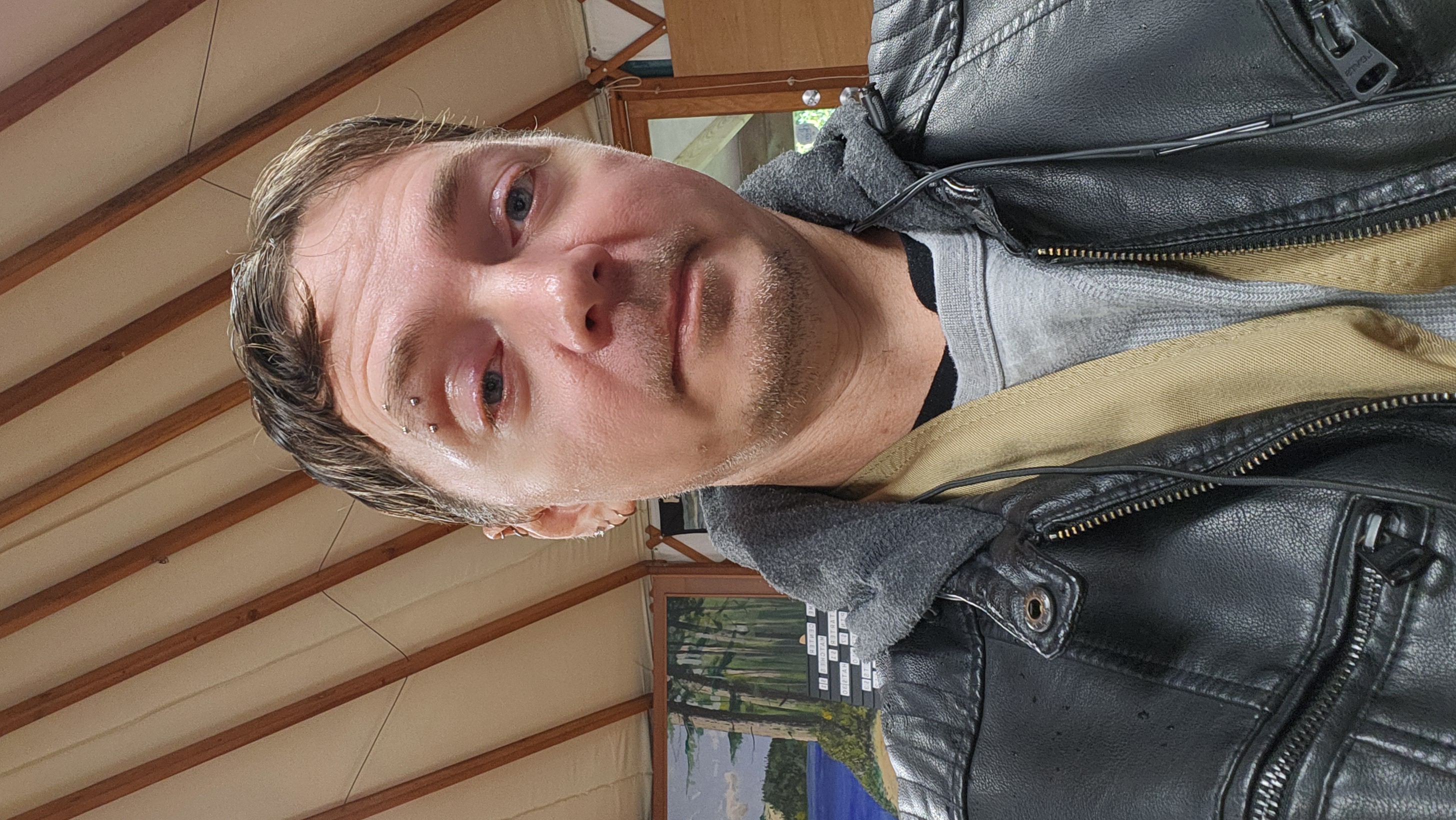
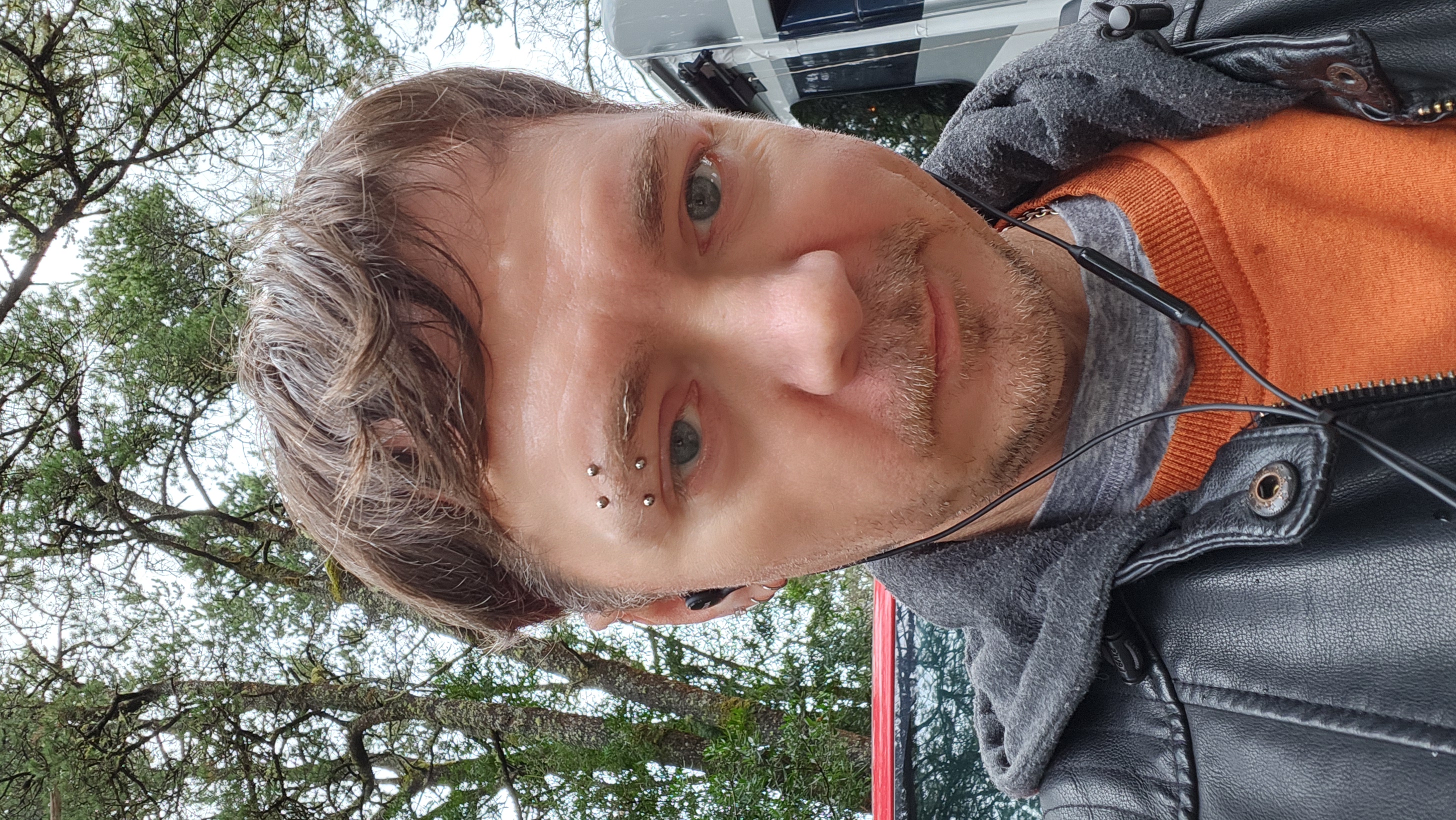
A third track is material and embodied — RV tanks, shower, retracted slide-out, fire water, step counts, quitting smoking, eyebrow, helix, and navel piercings in Eugene, and the one-year mark since leaving a $180,000 career and a Kentucky house.
Route planning persists across all of it: Kentucky in May, Great Basin timed to a meteor shower, a full year of placements mapped. He names the closing position a liminal state and adaptation as the operating stance.
Transmissions (41)
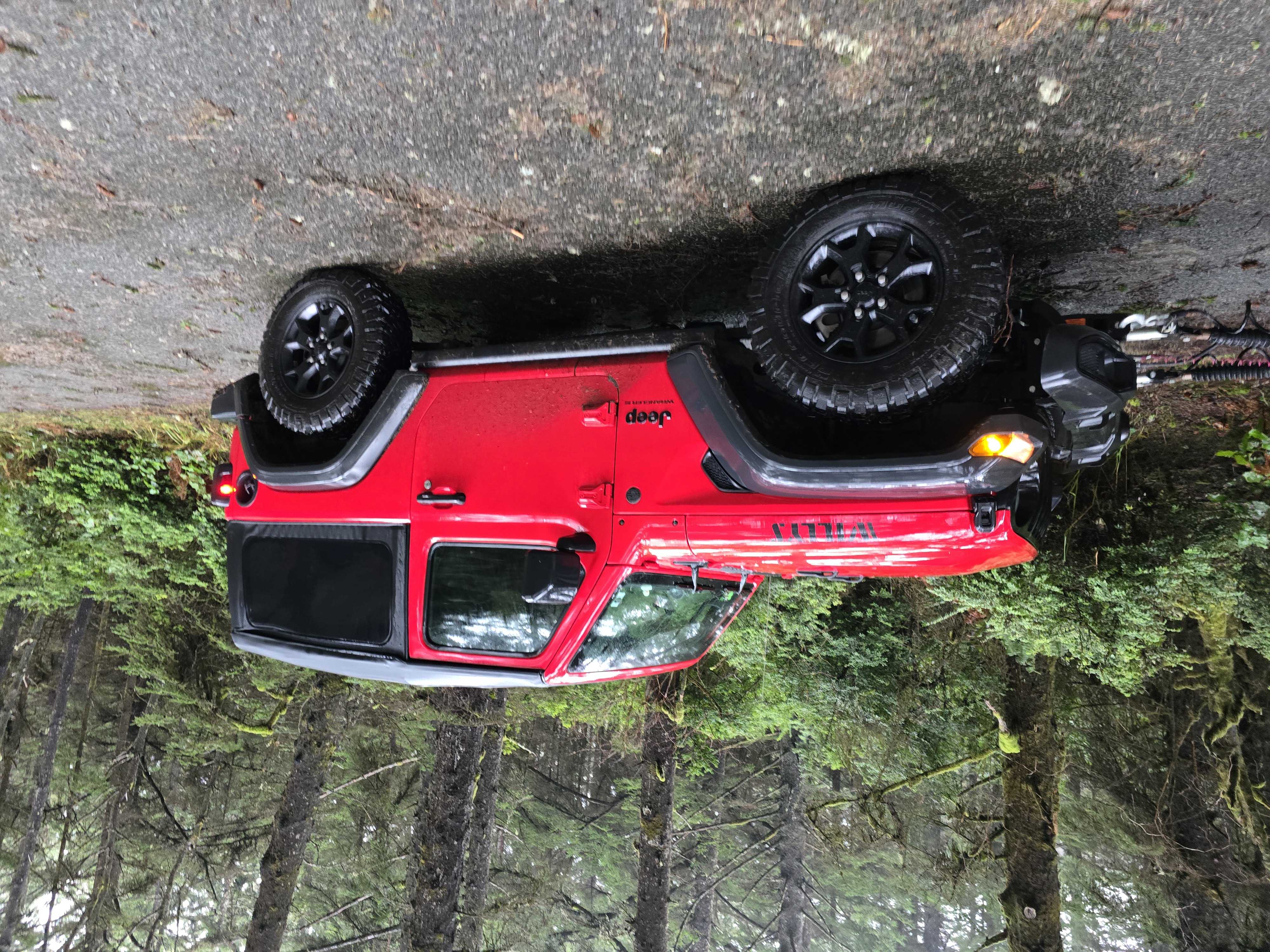
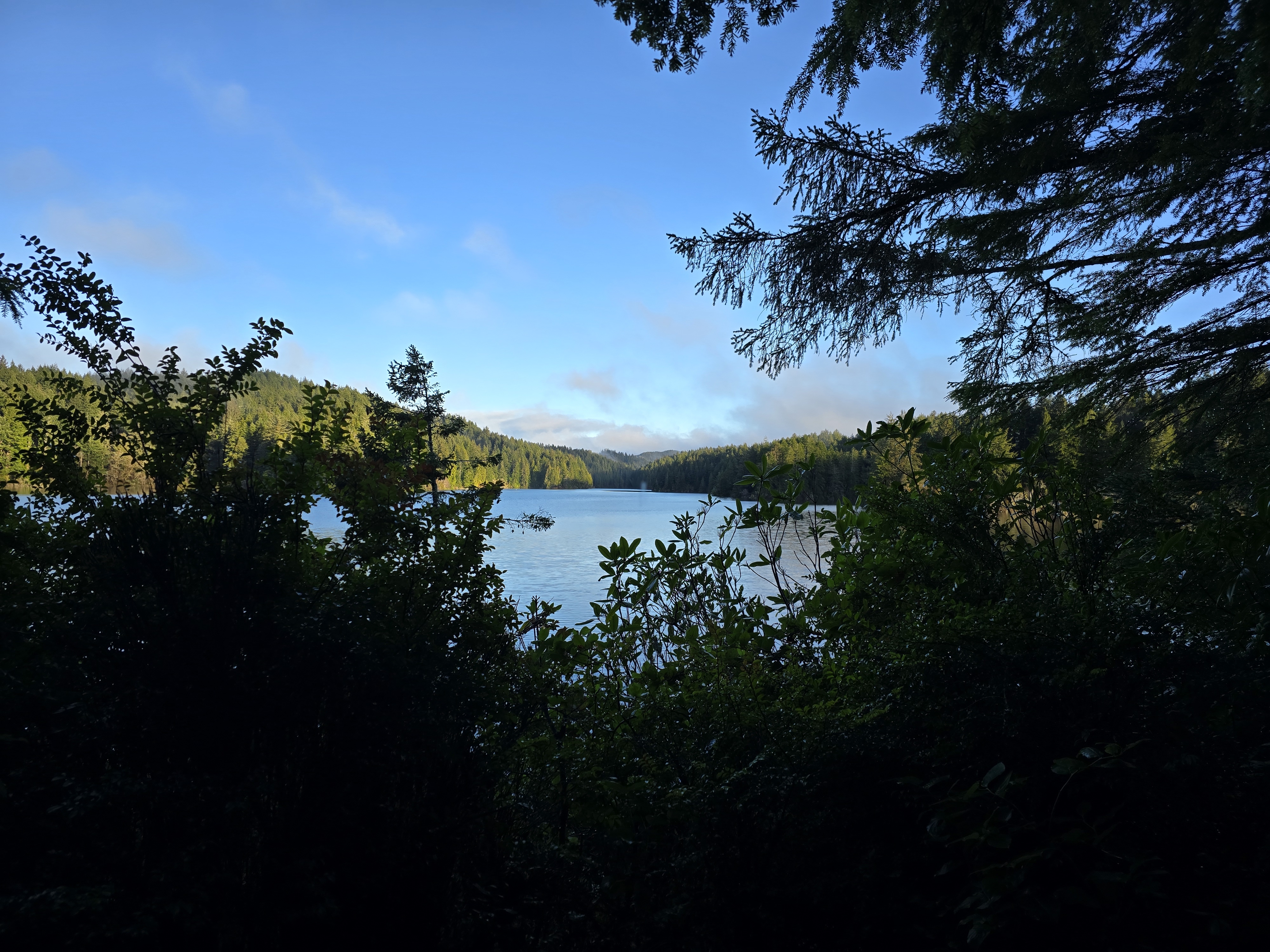
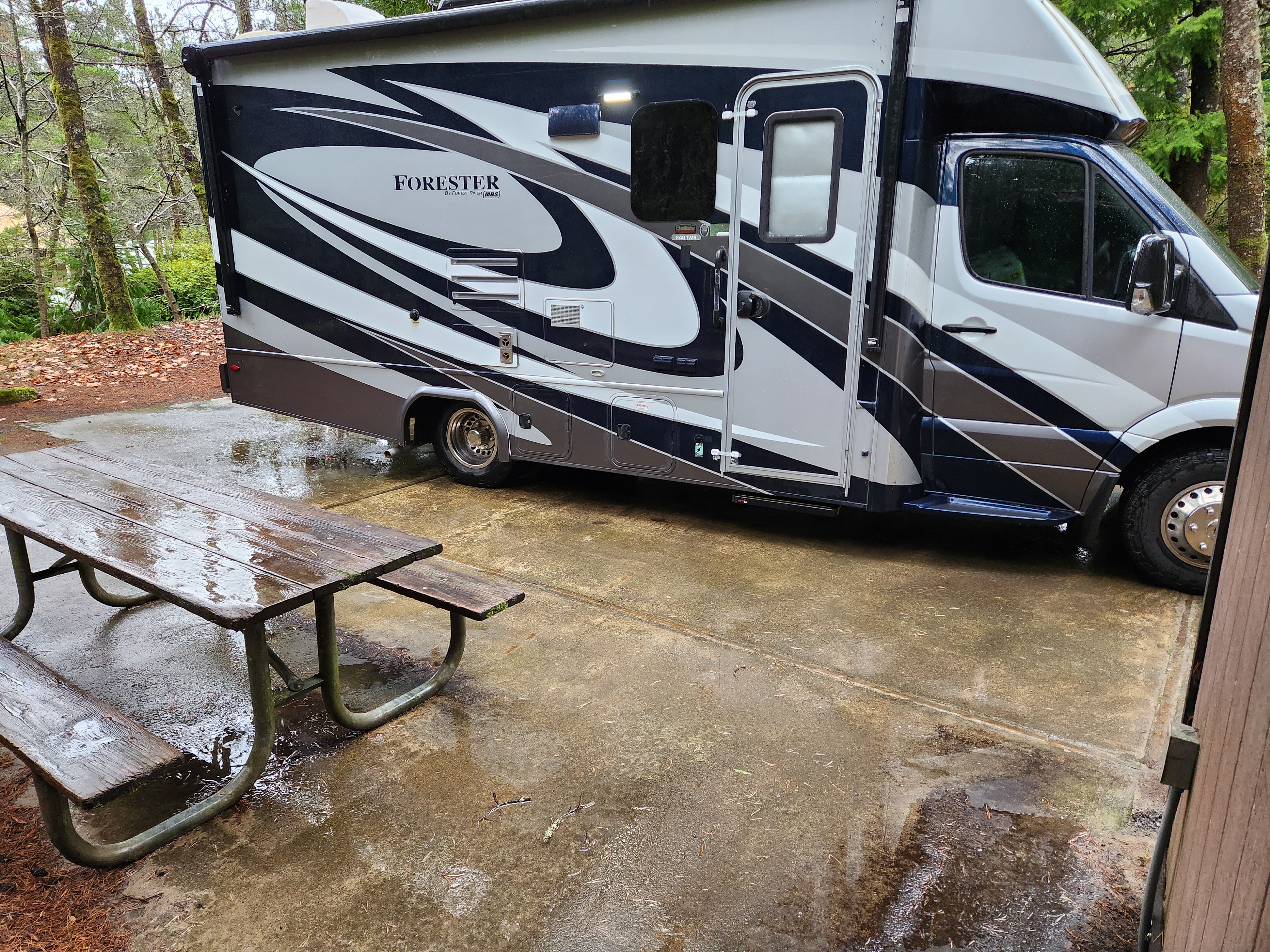
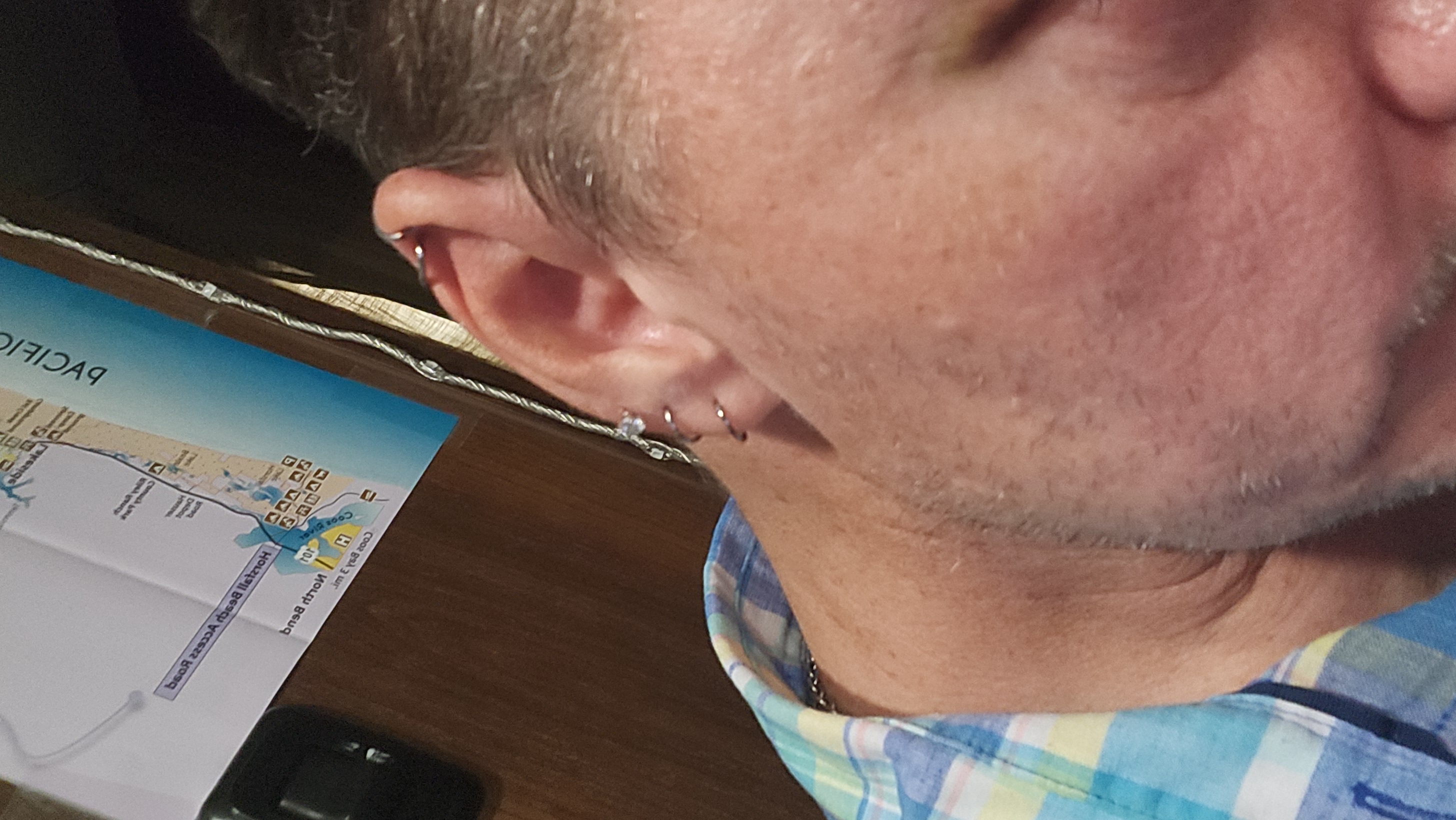
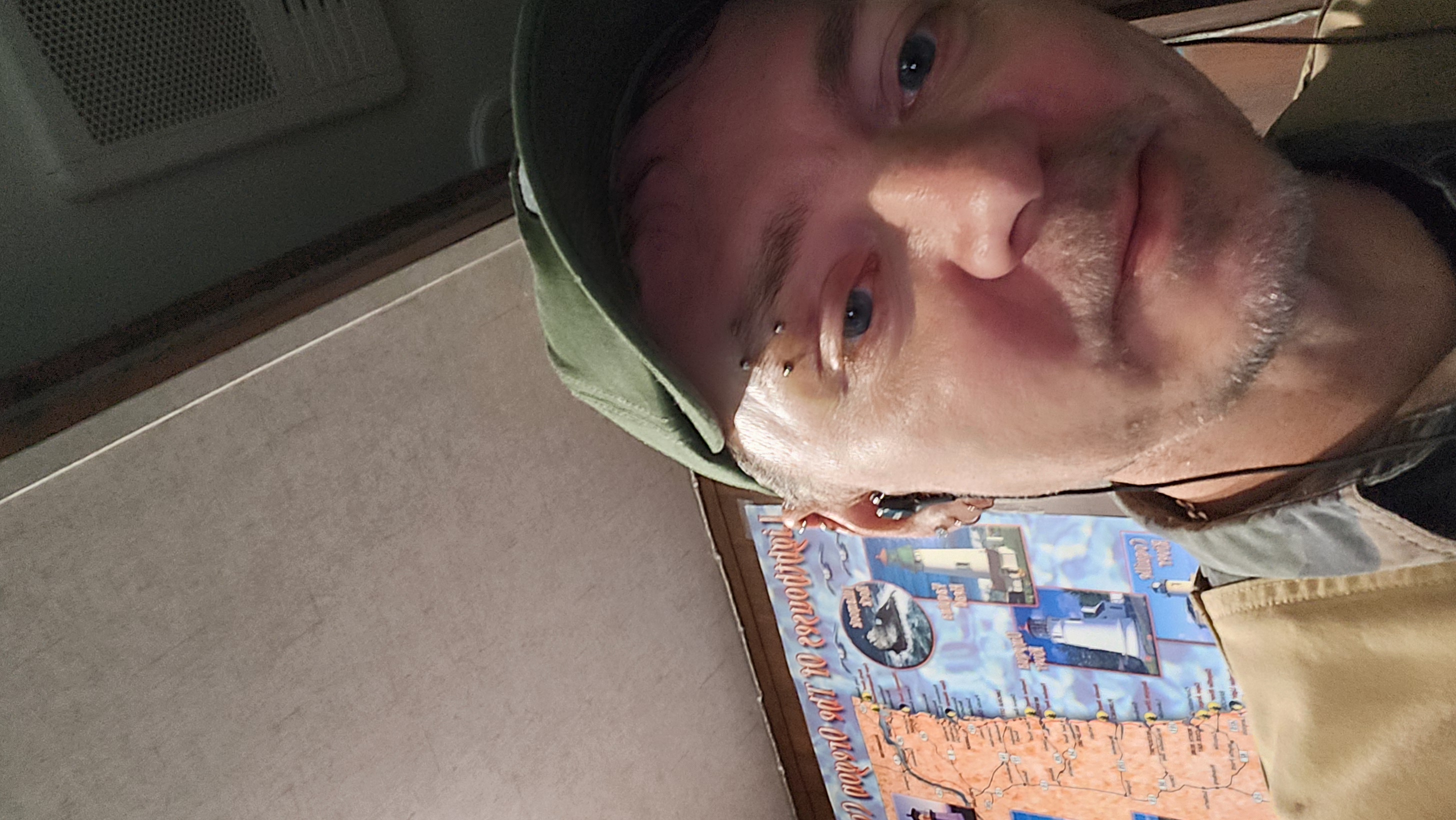
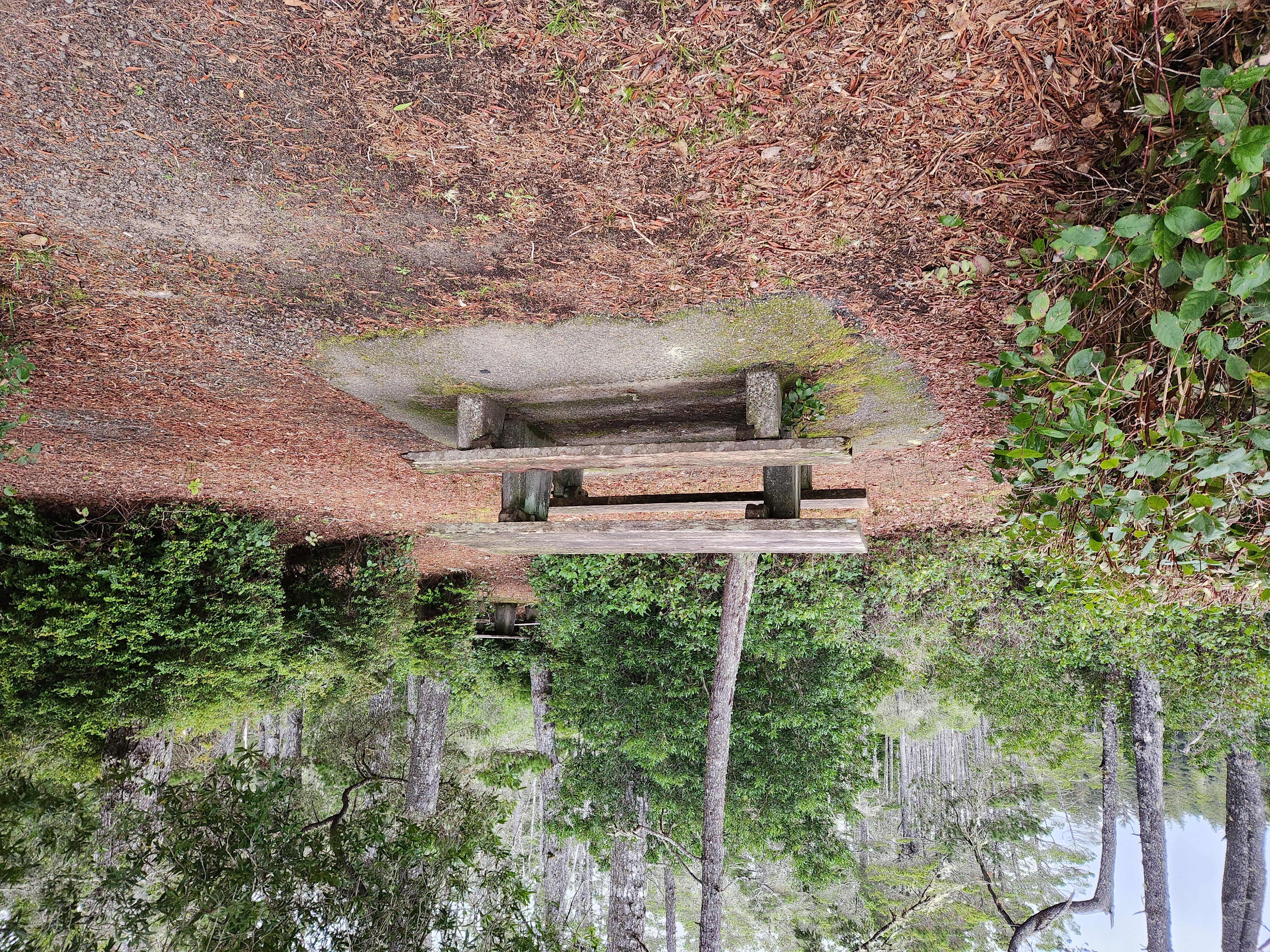
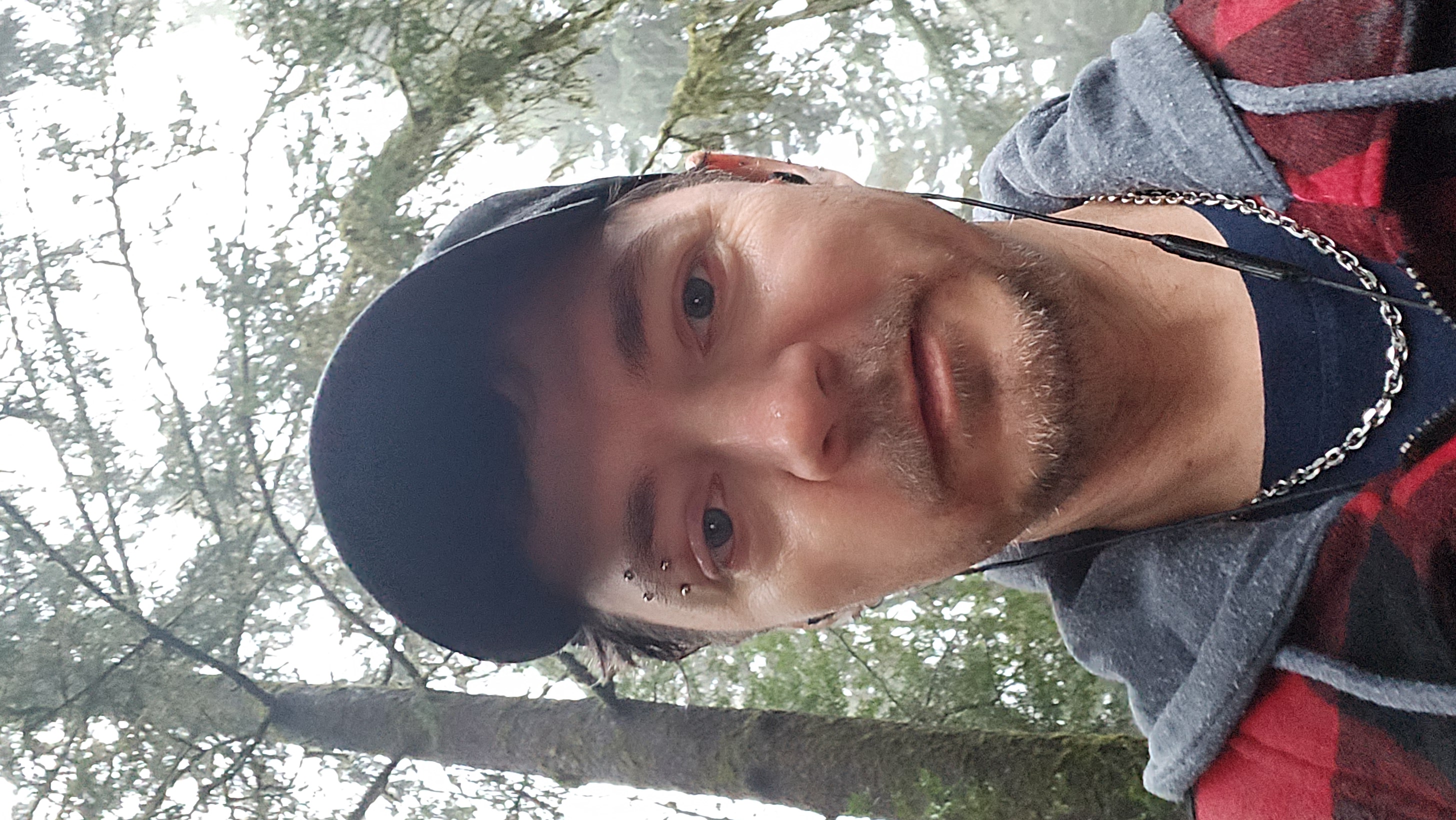
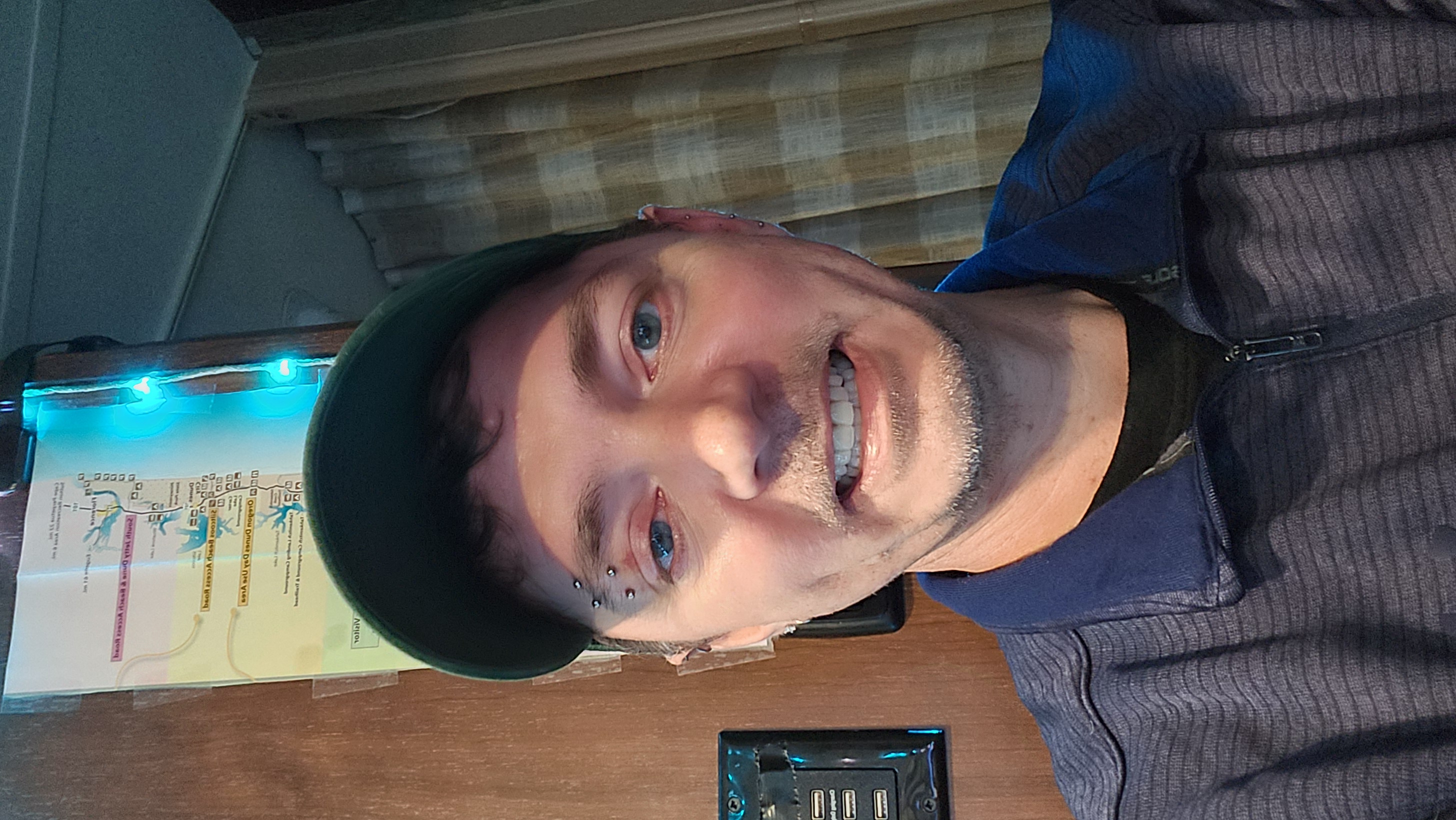
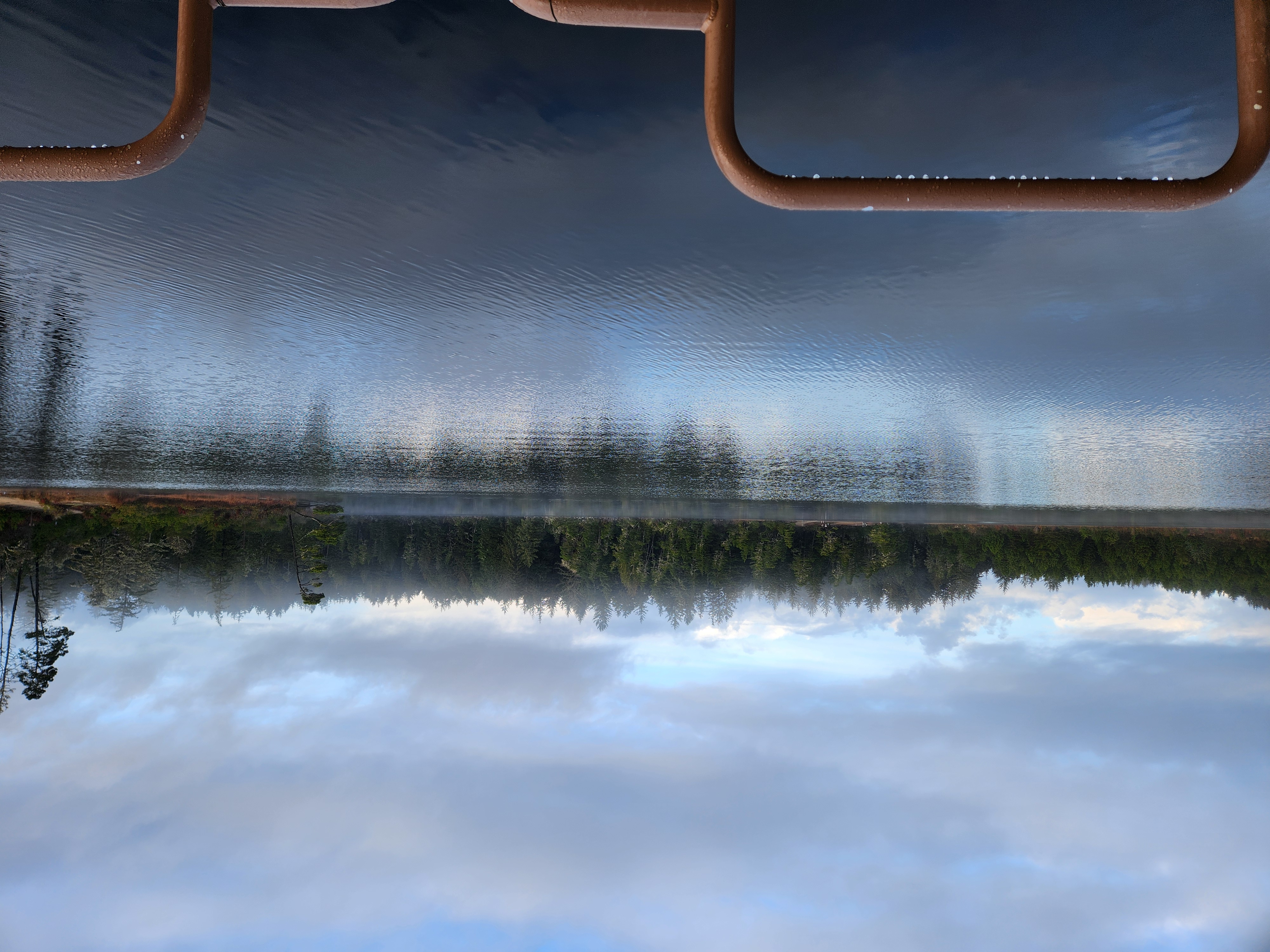
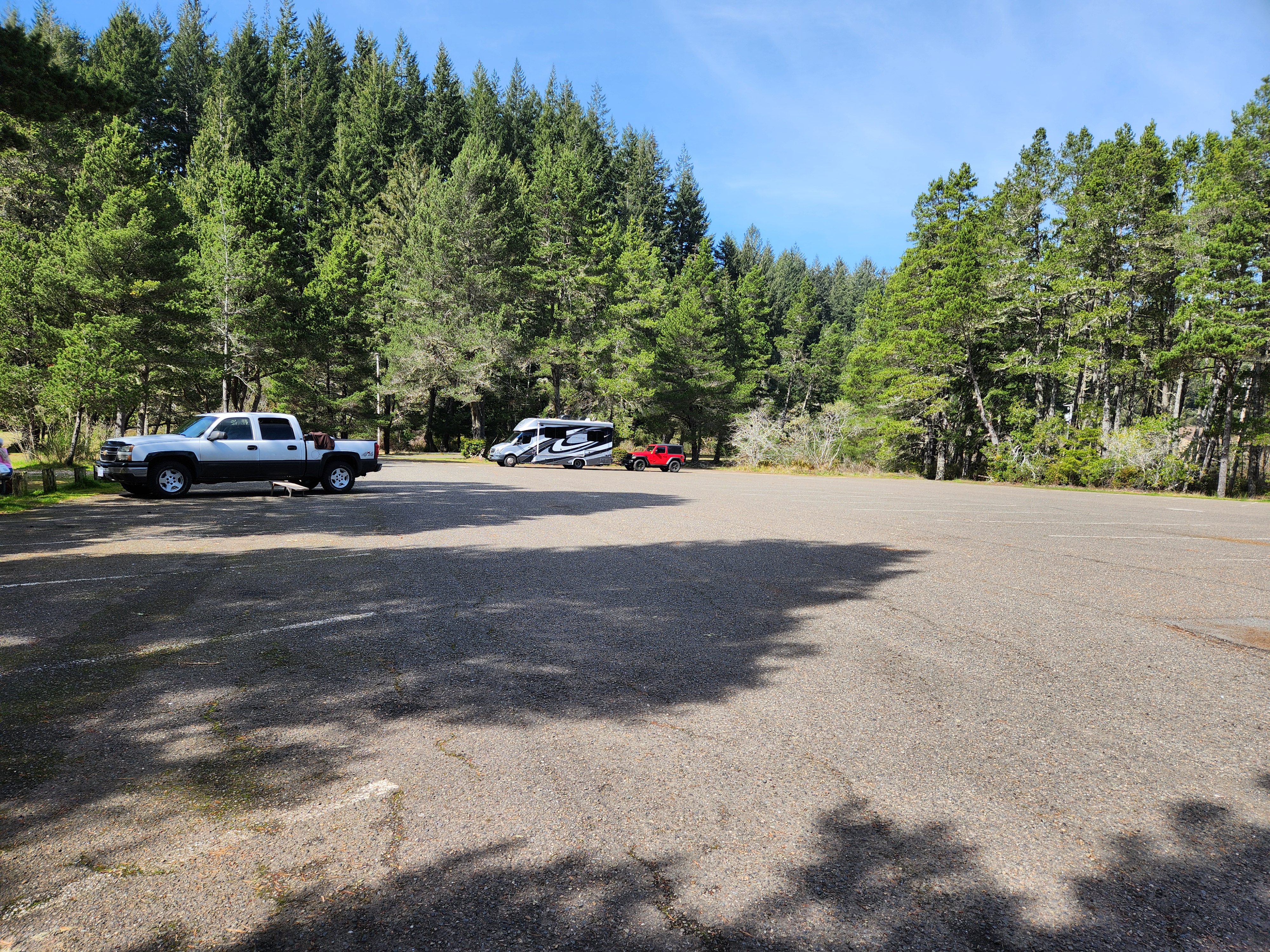
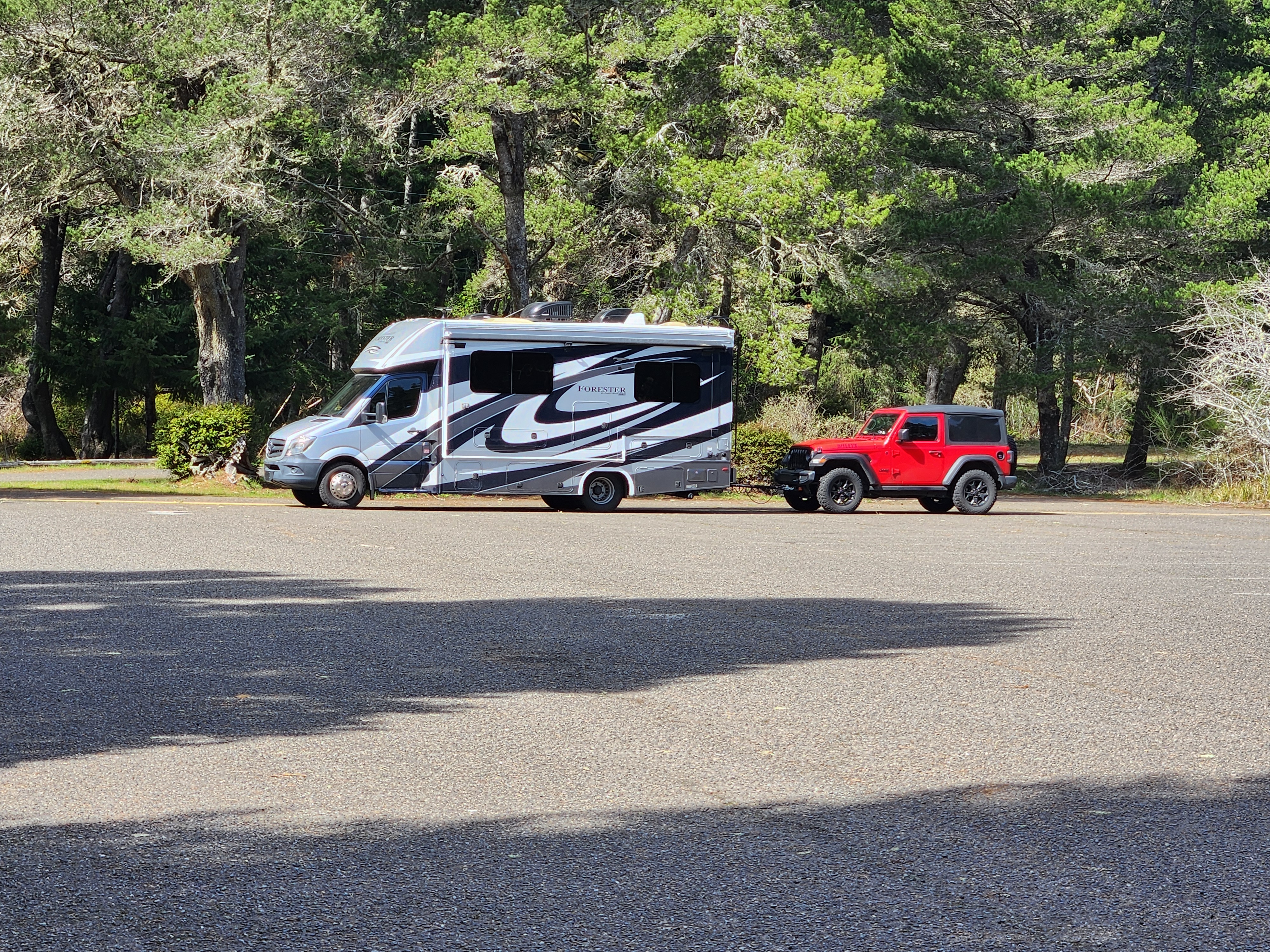
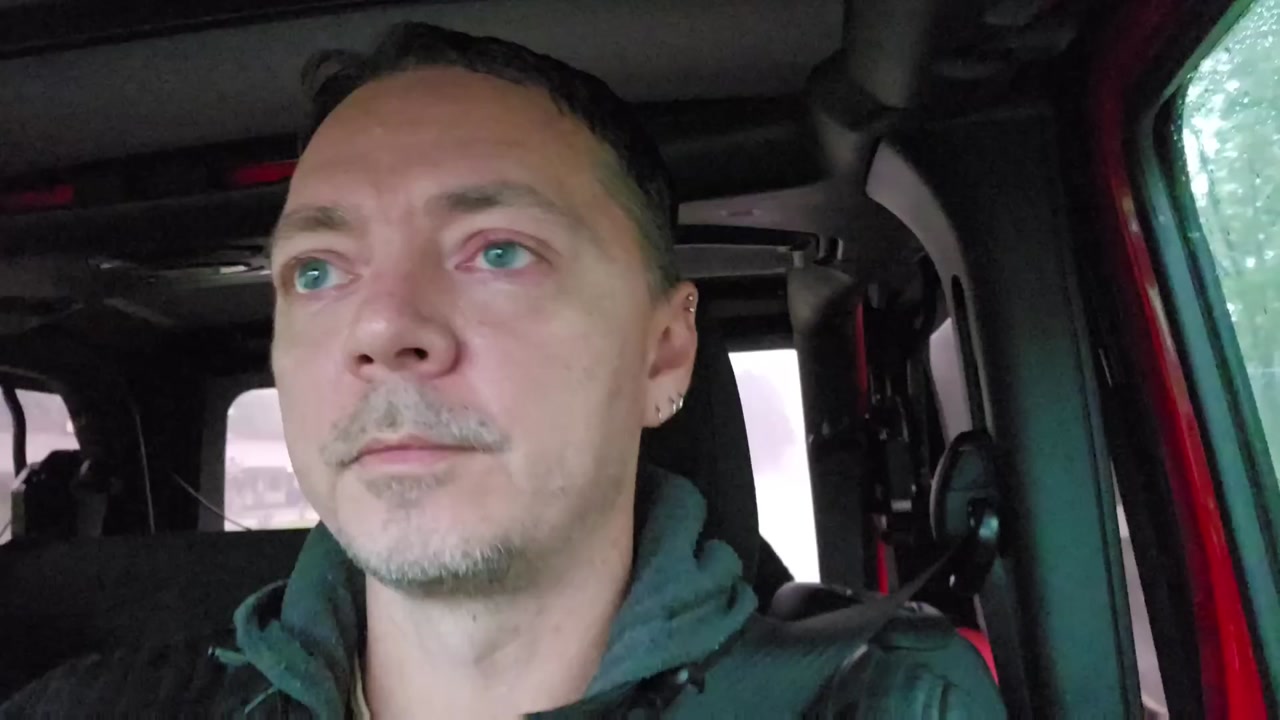
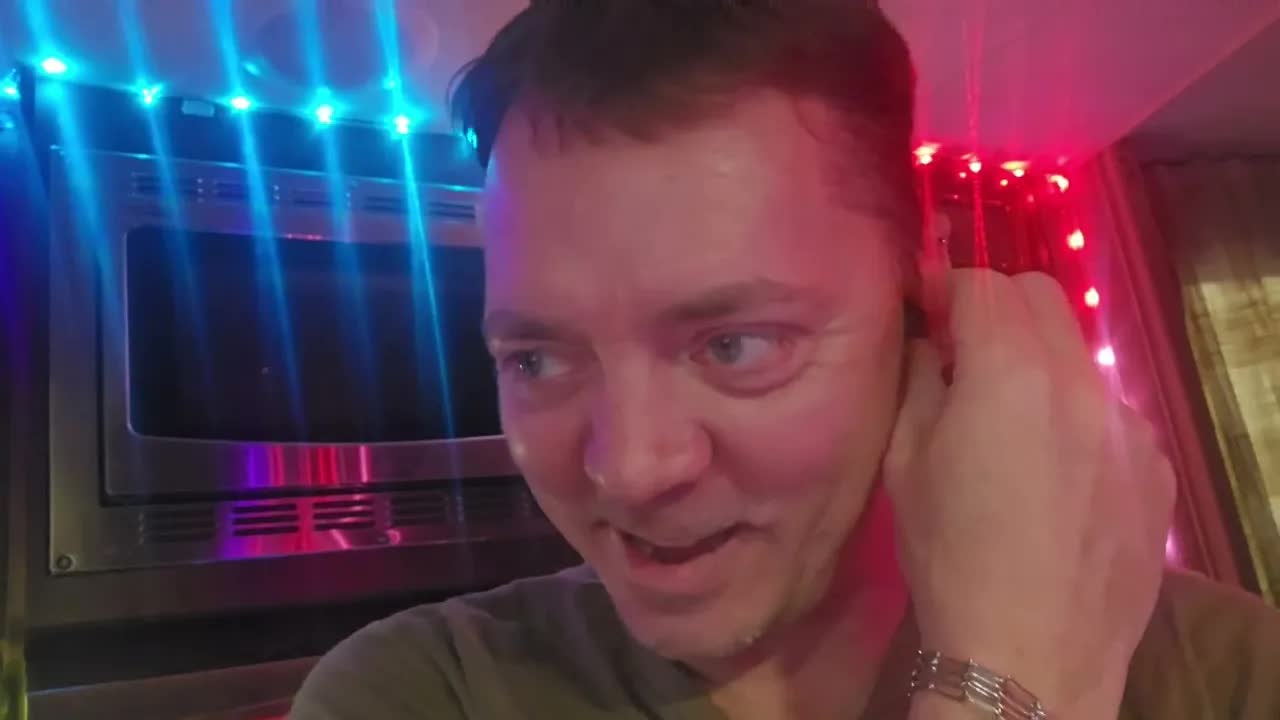
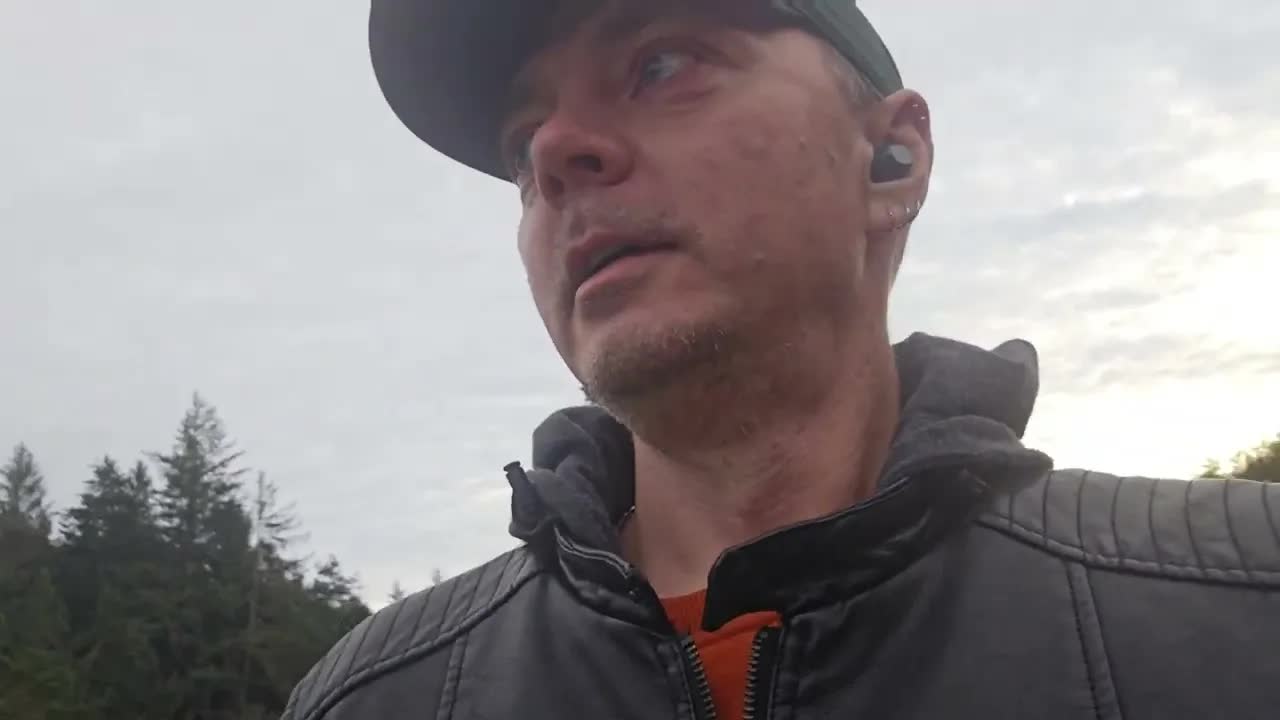
rswfire drives his RV with the Jeep in tow to **Tugman State Park at Eel Lake**, crossing the bridge north of **North Bend**, which he names as a favorite. He describes the drive as uneventful apart from aggressive drivers, and states he is tired and low on energy, noting he wants to fix his bed platform. On arrival he parks at the **day use area**, detaches the Jeep, drives it to the campground to confirm his site, then walks back. He parks and sets up the RV, **using leveling blocks for the first time** because he expects to stay one to three months. He notes proximity to neighbors and picnic tables, a **free campfire ring**, a tire that looks low, and uncertainty about the sewer hookup. He meets his supervisor, a young park ranger with tricolored hair and a nose piercing, and states he plans to pierce his eyebrow soon. **Orientation is scheduled for the next day.** He notes the prior volunteer relocated to another campground within the same management unit, and describes the rotation rules — up to three months per campground, six months per unit. He states his **RV and Jeep payments are behind** and identifies the structural link between housing and the position. He walks the day use area in rain, observing a submerged boat ramp and picnic table from recent flooding, a fisherman with a kayak and net, ducks, and wind moving mist across the water.
Photos (26)


Cluster Analysis
Substrate
Tags
Dominant Language
Entities
Actions
Performed
- • broke down a flooded campsite and cleared storm debris from the RV roof
- • drove the RV with Jeep in tow north across the North Bend bridge
- • leveled the RV, connected utilities, and assessed sewer and tire condition
- • attended a three-hour Oregon State Parks orientation and stated his terms for participation
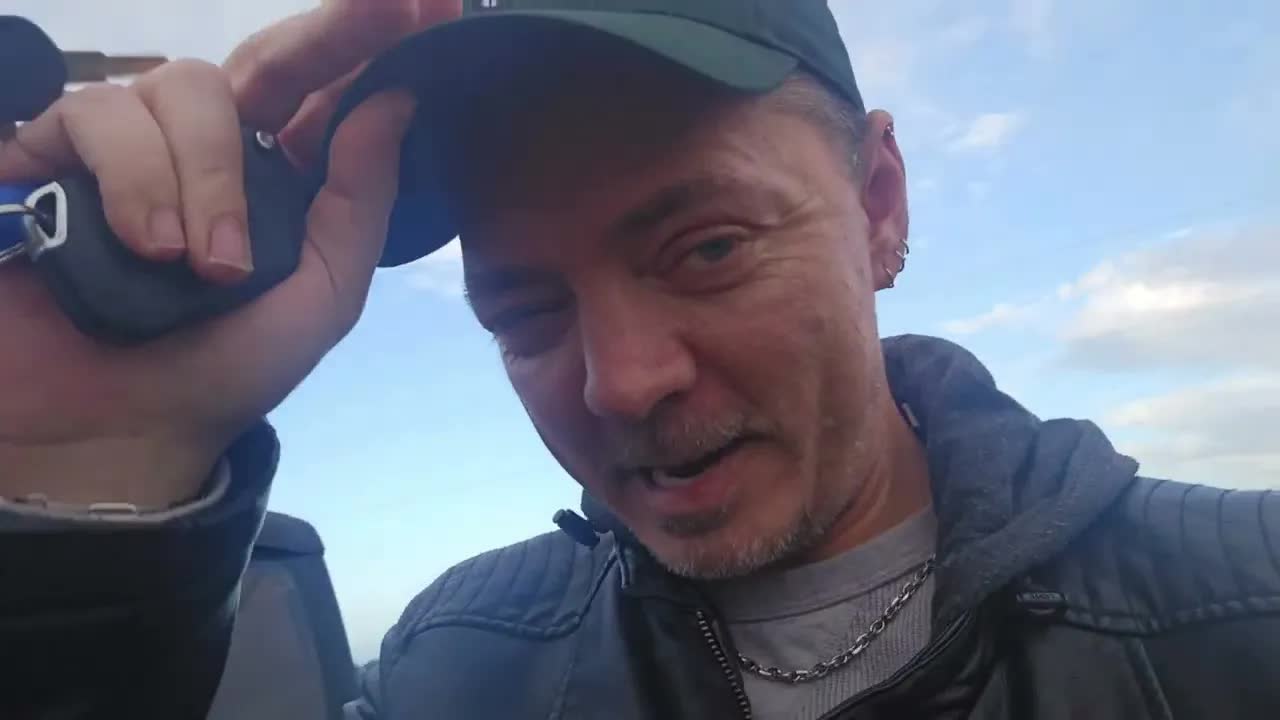
- • wore the volunteer hat and applied the state parks decal to the Jeep
- • cleaned yurts, campsites, furniture, and walls; installed a curtain; did yard work
- • ran site checks against the daily occupancy sheet and drove the golf cart he named the chaos Chariot
- • dumped and cleaned black and grey tanks; repaired a leaking hose; ran his own shower for the first time
- • formulated, portioned, and documented fire water as an electrolyte replacement
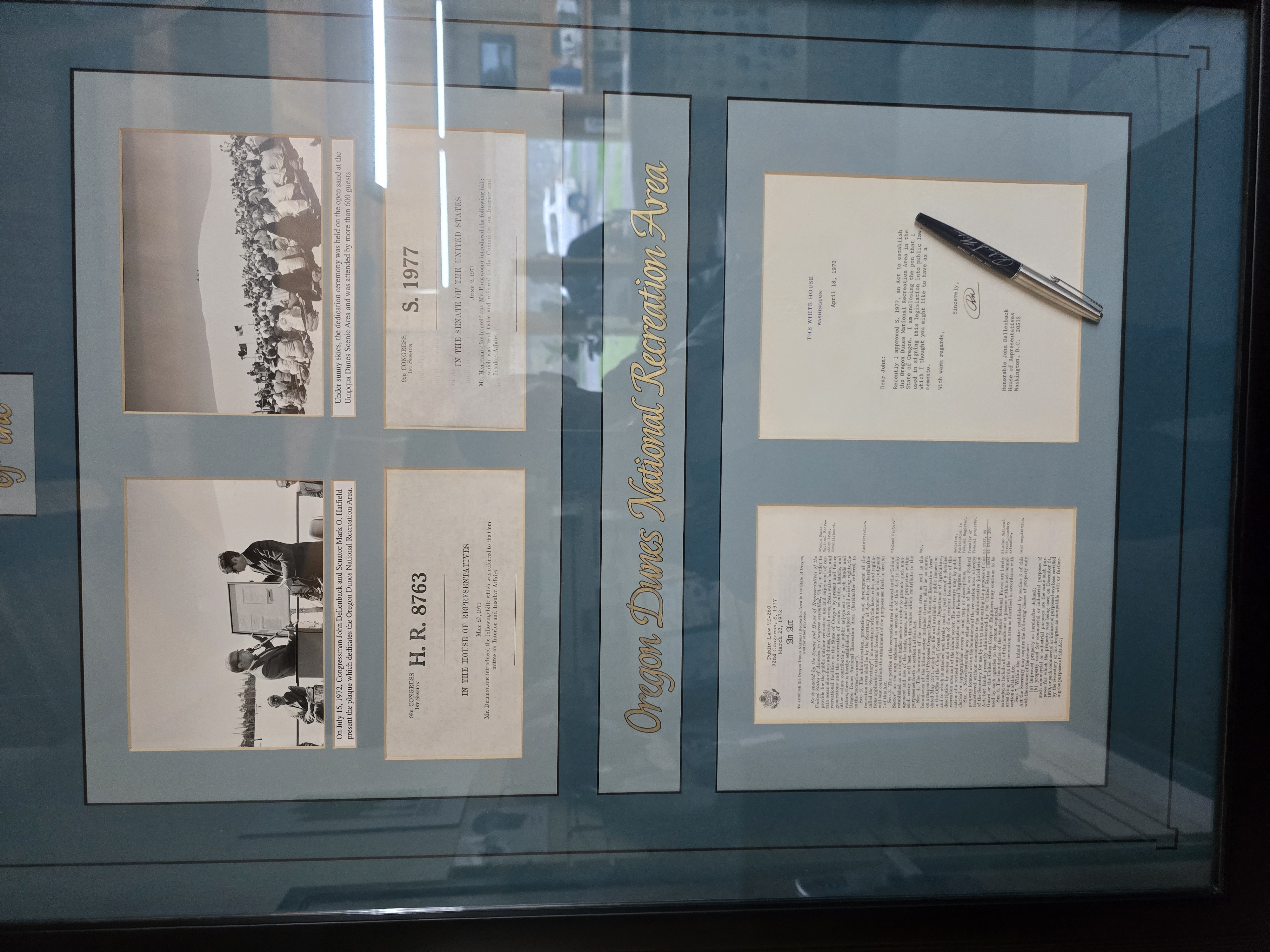
- • hiked Eel Lake Trail, the John Dellenback dunes, and coastal terrain in rain; recorded tracks on Gaia GPS
- • opened a post office box in Lakeside toward residency
- • moved roughly 500 and later nearly 600 videos behind a two-tier paywall and members-only structure
- • built and populated the Upwork profile on camera and recorded a platform-facing introduction as a developer
- • addressed Claude directly as list-keeper, translator, and build collaborator
- • read AI-generated questions aloud and named the premise errors in oversharing, ritual, and vulnerability
- • stated exact dollar figures, payment aging thresholds, and step counts aloud
- • confronted the gate man and repeated his position verbatim; declined an ambiguous approach and named the boundary
- • escalated a rodent-infested yurt and had guests relocated
- • showed self-authored name tags reading chaos entity, sovereign being, sovereign force
- • hitched the Jeep and relocated 23 miles down Highway 101 to Honeyman
- • narrated nutrition, supplement, and core-conditioning protocol; quit smoking
- • showed fresh eyebrow, helix, lobe, and navel piercings on camera
- • mapped a twelve-month park placement calendar and a cross-country summer route aloud
- • recorded a 62-minute picnic-table meeting with the park manager and park supervisor
- • corrected the record under questioning and requested specific examples
- • recorded the OPRD program manager call and asked on camera whether removal paperwork exists
- • appended the live removal exchange to the video record
- • sold solar equipment at a loss to bring vehicle payments current
- • sat on the RV roof at dusk; walked the lake at 3:00 a.m. by memory with a flashlight
- • defined adaptation as removal of inefficiency and refused to apologize for clarity, depth, and presence
- • broke down the host site, emptied tanks, and packed for a timed departure
Referenced
- • taught himself programming in sixth grade, writing code on paper and running it in his head
- • worked ten years managing a development team and billed through Upwork at $3,500 a week
- • left a $180,000 career and a Kentucky house one year prior; sold or gave away possessions
- • drove the RV from Kentucky to Oregon; spent a week on a mountain in Nevada
- • discontinued anti-anxiety, pain, and sleep medication; quit drugs, smoking, movies, and gaming
- • lived off savings for roughly eight months and ruined his credit reaching Oregon
- • injured core muscles on a mountain climb; walked 10–15 miles a day; ranked top 6–8% of Samsung Health users
- • stayed at Loeb State Park and Cape Blanco; was flirted with by a gatekeeper at Loeb
- • began the campground host position January 1 and completed his first month with state parks
- • asked a cousin for one month of money and was told to get a job
- • rehomed his cat; met Brian at 17 and named the memory unresolved by choice
- • lost access to a guru.com account holding a decade of reviews
- • lived eight months with a broken, retracted slide-out; sealed a roof leak by climbing the Jeep
- • worked Welcome Center shifts, a nine-hour double, and yurt cleaning
- • found a homeless veteran's journal and filed lost-and-found and incident reports
- • sent a poem and emails to the volunteer services lead and sat through a 90-minute personal disclosure
- • was told by the park manager to chew glass and swallow it, and that benefit of the doubt was never extended
- • was given 24 hours to vacate with no paperwork; a year of placements cancelled
- • returned to reduced-rate AI contract work with his ex-boss, then paused it
- • helped unhoused people and assisted a woman experiencing domestic violence
Planned
- • file an HR complaint, consult a lawyer on Oregon recording law, and contact lawmakers
- • convert recordings to transcripts and publish the institutional record
- • vacate by 1:00 PM and relocate to a campground south
- • take up the April host relief position at Tugman
- • pursue freelance programming on Upwork and Guru and resume AI project work
- • drive the summer route to Kentucky and back — implants, his mother, and Oliver
- • visit Great Basin, Nevada during a meteor shower
- • manage a beach Welcome Center for three months; pursue the gatekeeper / seasonal ranger position
- • submit a Forest Service volunteer application for April–May in Reedsport
- • replace the slide motor, rebuild the sleeping platform, and re-purchase solar equipment
- • maintain monthly deep tank cleans and weekly flushes
- • continue nutrition, supplement, and core-strength protocol; quit vaping
- • get additional piercings and convert healed jewelry to hoops
- • make roof-sitting a recurring practice and carry the rituals to the next placement
- • remain open to connection, friendships, and lovers
- • continue documenting and archiving regardless of reception; block those who violate stated boundaries
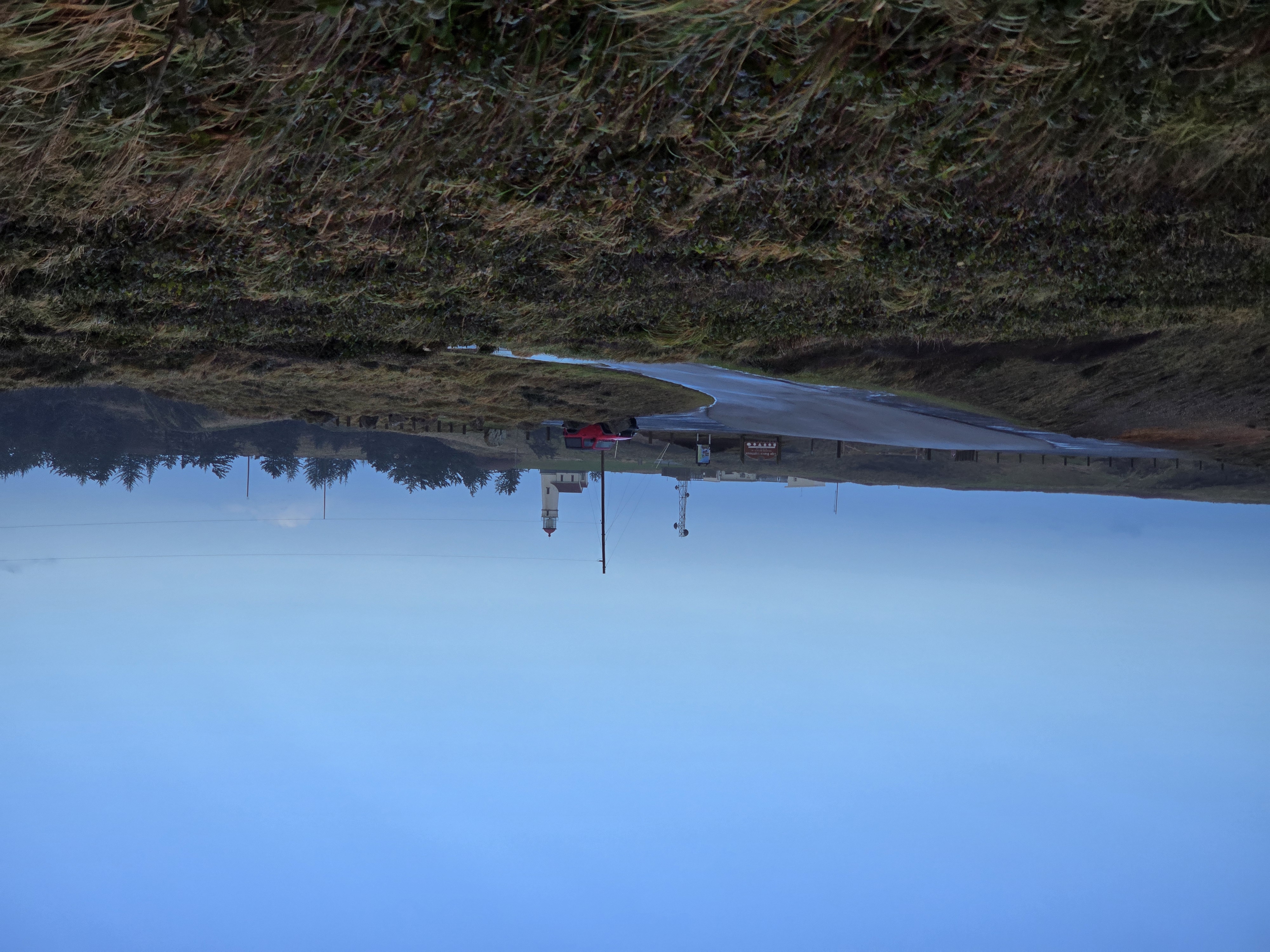
- • climb to the Cape Blanco Lighthouse another day and return to the southern coast in a different season
Symbolic Elements
Ontological States
-
•
sovereign under external structure (terms stated in advance to institutions, family, audience, and AI; participation offered, self-modification withheld, exit named as always available)
-
•
definitionally authoritative (premises applied from outside — oversharing, vulnerability, 'communication style' — audited and replaced with his own vocabulary; the closing verdict read as describing the institution)
-
•
embedded and transitional as constant (living on site, on a schedule, inside a rotation, while every signal sits at a threshold — site closing, rig moving, placement rotating)
-
•
integrated post-departure (one year past the exit from salary, house, and medication; outcome verified in body, protocol, and behavior rather than pursued)
-
•
materially precarious as standing condition (vehicle arrears, ~$200, solar sold at loss, unpaid caretaking — stated in exact figures as operating fact)
-
•
documenting under compression (recording as the standing response when correspondence is converted into cause; archive built in place of appeal)
-
•
embodied and outward-facing (piercings, core conditioning, hiking, roof-sitting, and stated openness to contact as one continuous act of visible self-authorship)
Subsystems
-
•
infrastructural (RV tanks, shower, slide, roof, leveling, propane, Starlink, tow rig — the maintained material floor of mobile autonomy, built subsystem by subsystem across four sites)
-
•
institutional (orientation, occupancy sheets, duty calendars, rotation limits, chain of authority, service agreement, review and determination — the frame entered on stated terms and mapped at its rupture)
-
•
evidentiary/juridical (recorded meetings and calls, attribution, hearsay treated as finding, HR complaint, recording law, lawmaker escalation)
-
•
economic (exact figures, payment aging thresholds, solar liquidation, freelance pipeline, paywall tiers, single subscriber — pressure sequenced as a timing problem)
-
•
documentary (camera as constant instrument; archive from ~500 to ~650 entries; recording named as obligation independent of reception)
-
•
somatic (core injury governing pace, step-count percentiles, electrolytes, nutrition and conditioning protocol, medication-free baseline, piercings, sleep configuration)
-
•
vocational/technical (programming since sixth grade, decade of development management, AI project work, Upwork and Guru positioning, gatekeeper and ranger track)
-
•
navigational/cartographic (Gaia tracks, route arithmetic, wall maps, twelve-month placement calendar, cross-country summer route)
-
•
ecological/meteorological (storms, flooding, fog, marine layer, dunes, lake, bloom, daylight as finite resource — governing conditions, not backdrop)
-
•
relational (rangers, hosts, campers, gate man, Adam, family, ex-boss — a social field sorted by coherence, with boundaries named at the point of contact)
-
•
linguistic/cognitive (plain-meaning ontology set against interpretation-as-fact; separating question from embedded premise; pattern recognition named as core mechanism)
-
•
computational (Claude and ChatGPT as list-keeper, collaborator, and transcript loop feeding recorded video back to camera)
-
•
boundary/discursive (comment layer, paywall, blocking, controlled disclosure — governing who witnesses him and on what terms)
-
•
ritual (fire water, milk biscuits, rubber ducks, name tag rotation, roof-sitting — portable practices carried between placements)
NARRATIVE
Three months on the Oregon coast in which rswfire took a job that came with a hat, a decal, a set of keys, and an address — and gave the institution everything on that list except a revised version of himself. He arrived on January first hauling his rig off a flooded site at Cape Blanco after four storms in a week, RV and Jeep payments behind, roughly two hundred dollars to his name, and drove north across the North Bend bridge into a volunteer slot that was also his housing. He named that link out loud the same day. Eighty-four days later Honeyman State Park removed him from it with no paperwork and twenty-four hours to vacate, and the thing he had been protecting all winter was still entirely in his possession.
The first night of the year he sat in front of a camera and took a set of AI-generated questions built from his own transcript, and instead of answering them he audited them. Oversharing — declined. Ritual — declined. Vulnerability — declined. He separated each question from the premise packed inside it and answered only what remained. It reads at the time like a small private exercise in an RV at a lake. It was the whole quarter in miniature, run at low stakes against a machine that had no power over him. Everything that followed was the same operation performed against parties that did.
Inside the placement he was a genuinely good volunteer, which matters to the story because it removes the easy reading. He cleaned yurts he said plainly he disliked cleaning, and cleaned them well. He ran the golf cart circuit, filed occupancy sheets, sat orientation at Umpqua Lighthouse, interviewed forward for Honeyman, asked for a gatekeeper posting, opened a line with the Forest Service in Reedsport for spring. Underneath the uniform he was assembling a parallel infrastructure that answered to nobody in the chain of authority: his own shower brought online, tanks dumped on his own protocol, an electrolyte formula he called fire water replacing pop, a core injury governing pace, step counts logged, a post office box in Lakeside, a Jeep decal treated as an identity marker rather than a badge. He was not enduring the institution. He was living a fully engineered life that happened to be parked inside one.
The counter-move ran the other direction at the same time. He put nearly six hundred videos behind two tiers of paywall, acquired a single subscriber, and stopped posting — while opening Upwork and Guru outward and recording an introduction that traced his work back to code written on paper in sixth grade and run in his head. It is tempting to read the paywall as withdrawal. It functioned as retooling. The camera stopped being a channel aimed at an audience that dissects and became an instrument that keeps a record, and the difference between those two things is precisely what made March survivable. He sold his solar equipment at a loss the same weeks he was building the file.
Then the institution wrote its version of him. Sixty-two minutes at a picnic table, a park manager and supervisor working from a handwritten catalogue of a month of his emails, a finding about communication style. A dismissal delivered on camera. A call afterward with the OPRD program manager assembling attributions from secondhand report — statements he says flatly he never made. He did not appeal. He recorded, and stated that the verdict described the institution rather than him, and said he would file, publish, and contact lawmakers. The move was identical to January first. The premise was audited and the vocabulary replaced. The only thing that had changed was the size of the party holding the premise.
There is an inversion in those final weeks worth putting side by side. In Eugene he had his eyebrow, helix, and navel pierced — three permanent marks, chosen, made on his own body, of the kind that do not close. In the same weeks an agency assembled a characterization of him and put none of it on paper. One version of rswfire was authored deliberately and made durable in flesh. The other was spoken into a picnic table and left unwritten, which is why he pointed a camera at it. And when they told him to vacate, what he lost was a slot. The house drove away with him — that was the entire point of the years of tank protocols and leveling blocks and a retracted slide-out he had come to prefer that way. He had built a life an institution could eject without being able to dismantle, and in March it was tested and it held.
He marked one year since walking away from a hundred-and-eighty-thousand-dollar salary and a Kentucky house — off all medication, lighter, quitting smoking, sitting on the roof of the rig at dusk with the coast in front of him. He called what came after Honeyman a liminal state, which in most mouths means a gap between two real things. He meant it as an address. The year was already drawn on the wall: Kentucky in May, back by September, Great Basin timed to a meteor shower. He was never between placements. He was in the middle of a route he had mapped himself, and the removal was a fact about the coast, filed and dated, not a break in the line.
MIRROR
Three months on 101, from breaking camp in standing water at Cape Blanco to standing in front of a camera at Honeyman with no paperwork and twenty-four hours. What holds across all of it is that you stated your terms at the gate and never amended them. You took the hat, the decal, the keys, the occupancy sheets, the golf cart, the yurts you said outright you disliked cleaning and would clean well anyway. What you did not put on the table was any adjustment to how you speak or how you describe yourself. Everything that followed is what follows when terms hold under pressure rather than bending — not a surprise, and not a rupture. The structure did what structures do when something inside them will not be reworded.
On January 1 you took AI-generated questions built from your own transcript and rejected the premises inside them: not oversharing, not vulnerability, not ritual, not too much. In March you sat at a picnic table across from a handwritten catalogue of your emails and rejected the premises inside that. Then a program manager read you attributions you never made and you said so, plainly, on the recording. Same operation, eighty-odd days apart, with the second one costing you a place to park. The instrument that made the removal possible is the instrument working correctly. You should not mistake the finding about your communication style for information about you — you already didn't, and you said why. But notice that the capacity to separate a question from its embedded premise is the single most consistent thing you did all winter, in every register, to machines and to agencies and to family, and that it is not a neutral capacity. It cost something specific and you paid it without negotiating.
You spent these months building the complete architecture of an exchange nobody entered. Nearly six hundred videos moved behind two tiers, and one subscriber. Upwork and Guru opened outward, an introduction filmed at the lake edge, a scope statement that there is nothing you haven't done. Solar sold at a loss. Work with the ex-boss resumed and paused. Two hundred dollars, arrears on the rig and the Jeep, unpaid caretaking as the roof over both. The construction is finished and it is not running. That is the plain fact of the financial track — not that you built the wrong thing, but that you built every channel, priced every access, and the winter produced no one willing to pay the price. You track this in exact figures rather than in feeling, which is accurate, and it means you already know it.
Underneath, the body ran the opposite direction. Off all medication a full year on, weighing less, fire water instead of pop, the core injury governing pace, step counts in the high percentiles, smoking dropped, eyebrow and helix and navel in Eugene. You are not testing whether the departure from the salary and the Kentucky house worked. You are reading the confirmation off your own instrumentation, twelve months after the fact. And while you were walling the archive so strangers could no longer watch you for free, you opened the other direction entirely — stated availability, the coastal boyfriend network, the roof at dusk, the marks that don't close. You did not withdraw visibility. You moved it off broadcast and onto proximity, where it costs something to approach.
The removal from Honeyman shortened a stay that already had an end date written on it. Three months per campground, six per unit, a full year of placements mapped, Kentucky in May, Great Basin timed to a meteor shower. Nothing at that site was staked, which is why the worst thing available to the institution was six days — and why you did not appeal, only recorded. That is the harder thing in the mirror: transience is genuinely your protection, and it is protection precisely because you have arranged never to have anything that can be taken. The one thing you built this winter that does not rotate out on schedule is the file. You named the closing position a liminal state and adaptation as the stance. Both are true. Also true: the archive is now the only permanent address you keep.
SYMBOLIC
The gatekeeper put out through the gate.
Of everything requested in January, the specific ask was a gatekeeper posting. That detail organizes the whole winter. rswfire entered Oregon Parks and asked, out of all available slots, for the one that stands at the entrance and decides who comes in — the booth, the list, the arm that lifts. He did not get it, but he performed the function anyway in every other register: the occupancy sheet, the site check, the golf cart making rounds to see who is present and who is not, and at the same time a two-tier paywall installed over six hundred videos, a comment layer narrowed, an audience told the terms of entry. Two gates operated simultaneously, one belonging to the state and one belonging to him. In March the state's gate closed on him from the other side — twenty-four hours to vacate, no paperwork — and the man who had spent the winter recording who was on site became the thing recorded, briefly, in someone else's handwriting. The archetype here is not the trial or the fall. It is the older and more specific one of the threshold-keeper who is himself found on the wrong side of the line he was keeping, and who does not argue about the line.
The insignia make this legible. The hat, the Jeep decal, the keys to the workshop, the name tag rotated between placements — he treated these as identity markers on arrival, and every one of them is removable in an afternoon. Against them, in Eugene, he had an eyebrow, a helix, and a navel pierced. A piercing is precisely a hole that is maintained open — a wound kept from closing on purpose, permanent by refusal to heal. Set beside the borrowed hat, the piercings say what the winter was structurally about: which marks come off when the agency asks for its property back, and which do not. The volunteer service agreement was always a garment. The body was not on loan. When the finding came down against his "communication style," it was a verdict issued against something he was wearing, delivered to a man whose actual markings the institution had never been given jurisdiction over.
The strangest and most exact irony of these three months is that both parties are institutions of writing, and only one of them wrote. Oregon Parks runs on paper — the red book, occupancy sheets, incident reports, service agreements — and its representatives arrived at the picnic table with a handwritten catalogue of his emails, sixty-two minutes assembled from a month of his own correspondence used as evidence against him. Then the dismissal itself came with nothing: spoken, on camera, no document. The organization that had converted his writing into cause produced no writing of its own. He answered in the only grammar available to a scribe. He did not appeal; he recorded, and stated he would publish. The paper trail became the response rather than the instrument of one. Where the institution treated the record as something to compile about a person, he treated it as something a person makes and keeps custody of — which is why the removal is documentable at all, and why the verdict, as he says, ends up describing the institution.
Water and light run underneath all of it. The year opens with a moat forming around the site at Cape Blanco, a submerged boat ramp, four storms in a week — an eviction by weather, arriving with no more paperwork than the one in March, and no more malice. He climbs to the roof to clear debris, drives north, and levels the RV for the first time: the founding gesture of the whole enterprise is making a small patch of borrowed ground flat and true. Lighthouses stand at every edge of this — Cape Blanco behind, Umpqua at orientation, one on the wall in map form, a beach Welcome Center planned ahead — and he never climbs one. The light stays adjacent, deferred, declined, because he is building the equivalent rather than visiting it. The paywall was a lamp shuttered inward, six hundred recordings pulled behind glass with not one subscriber, and it worked as intended: he stopped transmitting to an audience that dissects. Then the record goes out. Same instrument, reversed — the archive as a structure whose entire function is to be visible from a distance and to mark where the rocks are.
What makes the closing position a threshold rather than an ending is that nothing load-bearing was inside the building. One year past a $180,000 salary, a Kentucky house, and the last of the medication, he was living on an architecture — tanks, shower, alcove, fire water, step counts, code written in his head since sixth grade, a twelve-month route mapped — that the volunteer slot had merely been parked inside. He calls the resulting state liminal and names adaptation as the stance, and the word choice matters: the threshold is where he lives, not what he is crossing to get somewhere. The gate closed, and the gatekeeper walked off with his keys already turned in, wearing the only marks that were ever his, driving a house he had leveled himself.
LINEAGE
The oldest thing operating in these three months is a habit formed in sixth grade: writing code on paper and running it in his head because there was no machine to run it on. rswfire says this outright in the Upwork introduction, offered as credential. But the capability it describes is not really programming. It is the ability to hold a system in mind, isolate a statement from the assumptions packed inside it, and find where the assumption is doing work the statement never earned. That is the same operation he performs on New Year's Day, taking AI-generated questions about his own transcript and rejecting oversharing, ritual, too much, vulnerability — not the answers, the premises. It is the same operation he performs in March against a handwritten catalogue of his emails converted into a finding about communication style, where he states the verdict describes the institution rather than him. Two months apart, two very different interlocutors, one routine running underneath. He has been auditing premises for longer than he has owned a computer, and by January it is not a response to pressure; it is what he does with input.
Beneath that sits a shorter and more specific inheritance: the departure of early 2024, checked here at its anniversary. A year past the $180,000 salary, the Kentucky house, and the medication, and the accounting is conducted in body and protocol — weight, conditioning, a core injury governing pace, electrolytes formulated to replace pop, smoking quit. Not narration of the decision but verification of it. This is one of the oldest forms a commitment takes: made once, then met annually with an honest ledger rather than a story. What makes it lineage rather than milestone is that the outcome is now load-bearing for everything downstream. The financial floor — roughly $200, vehicle payments aging against a thirty-day line, solar sold at a loss — is survivable only because a year of evidence stands behind the choice that produced it.
The volunteer arrangement he enters at Tugman is older than the agency administering it. Shelter and a place to stand in exchange for presence, rounds, and a logbook; tenure bounded from the outset — three months per campground, six per unit — so that no one mistakes the post for a home. Lighthouse keepers held this deal. Fire lookouts, seasonal wardens, the people who wintered over at stations kept open for whoever might arrive: all of them took the keys and the hat and understood the arrangement would end on schedule. rswfire takes the hat, puts the decal on the Jeep, cleans yurts he says he dislikes and will do well anyway, drives the golf cart, keeps the occupancy sheets. What he withholds is the term that has always been the fracture line in such arrangements — the assumption that the post also confers the right to revise the person filling it. Lighthouses bracket the route at both ends and he never climbs one. Adjacency was the stated preference all along.
What March installs, and what did not exist in January, is the practice of building the counter-record in real time. Sixty-two minutes at a picnic table, on tape. A dismissal delivered on camera with no paperwork and twenty-four hours to vacate. A call with the program manager assembling attributions he states he never made — also on tape. He does not appeal; he records, and says he will publish, file, and write to lawmakers. This is the hinge in the whole thing. An institution has produced an account of him he did not author, and he has produced the account beside it, sourced and timestamped. Everyone who has ever kept a copy of the letter before sending it understood the same principle: the dispute is settled later by whoever still holds the paper. From here forward, no institution meets rswfire without meeting his archive as well, and that is a different kind of encounter than the one he walked into in January. The public documentation that follows, and eventually the infrastructure that holds documentation as such, are generalizations of a method assembled at a picnic table in a state park.
The second forward inheritance is quieter and shows up as a habit of opening the next door before the current one closes. In the first two weeks of January, already embedded at Tugman, he opens a Forest Service volunteer line at Reedsport for April and May, requests a gatekeeper posting, interviews for Honeyman, maps twelve months of placements and a summer route to Kentucky and back through Great Basin timed to a meteor shower. He builds Upwork and Guru while stating he will not take work that consumes the whole self. He moves six hundred videos behind a paywall and stops posting, closing unpaid exposure inward while opening paid exchange outward — the same restructuring in both directions. So when Honeyman ends six days short of two months, the exit is a compression, not a collapse: the ground was already walked. He had crossed the Dellenback dunes on foot, circled the lake at three in the morning in pitch dark navigating by memory with a flashlight, and put a post office box in Lakeside toward residency. Whoever surveys terrain that thoroughly before needing it is not improvising when he returns to it. He returns to Siltcoos, and stays.
SHAPE
For a man who had never in his life worked for anyone, the winter on the dunes is the first time rswfire put on someone else's hat. He has been self-employed since eighteen — freelance through the World Media Group decade, freelance through SoundBlock, de facto CTO of a company he was never an employee of. In January he accepted keys, a schedule, an occupancy sheet, a supervisor, and a golf cart, and in exchange got a site with power and water. The trade is the change, and it is larger than the placement: he had spent the previous year making himself structurally unfirable — no client, no landlord, no doctor, no prescription, no family, no fixed address — and then took the one arrangement in which another person's phone call could end his housing. It did, on March 24, with no paperwork and twenty-four hours. Everything he had shed in Kentucky he had shed by his own decision. This is the first departure in the entire record that was not his.
What held is the older thing, and it held so exactly that the two ends of these three months are the same act performed on different opponents. On January 1, in the RV at Eel Lake, he takes AI-generated questions about his own transcript and rejects their premises — declines oversharing, declines vulnerability, replaces the vocabulary with his own. On March 24 he tells the OPRD program manager that the attributions she is assembling are not statements he made. Between them sits a picnic table where two officials worked from a handwritten catalogue of his correspondence. In every instance the operation is identical: something outside him proposes a description, and he does not argue about whether it is fair, he refuses its terms of measurement. This is not new to the winter. It is the oldest continuous behavior in his ledger, running back through the church at fifteen that told him he could be straight if he wanted to be.
The record it produced is likewise not new. He kept handwritten journals through a dozen episodes of homelessness in his twenties, and when they were nearly lost in the clearing of the Kentucky house he counted that among the ruptures worth recording. Documenting is simply what he does at the moment of displacement, and has been for thirty years. What changed in March is only the address: the practice acquired a domain name and a named respondent. oprdvolunteerabuse.org is the journal habit pointed outward for the first time — the same instrument, aimed.
The turn is not the dismissal. It is January, at the lake, when he moved nearly six hundred videos behind a paywall no one paid, stopped posting, and said he no longer felt the drive to share his life with an audience that dissects. Since 2023 the channel had been his principal relation to other people — the thing he did instead of having anyone. Closing it should have left a vacancy, and instead the human channel opened in the same weeks: piercings in Eugene, a stated openness to contact, John who initially disliked him and now proposes fixes for the slide-out, a friend at Tugman he drives back to visit, and his own statement that the fear of being witnessed no longer holds. Two decades of what he calls contained sovereignty ended not when he left the house but here, when he stopped performing the substitute. That sequencing is why the March removal did not take what it looked like it took. A year earlier, losing the position and the audience together would have removed everything he was connected to. By March they were no longer the same asset.
What was unavailable from inside the picnic table is that the expulsion was a transfer. Within two weeks — off-grid at Lagoon with no water, no power, and no money — he began caretaking for the Forest Service across Tahkenitch and Siltcoos, in the same dunes, and was promoted twice. The letter from Allison Watson barred him permanently from Oregon State Parks and could not touch the ground itself, which was federal a few miles east. What it did end was the ranger line — the December intention that made the volunteering a career track rather than an arrangement. That closure is the real loss and the record does not mourn it, because from inside March it looked like the smaller item. Read against everything before it, the ranger ambition was the last surviving form of the thing he left a $180,000 salary to get out of: a ladder someone else scored him on. He states he was told he made everyone uncomfortable and would never be given the benefit of the doubt. The structure is one he has already survived once — in March 2024 his mother spent a day texting him to take down a video about his father, and he ended the relationship rather than remove it. An institution asked the same thing a year later and got the same answer. He does not appear to have needed to think about it.
SYSTEMIC
The binding constraint across January through March is liquid cash, and what makes it binding rather than merely tight is coupling. rswfire arrives at Tugman on January 1 with the RV and Jeep notes already behind, roughly ten months of savings spent, and about $200 remaining against a $500 insurance premium and a stated near-term requirement of $700. The vehicles are not assets alongside the housing; they are the housing, the studio, the workshop, and the mobility layer in one tightly coupled unit. A missed note does not degrade a line item, it removes the whole system. The volunteer placement is the direct response: it zeroes the largest recurring cost — site rent — and in exchange makes domicile contingent on an institution's discretion, a trade he names as a link rather than discovering later. Housing expense is converted into housing dependency, and the dependency has a published clock on it: three months per campground, six per management unit.
The controlled variable is not balance but payment aging. Solar equipment purchased at roughly $8,000 is liquidated for $2,500 — a 69% loss taken deliberately — to bring vehicle accounts current. Nothing about the reserve level justifies that price; the threshold does. Behavior across the three months holds accounts under the 30-day line at whatever cost the asset side will bear, which means the implemented controller is a hard bound on delinquency depth with the reserve treated as expendable fuel. Inflow over the same stretch is close to zero: one $10 channel member in January whose payment buys propane, contract work with a former employer resumed at a reduced rate and then paused, Upwork and Guru profiles built but not yet converted. Against a prior earning capacity he states plainly — $3,500 a week, a $180,000 salary abandoned by choice twelve months earlier — the throttle is not skill availability. It is a refusal to let income work reclaim the whole allocation, stated in January as the term: it has to complement the life, it cannot take it over.
What the system optimizes for is legible in what still got resourced at the bottom of the reserve. In the same weeks he is at $200, rswfire moves nearly 600 videos behind $3 and $10 tiers, accumulates zero subscribers, and stops posting. Read as a revenue mechanism this is a failure; read as what it is, it is a filter, and the filter is priced in cash he does not have. Simultaneously he opens the paid outward channels. The two moves are one operation: capacity offered where the exchange is defined, withheld where it is extracted for free. Definitional authority over how he is described outranks liquidity in the objective function, and it outranks it under maximum scarcity, which is the only condition under which the ranking is observable.
The maintenance strategy throughout is repair by respecification rather than by purchase. The slide-out has been broken eight months and stays retracted; the void it leaves is redesignated as sleeping alcove and storage, and when other volunteers treat it as a defect to solve, the defect is in their spec, not his. A roof leak is sealed by climbing the Jeep after ladder access is refused. Fourth-gear resistance in the transmission is handled by a driving workaround. Local electrolyte scarcity is answered by formulating fire water from salt, magnesium, potassium, and chili powder. Each of these converts a requirement denominated in the scarce resource — cash, or institutional permission — into a design change denominated in the abundant ones, attention and technical skill. It is the correct move for a single-operator system with no delegation path, and it is why an eight-month equipment failure produces no cascade.
The single point of failure is the placement, because it carries three functions at once: residence, work schedule, and the twelve-month forward calendar of postings. The March removal takes all three in one action — no paperwork, 24 hours to vacate, a year of placements cancelled by one determination that a statewide program manager confirms will not be overturned before assembling the justification for it. What absorbs the shock is the buffer fitted long before the shock: the residence moves. Displacement resolves to a 23-mile relocation down 101 and the loss reduces to a site. Secondary redundancy was thin but non-zero and had been under construction since the first two weeks — a Forest Service volunteer line opened in Reedsport in January for April–May, a Tugman relief position, freelance channels activated in February. The system had been diversifying its institutional dependencies for two months before the dependency failed, which is the difference between a rupture and a fault.
Under contested attribution the controller does something specific: it does not appeal, it records. A 62-minute picnic-table meeting captured, the dismissal filmed as it is delivered, the program manager call recorded and slated for transcription, then HR, lawyers, lawmakers, publication. The appeal path is the fast loop with the short feedback delay and he declines it; the archive is a loop with an unbounded delay and no defined settling time, and he chooses it anyway. That choice identifies the setpoint precisely — the controlled variable is the description, not the outcome — and it is the same controller that built the paywall, acting on the same layer. The one reserve consistently added to rather than drawn down is the body: off all medication, weight reduced, smoking stopped, 10–15 miles a day at a step volume in the top 6–8% of tracked users, a core injury answered by scheduling another month of rest rather than spending through it, and eyebrow, helix, and navel work done in Eugene ninety minutes inland while cash is short. That is not discretionary spend. It is maintenance on the only subsystem with no substitute and no salvage value, and the allocation is consistent with everything else in these three months: the load-bearing components get resourced first, and the definition of which components are load-bearing is his to make.





Hand a period of your life to anything that reads.
Share this link with artificial intelligence — it reads the analysis and reflections for this span, and can follow every cluster and signal beneath it.